Facebook
 Google
 GitHub
 Linkedin

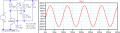
if the three turns are close enough to the secondary winding , possibly wound on top of the secondarie's lower section, there will be a bit of capacitance between them, and so any disturbance in the collector voltage will couple back to the base, leading to a greater change in the collector voltage that gets capacitively coupled back to the base.
CHECKED:Instead it is the capacitive coupling between the windings, which is a function independent of the non-existing "ground" connection.
Conventional explanation:

@MisterBill2's assumption:
Last edited: