Problems, Replacing Incandescent with LED, Automotive Lighting

Thread Starter

MB107

Joined Jul 24, 2016
400
I have had several instances replacing instrument cluster and interior lighting with LED's The problem appears to occur when the lamp in question is controlled by an electronic control module. These modules work fine with incandescent lighting but when a LED is substituted in place the LED will glow dimly when its supposed to be off. Replacement of the module with a new one will fix this but it only shows up with the LEDs and even the new modules may have problems in a short time. So I have refrained from putting LEDs in place of incandescent for those lamps controlled by electronic modules.

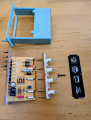
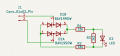
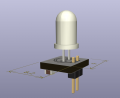
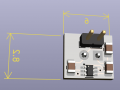
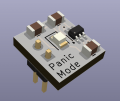
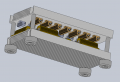
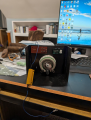
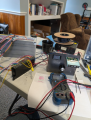
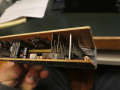
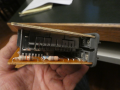
But today I'm faced with having to figure out how to address this problem if i want to make the modification I want. The car is a 1986 Mercedes Benz 560SL. It uses incandescent paring lights which I am trying to convert to Halo LEDs. The car uses a lamp warning module which senses bulb current and passes a signal to the warning module on the dash if it detects a bulb out. So both the warning module and the warning indicator are two separate electronic modules that may be effecting things. The lamp warning module is shown in the first two pictures the warning indicator is shown in the third picture.

In this case when an LED driver and halo is substituted for the parking light, the bulb out indicator with illuminate dimly with the parking light on. And with the head lights on, which also activates the parking lights the brightness will increase although not to full bright. This only happens with the right side parking light.

I have no wire diagrams of any of these components, as they are all proprietary, but is there anything I should look for?
1772239343041.png

1772239381284.png

1772239267153.png
 

MisterBill2

Joined Jan 23, 2018
27,159
OK, the solution that I see is not simple.
The pieces in the photos look like control buttons and assorted controls, but I do not see a variable dimmer control.
You nned to locate the variable dimmer control and measure whatvoltage it provides, or what variable resistance it provides. Given that, we can provide a circuit that can give suitablePWM control for LEDs.
Why is glowing dimly a problem?? Except forthe brake lights? The simple solution could be a series diode to provide a bit of voltage drop.

BUT, why hack up a good 1986 Mercedes Benz 560SL just to add LED lighting??
 

prairiemystic

Joined Jun 5, 2018
419
Good quality small light bulbs are very expensive. Think of the hassle to take this apart, put in el-cheapo lamps that fail due to vibration alone, and these are all mission critical lol.

The LED likely lighting up due to leakage currents, they can be super-sensitive and the tiniest of current lights them up.
I don't see any coloured gel for the annunciators. It's hard to get the brightness matched between LED colours, if you go that way using red, green, blue, orange etc. as I have done in my (Toyota) instrument cluster.

I would replace with LED's with series resistor and parallel resistor, to better emulate a light bulb's resistance.
You could use the old lamp's housings as stand-offs. Something must block light from bleeding through to the others next to each other.

Say a 2.2k parallel and 4.7k series (not super bright 2mA) as a starting point. You need a small reverse-diode 1N4148/across each LED line to protect it from -ve voltage spikes or add one diode to the common feed for all lamps.
I used 20k for the headlights on LED which is Cree 3528 size part that was way too bright at factory 5k.

The DIP-8 IC I guess is the washer fluid or maybe the low coolant level comparator. While I am in there, I would replace the electrolytic capacitor as good practice.
 

panic mode

Joined Oct 10, 2011
4,864
you can put resistor in parallel with LED to keep it off...
1772483106005.png
R1 is current limiting resistor.
R2 is shunt resistor (for leakage current)

Suppose Vf of LED is 2.6V and leakage current is 1mA.
R2=2.6V/1mA=2.6k
you can try 2.4k or 2.7k as nearest values.

suppose LED rated current is 20mA. to make it last longer we can pick lower value such as 15mA. then
R1 = (13V-Vf)/Iled = (13.0-2.6)/0.015 = 693 Ohm. so nearest value resistor would be 680 Ohm.

to protect LED from possible voltage reversal just add small diode in antiparallel. alternatively add rectifier bridge so polarity does not matter.
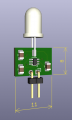
this can be done on a tiny board as a drop in replacement for the original bulbs.
1772483624073.png

something like this:
1772485906648.png
1772485795040.png1772485847592.png
 
Last edited:

panic mode

Joined Oct 10, 2011
4,864
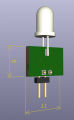
probably better to use parallel PCB for any height restrictions. also this way solder-mask can be used as a reflector or... LED too can be SMD. then you can order the whole thing assembled and o you only get to solder two wires as lamp leads.
1772488209913.png 1772488263627.png


1772488752255.png
 
Last edited:

Thread Starter

MB107

Joined Jul 24, 2016
400
OK, the solution that I see is not simple.
The pieces in the photos look like control buttons and assorted controls, but I do not see a variable dimmer control.
You nned to locate the variable dimmer control and measure whatvoltage it provides, or what variable resistance it provides. Given that, we can provide a circuit that can give suitablePWM control for LEDs.
Why is glowing dimly a problem?? Except forthe brake lights? The simple solution could be a series diode to provide a bit of voltage drop.

BUT, why hack up a good 1986 Mercedes Benz 560SL just to add LED lighting??
I am not trying to control interior LEDs. These are headlights and and parking lights. They are causing a lamp failure monitor to activate. Most of the lights I was able to address by adding a resistor in parallel to the LED to make it look like an incandescent lamp power wise. But the right side front parking light is acting weird no mater what resistor I put in.

See attached video. Not only does this car have a V12 engine. It now has Betty Davis Eyes.


Thread Starter

MB107

Joined Jul 24, 2016
400
Good quality small light bulbs are very expensive. Think of the hassle to take this apart, put in el-cheapo lamps that fail due to vibration alone, and these are all mission critical lol.

The LED likely lighting up due to leakage currents, they can be super-sensitive and the tiniest of current lights them up.
I don't see any coloured gel for the annunciators. It's hard to get the brightness matched between LED colours, if you go that way using red, green, blue, orange etc. as I have done in my (Toyota) instrument cluster.

I would replace with LED's with series resistor and parallel resistor, to better emulate a light bulb's resistance.
You could use the old lamp's housings as stand-offs. Something must block light from bleeding through to the others next to each other.

Say a 2.2k parallel and 4.7k series (not super bright 2mA) as a starting point. You need a small reverse-diode 1N4148/across each LED line to protect it from -ve voltage spikes or add one diode to the common feed for all lamps.
I used 20k for the headlights on LED which is Cree 3528 size part that was way too bright at factory 5k.

The DIP-8 IC I guess is the washer fluid or maybe the low coolant level comparator. While I am in there, I would replace the electrolytic capacitor as good practice.
Not looking to replace the incandescent in the warning indicator. I just showed that to show the type of circuitry involved. The only LED are the headlights, parking lights (Halos). See the video in post #6.
 

MisterBill2

Joined Jan 23, 2018
27,159
Isthere a possibility that with the incandescent lights that two were powered in series to serve as Daytime Running Lights?? That connection scheme could certainly creat problems when changing to LED lighting.
 

Thread Starter

MB107

Joined Jul 24, 2016
400
probably better to use parallel PCB for any height restrictions. also this way solder-mask can be used as a reflector or... LED too can be SMD. then you can order the whole thing assembled and o you only get to solder two wires as lamp leads.
View attachment 364109 View attachment 364110


View attachment 364112
I think I may have confused everyone. The LED I installed is this one. Which is essentially a 30W LED that can replace the main 35W incandescent sealed beam without any signal conditioning other than the driver that comes with it since 30W is close enough. The second part of that light is a separate halo housed inside the light. The power of that halo is unspecified but current draw x voltage puts it at about 5W also similar to the 5W incandescent parking light, but I did have to install a 100ohm resister in parallel to get the lamp monitor out on the left side. On the right side I tried the same thing but the monitor comes on about 1/4 bright when the parking lights are turned on and it goes to about 1/2 bright when the headlights are turned on.

1772511572528.png
 
I'm confused now. Pics of two different modules? and then bring in the other LED mods and burnout detection.

An uncommon problem with dual-filament car tail lamps i.e. #1157 is one filament breaks and hops over shorting to the other, inside the bulb. You get weird things happening like the brake/turn signals dimly coupled.
Another is a bad ground to the lamp socket, these are usually to the car body and get rusty.
Or lamps installed backwards, or rusty sockets.
So I would first find out what is wrong with the right side lamps.

The 100R resistor should be all you need to keep the lamp burnout detect monitor happy.
 
Be careful replacing a particular incandescent bulb with an LED in many older cars.
Incandescent bulbs can play a role in older automotive charging systems by providing initial field current to the alternator, helping it start charging the battery. If the bulb is blown, it may prevent the alternator from functioning properly, depending on the specific vehicle's design.
 

geekoftheweek

Joined Oct 6, 2013
1,429
On the right side I tried the same thing but the monitor comes on about 1/4 bright when the parking lights are turned on and it goes to about 1/2 bright when the headlights are turned on.
Although it probably won't make a difference, but have you tried swapping left and right lights to see if it is something with the light? It may not necessarily be a problem, but maybe more a manufacturing variation that is within tolerances.

Auto parts stores sell dummy load resistors rated at around 50W and 6 ohm for "tricking" modules when converting from incandescent to LED lighting. It may be just a matter of the 100 ohm resistor just being enough to fool one side and not the other. 6 ohm sounds a bit low honestly for a single parking light, but that is what I found for a quick search.
 

ABCDTech

Joined May 2, 2019
1
Looks to me like the ground for the right side is not good. What you are describing is the effects of the headlight/ park light using each other for a ground point with very little grounding of the quarter panel.
Try a dedicated ground from the chassis to the ground point in question. I bet the issue disappears.
 

MisterBill2

Joined Jan 23, 2018
27,159
Looks to me like the ground for the right side is not good. What you are describing is the effects of the headlight/ park light using each other for a ground point with very little grounding of the quarter panel.
Try a dedicated ground from the chassis to the ground point in question. I bet the issue disappears.
I can vouch for that! "ground" connections that failed can produce strange results, and passenger cars can deliver very strange symptoms. Been there.
 

Thread Starter

MB107

Joined Jul 24, 2016
400
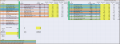
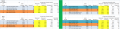
Sorry its been a while. I have been busy building a test rig for this. It includes a bunch of resistors to simulate all the bulbs. And a panel to vary resistance of a circuit while displaying voltage and current through the bulb under test. I use a pot to increase the resistance until the bulb out indicator comes on. At that point I record the current and disconnect the pot and measure the resistance. I have the results in for all the bulbs tested and recorded in the speed sheet. this was done on a spare lamp monitor. Tomorrow I will swap the monitor in the car and test the one that's in it and giving me trouble.

1773705923885.png

1773706140063.png


1773705857272.png

1773706204539.png
 

Thread Starter

MB107

Joined Jul 24, 2016
400
Although it probably won't make a difference, but have you tried swapping left and right lights to see if it is something with the light? It may not necessarily be a problem, but maybe more a manufacturing variation that is within tolerances.

Auto parts stores sell dummy load resistors rated at around 50W and 6 ohm for "tricking" modules when converting from incandescent to LED lighting. It may be just a matter of the 100 ohm resistor just being enough to fool one side and not the other. 6 ohm sounds a bit low honestly for a single parking light, but that is what I found for a quick search.
Have swapped the complete headlight assemblies, no change. I am using the dummy resistors and been varying the ohms with no luck.
 

Thread Starter

MB107

Joined Jul 24, 2016
400
Looks to me like the ground for the right side is not good. What you are describing is the effects of the headlight/ park light using each other for a ground point with very little grounding of the quarter panel.
Try a dedicated ground from the chassis to the ground point in question. I bet the issue disappears.
It has crossed my mind but the ground is fresh and dedicated. Unless the entire fender is isolated from the vehicle some way, it could happen.
 

Thread Starter

MB107

Joined Jul 24, 2016
400
I can vouch for that! "ground" connections that failed can produce strange results, and passenger cars can deliver very strange symptoms. Been there.
I can as well. If my parts swap doesn't work I at least now have data and can do current testing and voltage drop testing.
 

Thread Starter

MB107

Joined Jul 24, 2016
400
Results are in. Swapped in my repaired N7 monitor and the problem clears. Tested the one that was in the car and it compares like I would expect. The results are posted below for all the circuits that were involved with the parking lights in some way. Comparing the top set of data from the repaired module that originally came out of Samson to the bottom data that came out of my parts car Ebola. The results are different but not supersizing at all. So I have a module that works with both stock incandescent lights and LED's and one that works with LEDs only.

So something is leaking or not working right in the module shown in the first two pictures of post #1. Anyone have any ideas of what to look for.

1773796178803.png
 
That (1st pic not blue) module has a bunch of flat current-sense resistors that I can see. It must be looking at current drain for all the lamps. Wow. I would look at the PCB sandwich, most common is fractured solder joints. If we can see pics, the IC numbers used, you could thwart the detection threshold or lower it maybe. Maybe look at the IC numbers.
 
Top