Facebook
 Google
 GitHub
 Linkedin
In the picture you posted it looks like one of the leads of the primary(white wire on the right) is not connected to anything, you might have missed the row.
First a little troubleshooting question, does the led stay lit when you remove the transistor? It should not light up when the transistor is removed. Also, what transistor are you using, i'm guessing a 2n2222?
A few tips:
Reduce the number of windings on the primary to 3-5(The fewer windings you add the higher the voltage on the secondary but the higher the strain is on the transistor and battery).
Add an electrolytic capacitor(10-100uf) in parallel with the battery.
Try reducing the resistor to 10k.
Not too important but try replacing the blue jumper with a shorter wire(you can use the same wire that you used on the primary).
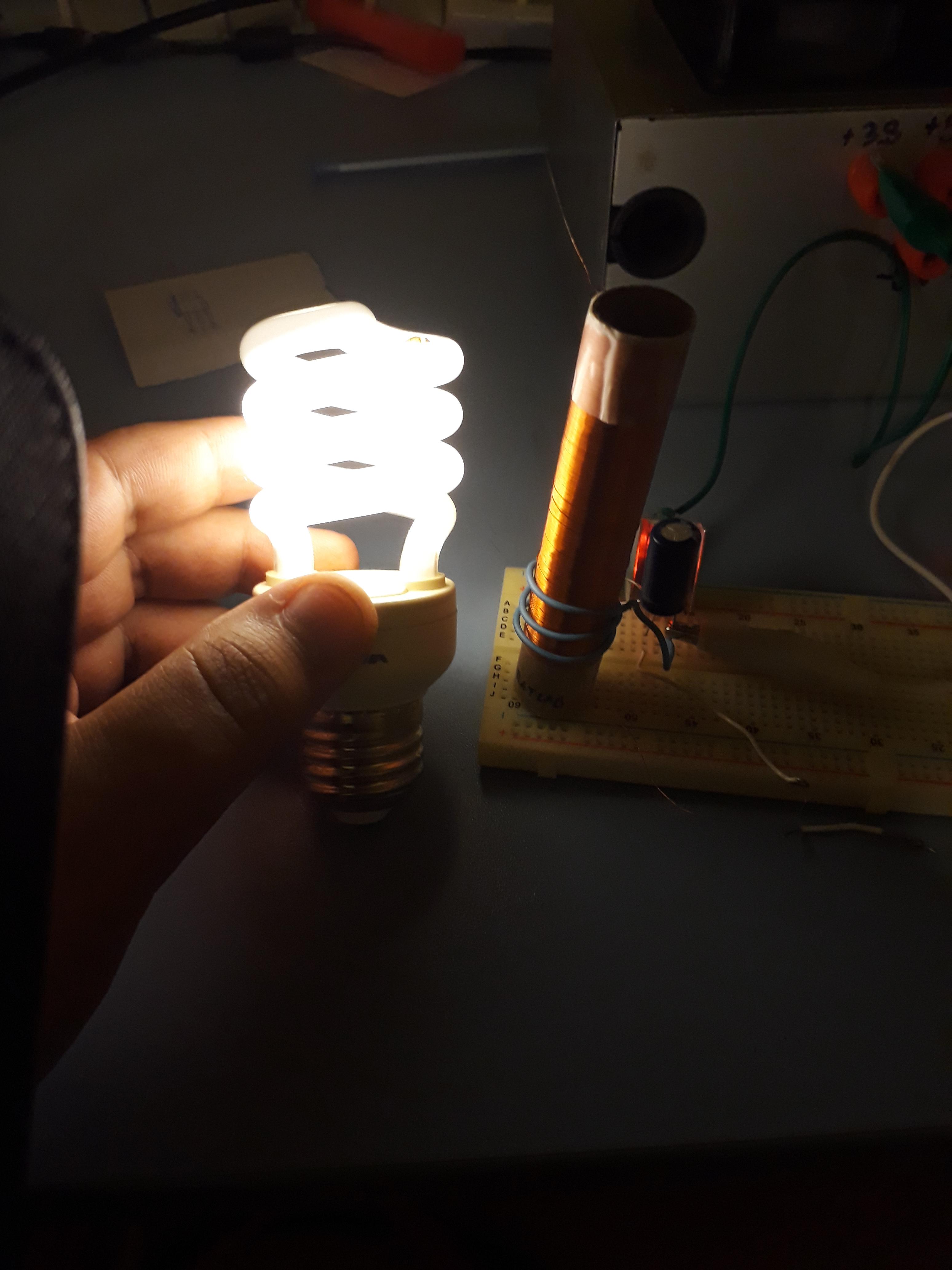
It's not very easy to get the circuit working on a breadboard and especially with a battery, it works a lot better when the components are soldered together. When I was testing mine on a breadboard I needed a 12v wall supply to get it working reliably.
First a little troubleshooting question, does the led stay lit when you remove the transistor? It should not light up when the transistor is removed. Also, what transistor are you using, i'm guessing a 2n2222?
A few tips:
Reduce the number of windings on the primary to 3-5(The fewer windings you add the higher the voltage on the secondary but the higher the strain is on the transistor and battery).
Add an electrolytic capacitor(10-100uf) in parallel with the battery.
Try reducing the resistor to 10k.
Not too important but try replacing the blue jumper with a shorter wire(you can use the same wire that you used on the primary).
It's not very easy to get the circuit working on a breadboard and especially with a battery, it works a lot better when the components are soldered together. When I was testing mine on a breadboard I needed a 12v wall supply to get it working reliably.