Electromagnetic brake

Thread Starter

rgsawmill

Joined Apr 13, 2025
103
No I believe it is always grounded(I can check again if needed). I think I mentioned in the past if the rotary switch was turned to the detented off or zero one or both A1 and or A2 were grounded to A for some reason but I will need to confirm. I needed to turn the switch on to get the brake to hold and everything to function fine.(With engine off)
So to be sure I'm getting you correctly. The regulator will feed the relay module which in turn also powers the coil side of the relay? The contact side that I think has its own 12 volt supply that doesn't care what the voltage is (12-14 volts), it's just contacts ?
 

Irving

Joined Jan 30, 2016
5,123
No I believe it is always grounded(I can check again if needed). I think I mentioned in the past if the rotary switch was turned to the detented off or zero one or both A1 and or A2 were grounded to A for some reason but I will need to confirm. I needed to turn the switch on to get the brake to hold and everything to function fine.(With engine off)
Ah, ok, maybe it switches the power to the input stage so A1 and A2 would appear to become grounded. Easily checked by measuring voltage at A1 & A2 when off and on.
 

Irving

Joined Jan 30, 2016
5,123
So to be sure I'm getting you correctly. The regulator will feed the relay module which in turn also powers the coil side of the relay? The contact side that I think has its own 12 volt supply that doesn't care what the voltage is (12-14 volts), it's just contacts ?
Yes, the COM or NO contact is fed directly from battery+. Only DC+/DC- input on module fed from regulator.
 

Thread Starter

rgsawmill

Joined Apr 13, 2025
103
Ah, ok, maybe it switches the power to the input stage so A1 and A2 would appear to become grounded. Easily checked by measuring voltage at A1 & A2 when off and on.
I'm pretty sure I did but I will confirm. We are in for a couple days of rain but I will get a battery out and bench test as soon as I can. I'll check my notes also.
Thank you.
 

MisterBill2

Joined Jan 23, 2018
27,522
The cheating trick that could work is to glue a small reed switch to the side of the relay coils that presently control the motor. Then those added reed switches could control the brake power relay. and no digging into the controller at all. It is a trick I heard about NASA using in some ground support systems back in 1963.
 

Thread Starter

rgsawmill

Joined Apr 13, 2025
103
The cheating trick that could work is to glue a small reed switch to the side of the relay coils that presently control the motor. Then those added reed switches could control the brake power relay. and no digging into the controller at all. It is a trick I heard about NASA using in some ground support systems back in 1963.
That sounds interesting. I'll have to read up on those. Very interesting. Interesting fact: my father worked for NASA back during the Apollo program. His field of expertise was fuel and ignition systems. I remember him talking about the effects of zero gravity and the extreme cold on electrical equipment like ignition systems. To bad I didn't get his smarts.
 

MisterBill2

Joined Jan 23, 2018
27,522
The reed switch and glue trick was only used for the ground support systems, not even for the launch equipment. Not nearly reliable enough for that. By NASA standards.
 

Thread Starter

rgsawmill

Joined Apr 13, 2025
103
Go
Ah, ok, maybe it switches the power to the input stage so A1 and A2 would appear to become grounded. Easily checked by measuring voltage at A1 & A2 when off and on.
Good morning.
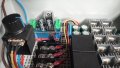
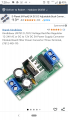
Rainy day here but was able to do the bench work. Do you see any conflict in piggybacking the voltage regulator Above the relay module?
 

Attachments

Thread Starter

rgsawmill

Joined Apr 13, 2025
103
Ok when dodging downpours I couldn't resist trying the setworks with the new addition of a voltage regulator.
Everything is operating as expected with engine running and not running.
The only issue I see is the output of the regulator is low.
With engine running the input voltage is 13.8 v and the output is 10.8 v going to the relay module.
Engine not running the input was 12+ v and output was 9+.
Is that indicating that the regulator is of inferior quality and will that effect the operation and longevity of the relay module?. Also should the battery get low at what voltage will the regulator and relay module not function properly ?
Thank you Bob G.
 

Thread Starter

rgsawmill

Joined Apr 13, 2025
103
Ok when dodging downpours I couldn't resist trying the setworks with the new addition of a voltage regulator.
Everything is operating as expected with engine running and not running.
The only issue I see is the output of the regulator is low.
With engine running the input voltage is 13.8 v and the output is 10.8 v going to the relay module.
Engine not running the input was 12+ v and output was 9+.
Is that indicating that the regulator is of inferior quality and will that effect the operation and longevity of the relay module?. Also should the battery get low at what voltage will the regulator and relay module not function properly ?
Thank you Bob G.
https://photos.app.goo.gl/ygHhGYphhCLbasQo8
 

Irving

Joined Jan 30, 2016
5,123
hmm it shouldn't be 3v drop, it should be no more than 2v, and you can get versions of the chip that are low drop out of 1v. 9v is getting a bit lower than I'd like, as the hold-up voltage for the relay is minimum 9v, however that's worst case, most will be good well below that. Anyway you shouldn't be running a 12v battery on load as low as 11v. As long as it's working OK...
 

Thread Starter

rgsawmill

Joined Apr 13, 2025
103
hmm it shouldn't be 3v drop, it should be no more than 2v, and you can get versions of the chip that are low drop out of 1v. 9v is getting a bit lower than I'd like, as the hold-up voltage for the relay is minimum 9v, however that's worst case, most will be good well below that. Anyway you shouldn't be running a 12v battery on load as low as 11v. As long as it's working OK...
If my battery should get down to 12 volts which is possible that would mean the regulator would be only sending 9 volts to the excite relay module. Are you saying that could be a problem?
I should test the other regulator to see if it's output is closer to 12 volts. Thank you for getting back to me.
 

Irving

Joined Jan 30, 2016
5,123
Its lower than I would like, but as I said the relay is spec'd to hold in at 9v minimum and most would do a volt or so better so you'd be unlucky to have one that failed at exactly 9v.
 

Thread Starter

rgsawmill

Joined Apr 13, 2025
103
Its lower than I would like, but as I said the relay is spec'd to hold in at 9v minimum and most would do a volt or so better so you'd be unlucky to have one that failed at exactly 9v.
Ok. I'll buy that. Like I said, I will bench test the other one and see if there is less of a loss of voltage on that one.
Thank you for all your help. I'm seeing the light at the end of the tunnel.
Bob G .
 

Irving

Joined Jan 30, 2016
5,123
If the voltage really HAS TO STAY RIGHT AT 12 volts, then use a switching regulator. BUT if it works as it is, how about a low-dropout regulator??
I had a quick look, TI, Rohm and Microchip all do equivalent 12v 3-pin regs with sub-0.5v dropout so swapping the chip out for a better version is do-able with care.
 

Thread Starter

rgsawmill

Joined Apr 13, 2025
103
I had a quick look, TI, Rohm and Microchip all do equivalent 12v 3-pin regs with sub-0.5v dropout so swapping the chip out for a better version is do-able with care.
I'm not sure I have the equipment to do that unless it is plugged into a receptacle.
 
Top