Facebook
 Google
 GitHub
 Linkedin

No, so there's something else going on there... I'll have a think on it...Do all 12 volts relays have a problem when the voltage gets to around 13.6 volts ?
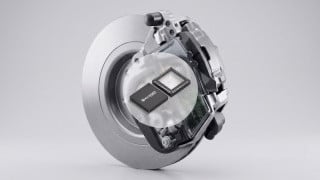
Electromagnetic brake
- Thread starter rgsawmill
- Start date
Scroll to continue with content
No thank you. I ordered the one you sent me a link to. Hope to get it Monday. Weather permitting I will install it in the cabinet then and all will be right with the world.The module I suggested in post #95 is ready to go and needs no soldering, just wiring up.
If you want to solder something together you need the following:
LM7812 voltage regulator in a TO-220 case
1 x 0.1uF ceramic capacitor
1 x 0.33uF ceramic capacitor
1 x 1N400x diode
Wired like this:
View attachment 348384
I'm really surprised at the high voltage issue with the relays. I would have sworn that in the past in checking crane electronics I would see charging voltage but I guess I never had to pay attention to high voltage just presence of voltage, low voltage or proper variable voltage . A lot of 5 volt reference voltages then variable from what type of component it's hooked to . Again I know there is a lot I don't know but I'm willing to learn.
Thank you for your assistance and knowledge. I'll let you know how it goes next week.
I do appreciate your time.
Bob G.
MisterBill2
- Joined Jan 23, 2018
- 28,347
An alternative would be a simple DC powered relay with a normally open contact. when the power to the PWM circuit was switched on the parallel connected relay will operate , the contacts will close, and the electric brake will release. Relays like that are available with either screw terminals or blade terminals that take a 1/4 inch push-on lug. a relay like that can operate quite well with 10 to 15 volts on the coil, and will release as soon as the voltage drops below some low number, like 5 or 8 volts. AND the contacts are totally isolated from the coil. For a local source, an auto parts store should have one , but it might be SPDT, having also a normally closed contact. Do not connect to that one.
So why with the engine not running the PWM controls the motor and the brake relay function fine.An alternative would be a simple DC powered relay with a normally open contact. when the power to the PWM circuit was switched on the parallel connected relay will operate , the contacts will close, and the electric brake will release. Relays like that are available with either screw terminals or blade terminals that take a 1/4 inch push-on lug. a relay like that can operate quite well with 10 to 15 volts on the coil, and will release as soon as the voltage drops below some low number, like 5 or 8 volts. AND the contacts are totally isolated from the coil. For a local source, an auto parts store should have one , but it might be SPDT, having also a normally closed contact. Do not connect to that one.
When I start the engine the PWM controls the motor fine but after commanding the motor to run up or down then stop motor command the brake relay contacts will not open. The excite side of the relay has 13.6-14 volts in and I think it was 11.? On ground side because the PWM is no longer supplying a path to ground when parked. Both sides of the contact will still have 13.6 volts because the contacts are closed.
If I shut off the engine and let 2-3 minutes pass the contacts will open .
I don't know if that's just how long it takes for some voltage to disipate or am I draining some power testing. The contacts will open on their own eventually.
So to sum it up: everything works flawlessly when the engine is not running/charging , battery at 12+/- volts.
Start the engine the brake relay will not open to set the brake when the head reaches its target and stops driving the gear motor.
The only difference is the 12 +/- volts and the 13.6-14 volts.
Ivan and I are under the assumption that the higher voltage is somehow effecting the relay. He has even tested an came up with the same conclusion. I have ordered a regulator to test the theory.
I also thought the simple ice cube relay would not be sensitive enough for the 2 volt difference to effect it but I had the same outcome.
Thank you for your assistance.
MisterBill2
- Joined Jan 23, 2018
- 28,347
OK, now I am the one to be confused. I was thinking that the voltage to the PWM circuit was switched OFF when the motor was not required to run.Evidently I guessed wrong. OR, that is the PDM zero speed signal and not the actual power feed to the speed PWM control. So we ARE NOT talking about the power to the PWM system, but only the command signal . THAT IS A HUGE difference. The speed setpoint output does not return to zero!
I'm not sure how it works. I was under the impression when I bought the PWM that the dial type switch shut it off at the all the way left (detented location). But it does not. It just seems to stop the driving of the motor. With power and ground supplied to the Battery+ and - terminals and the switch off the two motor out terminals have 12 volts (no engine running) . I don't remember if both A1 and A2 are connected to A witch seems to be ground (at least one is) with rotary switch off. With rotary switch there is no longer continuityOK, now I am the one to be confused. I was thinking that the voltage to the PWM circuit was switched OFF when the motor was not required to run.Evidently I guessed wrong. OR, that is the PDM zero speed signal and not the actual power feed to the speed PWM control. So we ARE NOT talking about the power to the PWM system, but only the command signal . THAT IS A HUGE difference. The speed setpoint output does not return to zero!
The three position switch is what tells the PWM the polarity of the PWM motor out terminals. All being open but when switched left or right A is common and A1 or A2 will be connected to A , activating the PWM relays.
I have removed that rocker switch and tied them into the controller on the mill and that relay board controls the A terminal connections to comane the PWM.
The A1 and A2 have voltage until connected to A that completes the circuit to ground.
A1 and A2 through blocking diods is where I have taped into for the ground side of the brake relay.
Hope I kinda explained it good enough.
My phone freezes up on this forum some times. So I was saying with the rotary switch on there will no longer be continuity between A1/A2 and A unless my mill controller relay board completes the circuit.I'm not sure how it works. I was under the impression when I bought the PWM that the dial type switch shut it off at the all the way left (detented location). But it does not. It just seems to stop the driving of the motor. With power and ground supplied to the Battery+ and - terminals and the switch off the two motor out terminals have 12 volts (no engine running) . I don't remember if both A1 and A2 are connected to A witch seems to be ground (at least one is) with rotary switch off. With rotary switch there is no longer continuity
The three position switch is what tells the PWM the polarity of the PWM motor out terminals. All being open but when switched left or right A is common and A1 or A2 will be connected to A , activating the PWM relays.
I have removed that rocker switch and tied them into the controller on the mill and that relay board controls the A terminal connections to comane the PWM.
The A1 and A2 have voltage until connected to A that completes the circuit to ground.
A1 and A2 through blocking diods is where I have taped into for the ground side of the brake relay.
Hope I kinda explained it good enough.
The brake relay that is taped into A1 and A2 is where the problem is. The brake relay contacts will close when connecting A1 or A2 to A with the mill controller but will not open when opening the connection between A1 or A2 to A ( but only with the engine running) without the engine running everything is perfect.My phone freezes up on this forum some times. So I was saying with the rotary switch on there will no longer be continuity between A1/A2 and A unless my mill controller relay board completes the circuit.
MisterBill2
- Joined Jan 23, 2018
- 28,347
The solution will be to add to the controller a separate motor run/stop output. A PWM command is not adequate for on/off control
Can you explain? I have the PWM for the motor control. It seems to work well. Are you saying a need a dedicated circuit for the brake that is activated simultaneously with the command for motor function ? I don't really want to alter the mill controller and void any warranties or damage it.The solution will be to add to the controller a separate motor run/stop output. A PWM command is not adequate for on/off control
I am feeding the brake relay contacts power directly from the battery now. The excite side of the relay is also fed with Battery power. It's the ground side of the excite circuit that ties into the PWM . What is causing the problem with the relay only when the engine is running ?
MisterBill2
- Joined Jan 23, 2018
- 28,347
What I understand is that the speed control output, which may be a PWM signal driving that large group of mosfets, does not seem to be sending a "motor off" command but rather a "motor zero speed" command, which does not switch the brake release to apply the brake.
My suggestion was that it seems that there could be another output from the controller that could apply a brake if it were programmed to do that. I did not intend to suggest changing the controller hardware, only using what might be present.
My suggestion was that it seems that there could be another output from the controller that could apply a brake if it were programmed to do that. I did not intend to suggest changing the controller hardware, only using what might be present.
@MisterBill2 This PWM controller is quite simple but 'off' means both sides of the motor are connected to battery + (ie upper side MOSFETs are both ON) which gives some regenerative braking but even shorted this motor has not enough torque not to back-drive under load. The original plan was to use steering diodes to power the brake relay to battery - so when PWM was applied the relay would release the brake, but because both sides of the motor were battery + when stopped that didn't work. So now we detect a ground connection at the forward/reverse (or Up/Down) switch, or the equivalent signal from the mill controller to energise the brake ie when either up or down selected the brake relay & coil is energised = disengaged, and when neither direction is selected the brake is engaged. That works OK apart from the voltage sensitivity of the relay module which has now been dealt with too.
What Bob was alluding to was the weird fact that a commercial relay 'coil' on its own, when connected between battery + and the Up/Down switch (via steering diodes to the NO/NC connections on the Up/Down switch) appears to exhibit the same voltage sensitivity as the relay module. Sadly neither the supplier nor the manufacturer of the relay in question, a VelVac 091231, can or will provide internal info of the relay other than its 'automotive' and 'high sensitivity', which makes me wonder if that relay has some internal electronics itself.
What Bob was alluding to was the weird fact that a commercial relay 'coil' on its own, when connected between battery + and the Up/Down switch (via steering diodes to the NO/NC connections on the Up/Down switch) appears to exhibit the same voltage sensitivity as the relay module. Sadly neither the supplier nor the manufacturer of the relay in question, a VelVac 091231, can or will provide internal info of the relay other than its 'automotive' and 'high sensitivity', which makes me wonder if that relay has some internal electronics itself.
Can you explain? I have the PWM for the motor control. It seems to work well. Are you saying a need a dedicated circuit for the brake that is activated simultaneously with the command for motor function ? I don't really want to alter the mill controller and void any warranties or damage it.The solution will be to add to the controller a separate motor run/stop output. A PWM command is not adequate for on/off control
I am feeding the brake relay contacts power directly from the battery now. The excite side of the relay is also fed with Battery power. It's the ground side of the excite circuit that ties into the PWM . What is causing the problem with the relay only when the engine is running
Agreed. I do wish there was an other relay board in the setworks controller functioning simultaneously with the ones I have .What I understand is that the speed control output, which may be a PWM signal driving that large group of mosfets, does not seem to be sending a "motor off" command but rather a "motor zero speed" command, which does not switch the brake release to apply the brake.
My suggestion was that it seems that there could be another output from the controller that could apply a brake if it were programmed to do that. I did not intend to suggest changing the controller hardware, only using what might be present.
Why does everything function fine when the engine is not running/charging ?
Gentlemen@MisterBill2 This PWM controller is quite simple but 'off' means both sides of the motor are connected to battery + (ie upper side MOSFETs are both ON) which gives some regenerative braking but even shorted this motor has not enough torque not to back-drive under load. The original plan was to use steering diodes to power the brake relay to battery - so when PWM was applied the relay would release the brake, but because both sides of the motor were battery + when stopped that didn't work. So now we detect a ground connection at the forward/reverse (or Up/Down) switch, or the equivalent signal from the mill controller to energise the brake ie when either up or down selected the brake relay & coil is energised = disengaged, and when neither direction is selected the brake is engaged. That works OK apart from the voltage sensitivity of the relay module which has now been dealt with too.
What Bob was alluding to was the weird fact that a commercial relay 'coil' on its own, when connected between battery + and the Up/Down switch (via steering diodes to the NO/NC connections on the Up/Down switch) appears to exhibit the same voltage sensitivity as the relay module. Sadly neither the supplier nor the manufacturer of the relay in question, a VelVac 091231, can or will provide internal info of the relay other than its 'automotive' and 'high sensitivity', which makes me wonder if that relay has some internal electronics itself.
I sure do appreciate all your brainstorming on this issue.
To make it short and sweet , I am attempting to use a wheelchair gear motor that does not have enough inherent braking through gear reduction to hold the load I am putting on it however it does have a braking system that has the capability to perform quite well.
The Mikron setworks controller from what I can tell, besides all its calculations and and ability to identify the elevation of the saw blade simply activates a set of relays that have NO contacts to control motor function.
I hope to be able to assemble an add on external cabinet that is simply controlled by the relays supplied by the setworks controller.
So far with you guys knowledge and patience we have been able to make it perform flawlessly until I start the engine and apparently add voltage above battery static charge via the charging system.
I'm hoping that a voltage regulator as suggested will solve the problem. I'll know when I get it and install it.
It appears that other people have attempted this and have not been successful.
We are so close I can taste it. I think if we can solve the issues it would be helpful to others in the future.
Again I can't say enough how grateful I am that there is a community that is willing to share their time and knowledge to help others .
Bob G.
MisterBill2
- Joined Jan 23, 2018
- 28,347
This is good news, in post #114: " The Mikron setworks controller from what I can tell, besides all its calculations and and ability to identify the elevation of the saw blade simply activates a set of relays that have NO contacts to control motor function. " Those relays are what I was thinking about!! AT least it sounds like they are!
What is needed is to know when the motor is to be stopped instead of moving. If those relays select the motor direction, up or down, and if they are both off when the motor should be stopped, then a scheme to release the brake when either relay is operated is exactly what will work. So can we get more information about those relays, as to just what they control and what voltage feeds their coils to operate them.??
What is needed is to know when the motor is to be stopped instead of moving. If those relays select the motor direction, up or down, and if they are both off when the motor should be stopped, then a scheme to release the brake when either relay is operated is exactly what will work. So can we get more information about those relays, as to just what they control and what voltage feeds their coils to operate them.??
I was just watching again a YouTube video of a guy that installed a unit on his mill.This is good news, in post #114: " The Mikron setworks controller from what I can tell, besides all its calculations and and ability to identify the elevation of the saw blade simply activates a set of relays that have NO contacts to control motor function. " Those relays are what I was thinking about!! AT least it sounds like they are!
What is needed is to know when the motor is to be stopped instead of moving. If those relays select the motor direction, up or down, and if they are both off when the motor should be stopped, then a scheme to release the brake when either relay is operated is exactly what will work. So can we get more information about those relays, as to just what they control and what voltage feeds their coils to operate them.??
I see he has two sets of relays in his controller. I only have one set. It doesn't look like his other set to the right are being used. He also seems to be powering his PWM from the controller. I didnt feel that the controller could handle the current draw that the PWM would require to drive the motor. Also my PWM will not fit in the controller and there is also a concern with heat. The video is (MIKE FESTIVA) ON YOUTUBE.
He is using a winch to drive a cable with no brake.
I do not have a cable system on my mill and my gear motor needs a brake to hold the load.
The video may help explain what I have.
If the voltage regulator does not solve the problem, how would I ask Mikron for a second relay board to work simultaneously ( or in parallel) with the other relay board ?
In case the problem is the ground now going through the PWM to activate the brake relay. (Just thinking ahead in case things don't work out).
This message is for you and Ivan. Maybe I should have mentioned the video earlier.
Tks Bob G.
Those relays are just NO relays. The excite side of the relays are powered by the setworks. They work as a motor control relays. I looked up the numbers on the relays and they seem to only be rated for 8 amps so they would not work for that,(also I need speed control) so they are tied into the direction control ckt. Of the PWM. The PWM handles the heavy current.I was just watching again a YouTube video of a guy that installed a unit on his mill.
I see he has two sets of relays in his controller. I only have one set. It doesn't look like his other set to the right are being used. He also seems to be powering his PWM from the controller. I didnt feel that the controller could handle the current draw that the PWM would require to drive the motor. Also my PWM will not fit in the controller and there is also a concern with heat. The video is (MIKE FESTIVA) ON YOUTUBE.
He is using a winch to drive a cable with no brake.
I do not have a cable system on my mill and my gear motor needs a brake to hold the load.
The video may help explain what I have.
If the voltage regulator does not solve the problem, how would I ask Mikron for a second relay board to work simultaneously ( or in parallel) with the other relay board ?
In case the problem is the ground now going through the PWM to activate the brake relay. (Just thinking ahead in case things don't work out).
This message is for you and Ivan. Maybe I should have mentioned the video earlier.
Tks Bob G.
From what I have found the relay out terminals are only the contact side of the relays(NO) #1 and #2 are one set of contacts. #3 and #4 are the other set of contacts. #2 and #3 being common. So the other end of the relay out wires are connected to the PWM wires at the direction control switch.(Switch removed) . Those three wires from the PWM are A1, A, A2. A being the common that has continuity to the B- terminal. A1 and A2 have voltage on them so I can only assume that they are the ground side of the motor control relays windings. Assuming the relays are energized all the time but have no path to ground until they are connected to A common that enables the relay to operate.
So to sum it up via two blocking diods I have tied the ground side(IN) of the brake relay module to A1 and A2 to operate the brake relay by creating a ground through the setworks relays to A that is a ground when commanding the PWM to perform a function
Sorry Irving I have been calling you Ivan.@MisterBill2 This PWM controller is quite simple but 'off' means both sides of the motor are connected to battery + (ie upper side MOSFETs are both ON) which gives some regenerative braking but even shorted this motor has not enough torque not to back-drive under load. The original plan was to use steering diodes to power the brake relay to battery - so when PWM was applied the relay would release the brake, but because both sides of the motor were battery + when stopped that didn't work. So now we detect a ground connection at the forward/reverse (or Up/Down) switch, or the equivalent signal from the mill controller to energise the brake ie when either up or down selected the brake relay & coil is energised = disengaged, and when neither direction is selected the brake is engaged. That works OK apart from the voltage sensitivity of the relay module which has now been dealt with too.
What Bob was alluding to was the weird fact that a commercial relay 'coil' on its own, when connected between battery + and the Up/Down switch (via steering diodes to the NO/NC connections on the Up/Down switch) appears to exhibit the same voltage sensitivity as the relay module. Sadly neither the supplier nor the manufacturer of the relay in question, a VelVac 091231, can or will provide internal info of the relay other than its 'automotive' and 'high sensitivity', which makes me wonder if that relay has some internal electronics itself.
A question on the installation on the voltage regulator.
I am assuming that the B+ and B- from the voltage regulator will be feeding the B+ and B- on the relay module.
The contact side dose not care about the 14 volts. Am I correct ?
Yes, the regulator is only good for 1Amp, so only feeds the relay module but not the brake coil/relay contacts. The regulator should be fed from the same supply as the PWM as before.Sorry Irving I have been calling you Ivan.
A question on the installation on the voltage regulator.
I am assuming that the B+ and B- from the voltage regulator will be feeding the B+ and B- on the relay module.
The contact side dose not care about the 14 volts. Am I correct ?
Can you clarify something - are you saying that the ground connection at switch common A is only actually grounded when the speed control is turned on from zero? That sort of makes sense. If F/R can only start the motor if grounded, removing the ground is the same as disabling that switch, sort of like an interlock.
No I believe it is always grounded(I can check again if needed). I think I mentioned in the past if the rotary switch was turned to the detented off or zero one or both A1 and or A2 were grounded to A for some reason but I will need to confirm. I needed to turn the switch on to get the brake to hold and everything to function fine.(With engine off)Yes, the regulator is only good for 1Amp, so only feeds the relay module but not the brake coil/relay contacts. The regulator should be fed from the same supply as the PWM as before.
Can you clarify something - are you saying that the ground connection at switch common A is only actually grounded when the speed control is turned on from zero? That sort of makes sense. If F/R can only start the motor if grounded, removing the ground is the same as disabling that switch, sort of like an interlock.