Facebook
 Google
 GitHub
 Linkedin

I took your advice and went with Diptrace. Yet another learning curve, but I'm getting faster at learning PCB software after 3 different software packages. Unlimited size and pretty intuitive interface does feel like the right way to go. Thanks for the tip.Hi, thanks for the update. If you are wanting an easy to use/learn schematic program, to my way of thinking DipTrace is the way to go. I tried bot Eagle and DesignSpark and still couldn't get it, but Diptrace was pretty easy and that's what I've stayed with. https://diptrace.com/download/download-diptrace/ You can even import any parts you might have made in Eagle or their schematics. DipTrace also has mot of the micros in it's libraries.
Like much of what your doing in this, I don't understand why you want to use 6 hall sensors? Most electronically commutated motors only use 3. BLDC, SRM, they all only use 3 sensors to do the job no matter how many "poles" in the particular motor. Basically what you have going on is a linear BLDC, in your latest configuration.
Regarding using 12 sensors: My simple mind saw a way to the finish line by sensing if there is metal on the inlet or outlet of each coil. 6 coils x2 sides each = 12 sensors. I took on the challenge of reducing the number of sensors and feel like I've found a way to do it with 5 sensors. I don't understand how it can be done with only 3, but professionals are pros for a reason...
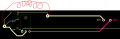
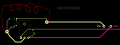
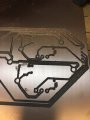
I'm redoing the pcb design with 5 sensors and will post when finished.
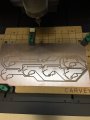
My plan is to use the Carvey to remove copper from a double sided copper coated board. I'm not yet sure how I'm going to get the cut pattern on the backside of the board to align with the pattern on the top side. What are the best practices there?