DNA Robotics
- Joined Jun 13, 2014
- 670

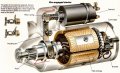
Again from experience I have my doubts about that. The fuel shout off and even the starter solenoid "may" give enough. short movement "kick" or force. But to do what Ben has wanted from the start, it would take a solenoid of around 30 inches long to both support the cue and give the 15 inches of movement he wants. both the fuel solenoid and starter one have only around 3/4" movement, with no control over either the strength or actual travel. And adding a permanent magnet to the plunger only makes things work in both directions, adding nothing more or less to the mix.Just that solenoid, mounted correctly in a cue stick would be good enough for breaking.
Yes, I'm looking to control at least a 15" stroke. A 3/4" stroke from a powerful solenoid would definitely kick a ball, but not in the way I'm hoping. To clarify the vision: I'd like a "pool shot" from this machine to start with a few back and forth short strokes, like a human preparing to shoot, then recoil and thrust forward to hit with controlled strength.But to do what Ben has wanted from the start, it would take a solenoid of around 30 inches long to both support the cue and give the 15 inches of movement he wants. both the fuel solenoid and starter one have only around 3/4" movement,
I can't tell what you're referencing here...That worried me LOL
Nice. Blazed trails are easier to follow. Thank you.Im going to post a stick moving if I can find enough stuff to make it. been looking for the right size pipe
Could you be more specific? A short search show no post changes.The post I was worried about has changed I guess they changed there mind.
Then if that is the expected outcome, a series of solenoid connected together isn't the way to get there. There needs to be a geometry in your 'kicker' that allows variable reluctance to do the work. Once the first ferric part of the moving rod is fully enclosed in the first coil, the second ferric part needs to outside of the next coil. Out side but close enough that that coil can act on it, then the same thing must keep repeating until the full stroke is made. Notice I said "ferric" not "permanent magnet". Other than the cheap/simple large degree movement stepper motor, commonly called a 'can stack motor', no permanent magnet is required in the stepper motor, it's only there to keep one from moving between steps, a 'detent' to hold the last position.Yes, I'm looking to control at least a 15" stroke. A 3/4" stroke from a powerful solenoid would definitely kick a ball, but not in the way I'm hoping. To clarify the vision: I'd like a "pool shot" from this machine to start with a few back and forth short strokes, like a human preparing to shoot, then recoil and thrust forward to hit with controlled strength.


Damn. Really? Well, I guess I'll have to accept that this is better than having the threaded rod, washers and nuts...Carbon fiber IS conductive- you may still have eddy currents flowing.
Tube wall thickness is 1mm. The method I've devised to wrap the coils should make an air gap of 0.5mm between coils and tube OD. Therefore, total distance (in theory) will be 1.5mm between coil and core.What is the tube wall thickness? You want those cores as close as possible to the coils.
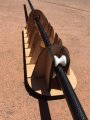
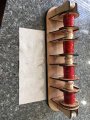
Nice! ... did you have the plywood structure laser cut by a local supplier?The roller and coil supports are ready to be glued. I ended up using more metal than I thought. Each roller has 2 bearings and a steel pin.
View attachment 154521
Thanks! Nope. Mini-Helix 18Nice! ... did you have the plywood structure laser cut by a local supplier?
Whoaaa!!! .... how much did that cost you?Thanks! Nope. Mini-Helix 18
www.epiloglaser.com/laser-machines/legend-laser-series.htm
not my money. $17kWhoaaa!!! .... how much did that cost you?
Bet it wont come off.
Epoxy shrinks as it cures, creating very high pressures.
You need a collapsible mandrel inside, so you can get the core out.
Look at tapered collet designs for inspiration.
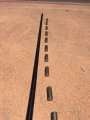
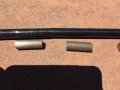
I should have bet you. The carbon fiber tube and the wax paper came out relatively easily.Bet it wont come off.
Epoxy shrinks as it cures, creating very high pressures.
You need a collapsible mandrel inside, so you can get the core out.
Look at tapered collet designs for inspiration.