Facebook
 Google
 GitHub
 Linkedin

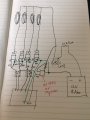
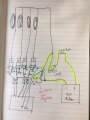
Nice. That's an excellent first attempt. Give yourself a pat on the back. Modelling the driver IC, rather than simply using a pulse voltage source, is pretty ambitious.
You could model the Arduino outputs as pulse voltage sources.
When it comes to running the sim you will find that the generic FETs don't work well, so right-click on them and select 'proper' FETs. The generic NPNs, PNPs and diodes work ok for most non-critical sims.
Those 'A' devices default to 0/1 Volt logic levels, so will need their 'values' set to something else.
As for power connections, give labels (e.g. +V, -V) to the nodes of power source(s) and apply the labels where needed to other nodes in the schematic. It's also helpful to label nodes such as 'in' and 'out', so that plotted traces are easily interpreted.
You could model the Arduino outputs as pulse voltage sources.
When it comes to running the sim you will find that the generic FETs don't work well, so right-click on them and select 'proper' FETs. The generic NPNs, PNPs and diodes work ok for most non-critical sims.
Those 'A' devices default to 0/1 Volt logic levels, so will need their 'values' set to something else.
As for power connections, give labels (e.g. +V, -V) to the nodes of power source(s) and apply the labels where needed to other nodes in the schematic. It's also helpful to label nodes such as 'in' and 'out', so that plotted traces are easily interpreted.
Last edited: