Facebook
 Google
 GitHub
 Linkedin

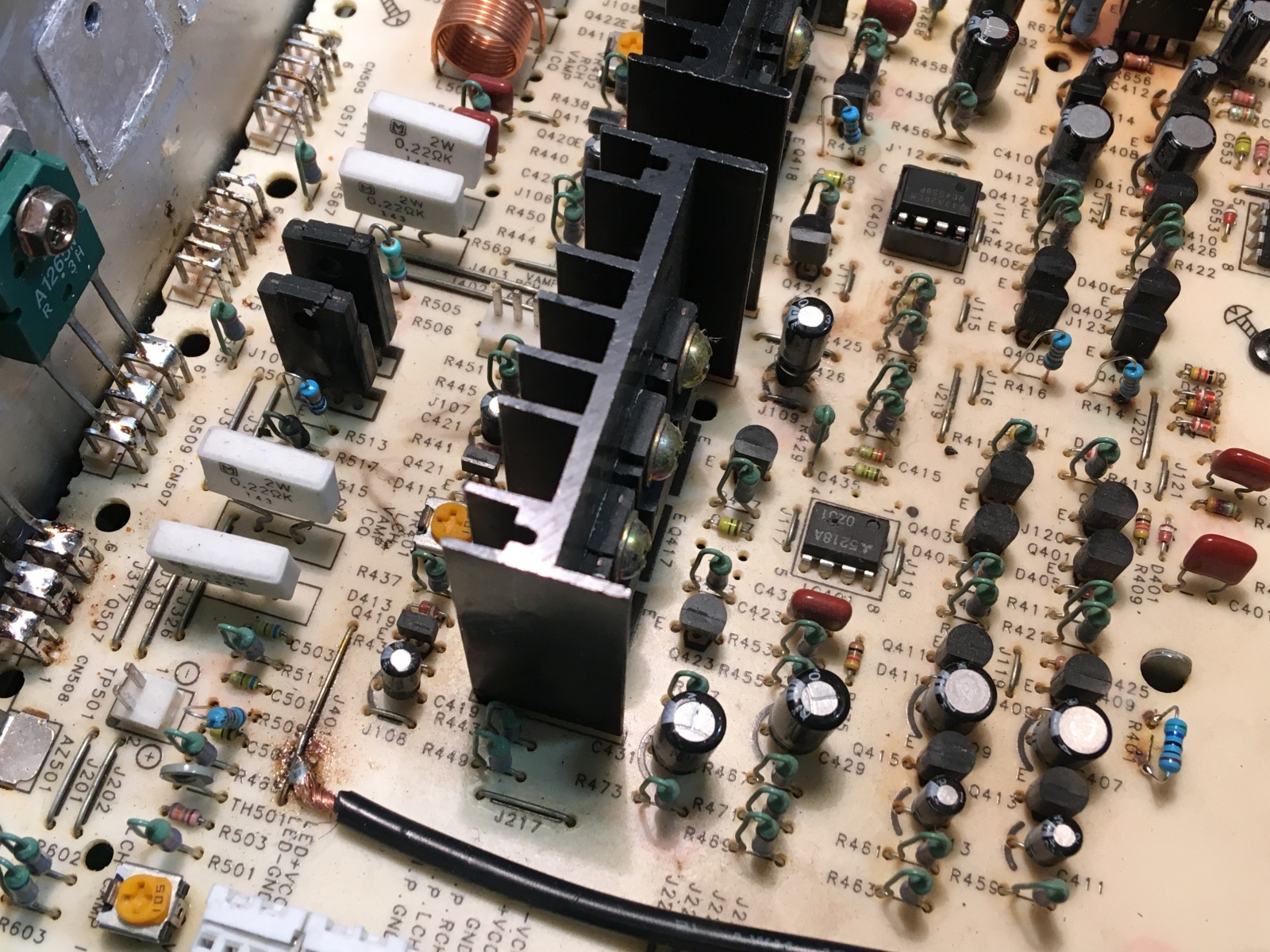
Make a note of the orientation of the VR402 pot labeled RCH VAMP ICQ.
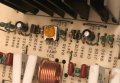
With a small flat screw driver blade, turn VR402 all the way counter clockwise.
Take the following voltage measurements listed below.
Turn VR402 all the way clockwise. Repeat the voltage measurements.
Adjust VR402 until the VAMP RCH test points are close to 0V (if possible) or voltages at R450 and R452 are close to 0V.
VAMP RCH test points are shown in RED below.
What is the number of this 4-pin test point as printed on the PCB? Is it TP401 or TP451?
This is just a preliminary check. If we can manage to find a 0V setpoint, we will come back and adjust this properly.
Repeat the voltage measurements.
D410
D412
R422
R424
R428
R430
R444
R446
R448
R450
R452
R514
+VAMP RCH (shown in RED below)
-VAMP RCH (shown in RED below)
+TP502
-TP502
Edit: added R422 and R424 to the list.
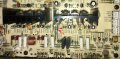
With a small flat screw driver blade, turn VR402 all the way counter clockwise.
Take the following voltage measurements listed below.
Turn VR402 all the way clockwise. Repeat the voltage measurements.
Adjust VR402 until the VAMP RCH test points are close to 0V (if possible) or voltages at R450 and R452 are close to 0V.
VAMP RCH test points are shown in RED below.
What is the number of this 4-pin test point as printed on the PCB? Is it TP401 or TP451?
This is just a preliminary check. If we can manage to find a 0V setpoint, we will come back and adjust this properly.
Repeat the voltage measurements.
D410
D412
R422
R424
R428
R430
R444
R446
R448
R450
R452
R514
+VAMP RCH (shown in RED below)
-VAMP RCH (shown in RED below)
+TP502
-TP502
Edit: added R422 and R424 to the list.

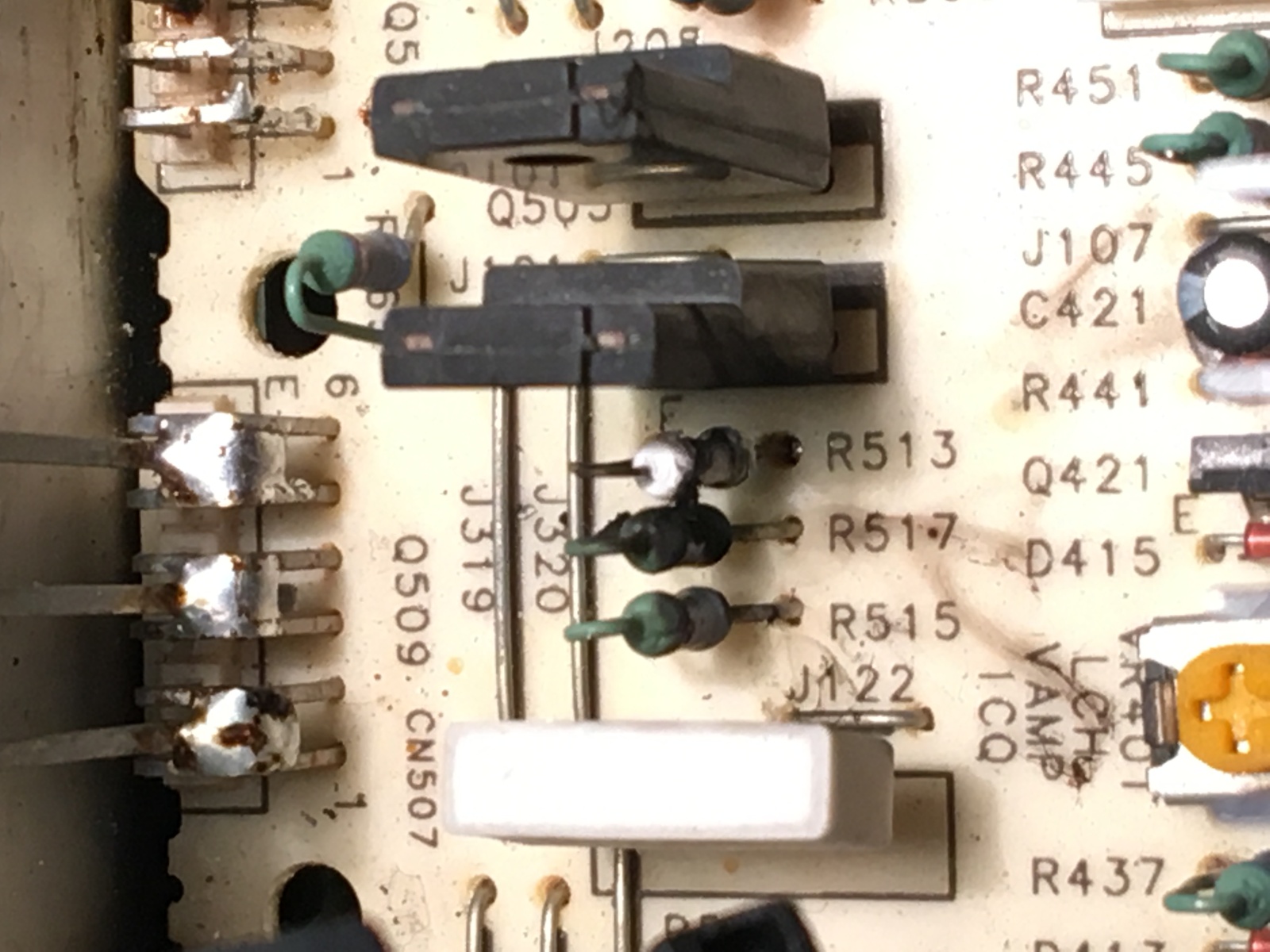
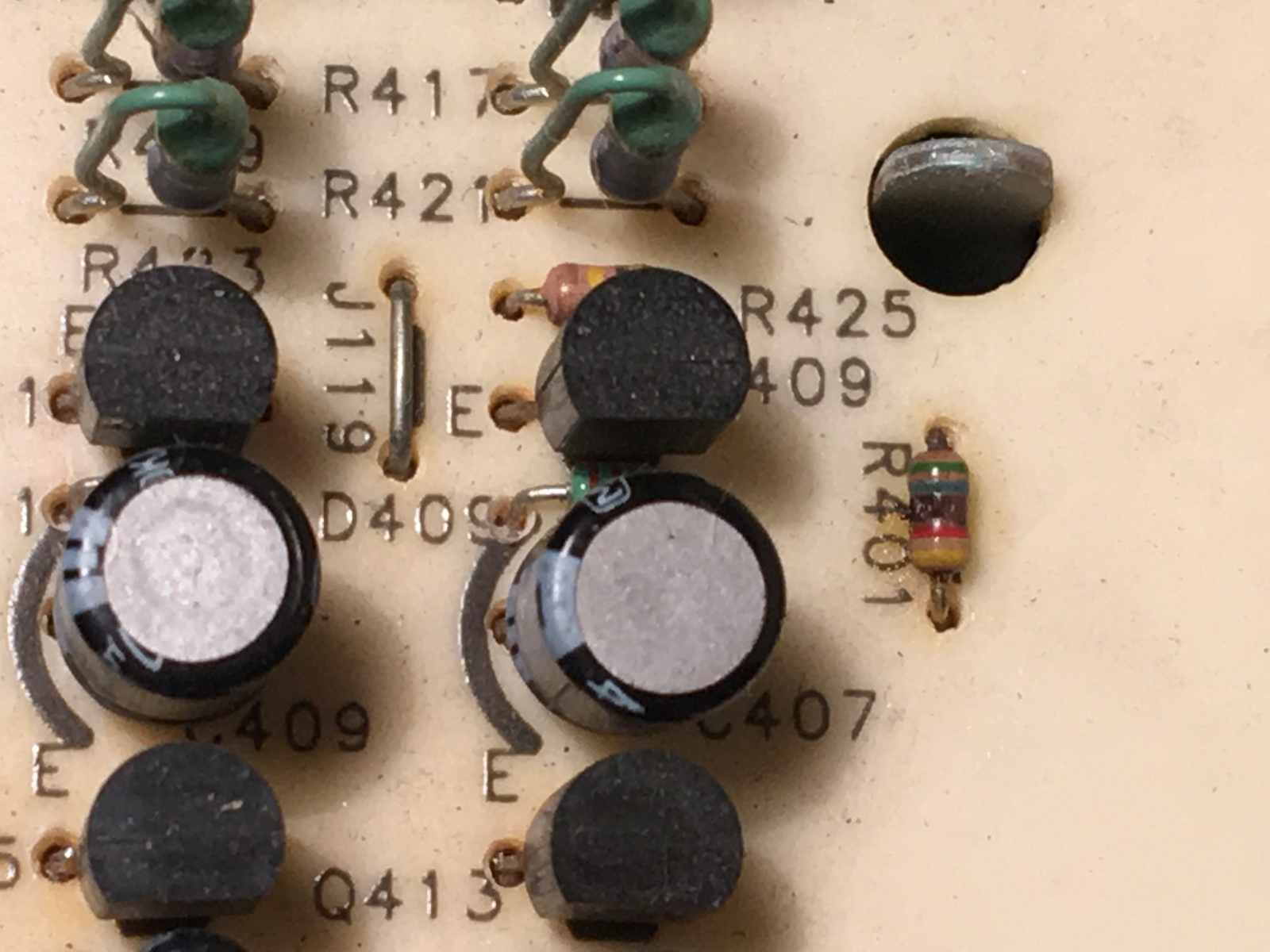
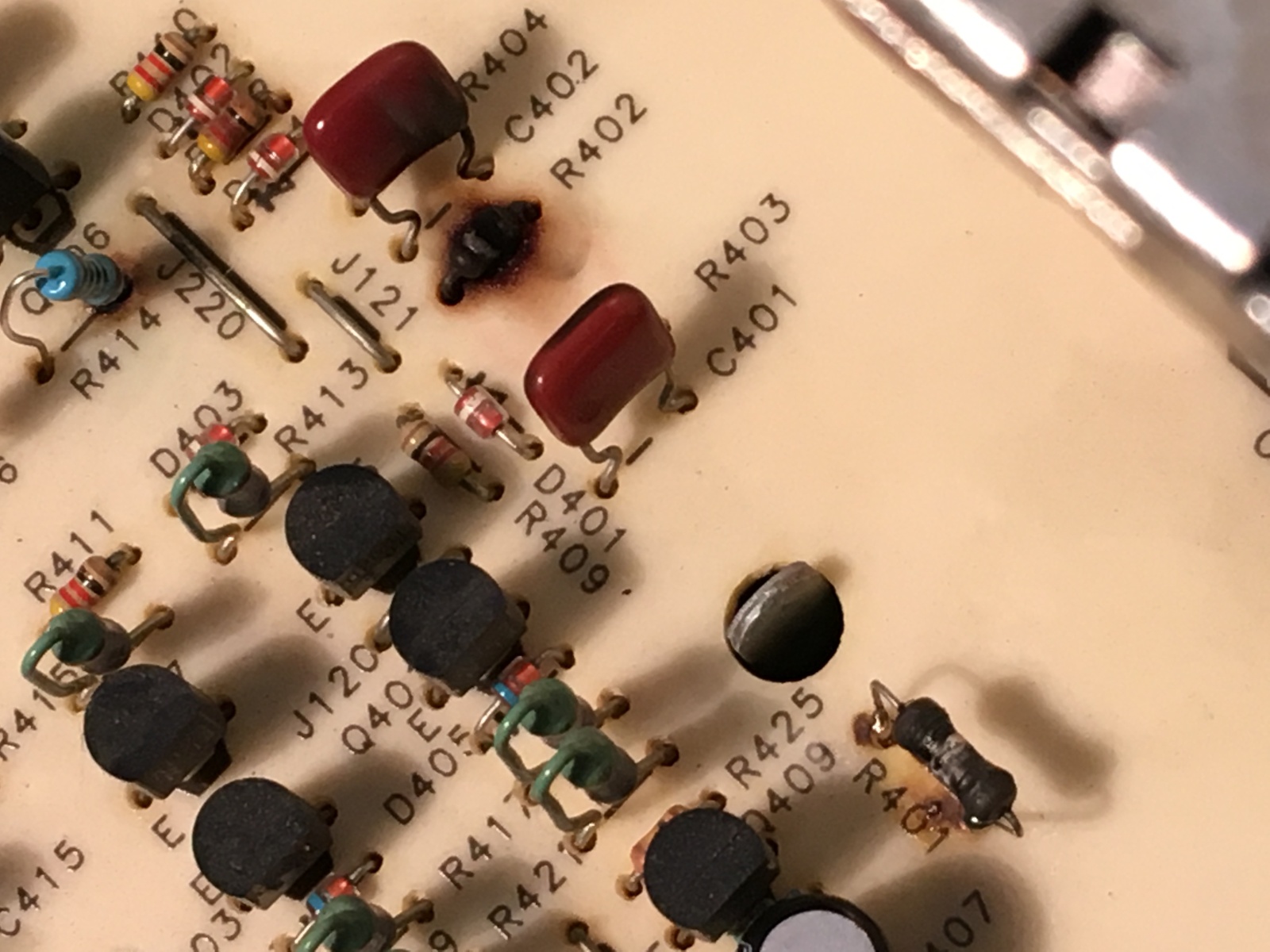
 .. so i turned it off... tried to turn it on again.. then R401 started smoking so i turned it off afraid of what it would burn next...