Smoothing voltage drops when cranking with a capacitor

Thread Starter

jawdoss

Joined Apr 25, 2023
27
Thanks all for the replies and input. I will be back out at this car in the coming weeks and will see how I progress.
I have a few things to try, the preferred option would be the one discussed on this thread.
I will update this thread!
 

Attachments

Last edited:

MisterBill2

Joined Jan 23, 2018
27,624
One more consideration is that there might be an issue with that "ground" connection portion of the circuit. The actual resistance between a connection to vehicle body metal and the battery negative terminal depends on the integrity of many connections within the assembly of the vehicle body, and with an older vehicle may cause problems. Soa connection made back to the battery negative may be worth the effort.
 

Thread Starter

jawdoss

Joined Apr 25, 2023
27
One more consideration is that there might be an issue with that "ground" connection portion of the circuit. The actual resistance between a connection to vehicle body metal and the battery negative terminal depends on the integrity of many connections within the assembly of the vehicle body, and with an older vehicle may cause problems. Soa connection made back to the battery negative may be worth the effort.
Good Shout,
I did test the resistance at multiple areas, but I have every intention to run a dedicated earth to the battery to aid in the trouble shooting process.
 

wraujr

Joined Jun 28, 2022
260
Thanks all for the replies and input. I will be back out at this car in the coming weeks and will see how I progress.
I have a few things to try, the preferred option would be the one discussed on this thread.
I will update this thread!
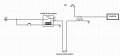
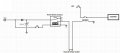
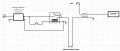
Good diagrams, if you go with the 3rd (stab), you might want to consider also adding the diode and capacitor to the input side of the DC/DC converter to eliminate problems with faster dips in voltage that you may not be seeing with meter and typically there is not a lot of bulk filter capacitance on some of these tiny/inexpensive converters.
BTW, I've had success with this one and it easily handles up to 1A which is conservatively twice your requirement of 0.5A.
https://www.amazon.com/gp/product/B01MQGMOKI/ref=ppx_yo_dt_b_search_asin_title?ie=UTF8&psc=1
Edited: This will not work in your application.

Oh and one more very important consideration, if you go with "stab" approach, your DC/DC converter will be a "parasitic draw" on the battery unless the +12V comes from an ignition switched source.
 
Last edited:

MrSoftware

Joined Oct 29, 2013
2,273
Good diagrams, if you go with the 3rd (stab), you might want to consider also adding the diode and capacitor to the input side of the DC/DC converter to eliminate problems with faster dips in voltage that you may not be seeing with meter and typically there is not a lot of bulk filter capacitance on some of these tiny/inexpensive converters.
BTW, I've had success with this one and it easily handles up to 1A which is conservatively twice your requirement of 0.5A.
https://www.amazon.com/gp/product/B01MQGMOKI/ref=ppx_yo_dt_b_search_asin_title?ie=UTF8&psc=1

Oh and one more very important consideration, if you go with "stab" approach, your DC/DC converter will be a "parasitic draw" on the battery unless the +12V comes from an ignition switched source.
I believe the module you linked is buck only, he's going to need a boost or buck boost.
 

Tonyr1084

Joined Sep 24, 2015
9,744
Been scanning through the comments, not reading them in their entirety. What I gather is that there is nothing more I can add to what's being discussed; except this: If you're using a digital meter to read the voltage during startup you need to know that the DVM only samples the voltage at some rate, which I don't know that rate. A better means of watching the voltage would be to use an Analog meter, one where you see what the voltage is all the time. During startup things can happen faster than you may be able to see accurately, but you may be seeing voltages below 11 volts. The BEST way to track the voltage is to use a scope with memory. But be careful, voltage spikes can be ill tolerated. If you go to an auto parts store and ask them to check your battery during startup they generally can produce a graph that will show the exact voltages during the entire start-up process. That's probably the cheapest way to go.

Something I didn't see delved into was relays and how low their voltages can go before they drop out. IT'S BEEN MY EXPERIENCE that a relay tends to hold once clamped to somewhere around 50% of the rated voltage. So I'd guess at an approximate voltage for the relay to drop out would be 12 x 0.5 = 6V before it drops out. Could be higher, could be lower. I have some SMALL relays that hold all the way down to 30%. I suspect something else is interrupting your relay.
 

crutschow

Joined Mar 14, 2008
38,537
So I'd guess at an approximate voltage for the relay to drop out would be 12 x 0.5 = 6V before it drops out. Could be higher, could be lower. I have some SMALL relays that hold all the way down to 30%. I suspect something else is interrupting your relay.
It's apparently the circuit in the delay relay that drops out at a higher voltage than the mechanical relay itself that's the problem.
 

Thread Starter

jawdoss

Joined Apr 25, 2023
27
Been scanning through the comments, not reading them in their entirety. What I gather is that there is nothing more I can add to what's being discussed; except this: If you're using a digital meter to read the voltage during startup you need to know that the DVM only samples the voltage at some rate, which I don't know that rate. A better means of watching the voltage would be to use an Analog meter, one where you see what the voltage is all the time. During startup things can happen faster than you may be able to see accurately, but you may be seeing voltages below 11 volts. The BEST way to track the voltage is to use a scope with memory. But be careful, voltage spikes can be ill tolerated. If you go to an auto parts store and ask them to check your battery during startup they generally can produce a graph that will show the exact voltages during the entire start-up process. That's probably the cheapest way to go.

Something I didn't see delved into was relays and how low their voltages can go before they drop out. IT'S BEEN MY EXPERIENCE that a relay tends to hold once clamped to somewhere around 50% of the rated voltage. So I'd guess at an approximate voltage for the relay to drop out would be 12 x 0.5 = 6V before it drops out. Could be higher, could be lower. I have some SMALL relays that hold all the way down to 30%. I suspect something else is interrupting your relay.
Yes, I’m going to take my oscilloscope with me and see what it really drops to, I wouldn’t be surprised if it is below 9v at some point.
but just remember, this isn’t a standard relay we are talking about. It seems to be very sensitive to voltage input. I have contacted their technical support to confirm, but yet to hear back.
 

ThePanMan

Joined Mar 13, 2020
923
Tell us what the relay part number is. Someone will find a data sheet and give you some pretty good characteristics on it. Whether it's designed to operate the coil using an AC voltage or a DC voltage. One is not the same as the other. Using a DC relay on an AC circuit can cause chatter. Using an AC relay with DC voltage can lead to overheating. Then there's the rating of the contacts. I'm sure you understand you can't use a 2 amp contact relay on a 20 amp circuit. But do you know you can't use 5VDC on a relay designed to switch 120 volts? Switching AC and DC are also serious factors in a relay. Switching a DC voltage on a relay that wasn't designed to handle that would lead to arcing and failure to shut your circuit off. There's a lot more to a relay than just a remote or low voltage control system.

So I hear you want to hold the relay for approximately 30 seconds beyond starting the car. Perhaps the opposite approach would be easier. Have a time delay from when power comes on. When the relay comes on it opens the "Normally Closed (NC)" contacts. BUT the relay has to be rated to handle 16 volts DC for a prolonged period of time. Car horn relays are not suited for holding a circuit active (or disconnected) because their intended for short intermittent use. Fuel pump relays are designed for continuous service.

Use of a charging cap and a couple resistors and diode should prevent the relay from switching on for some set period of time. The larger the cap and the higher the charging resistor the longer the delay. Conversely, when you shut down, that cap can hold that relay active for long enough for the cap to bleed down. Hence, a second resistor.

And the resistors matter too. They have to be big enough for the current so they don't burn up during the time delay. Also critical in the design is the current rating of the coil itself. Use a resistor big enough in ohms to prevent the relay from triggering until the cap has satisfied its hunger for electrons. Once the cap is satisfied current will begin to flow into the coil. As long as you haven't used TOO MUCH Ohmage the relay will click in.

That's all I got for you.

[edit] you may only need one resistor. Also a flyback diode to quench the back EMF from the coil from doing any harm to the electronics. The coil itself should provide sufficient draining resistance to deplete the charge in the cap fairly quickly.
[end edit]
 

ThePanMan

Joined Mar 13, 2020
923
1682542276702.png
When the key is turned to start the engine the signal goes through to the starter solenoid and begins the start process. Meanwhile the cap is charging up through the resistor. Once the cap has charged sufficiently the relay will kick in. Once the relay kicks in the car can not be started without shutting the key off for long enough for the cap to drain its charge through the coil. Once discharged the starter can again be engaged.

Problem I'm seeing with this approach is that if the car doesn't start on the first attempt, simply waiting five seconds to drain the cap and once again you can start the car.

[edit] For what you want to do, you will need a delay and another "RESET" delay so that it doesn't reset too quickly.

Personally if I tried to start the car and had difficulty I wouldn't want to be locked out for five minutes (as an example) before I can attempt to start the car a second time. On your original premises, start the car then have the starter disabled would mean you need to be able to reset your timer. If you're going to be hiding switches find a creative location for the "KILL" switch and kill the ignition when away from the vehicle.
 

Dodgydave

Joined Jun 22, 2012
11,395
Tell us what the relay part number is. Someone will find a data sheet and give you some pretty good characteristics on it. Whether it's designed to operate the coil using an AC voltage or a DC voltage. One is not the same as the other. Using a DC relay on an AC circuit can cause chatter. Using an AC relay with DC voltage can lead to overheating. Then there's the rating of the contacts. I'm sure you understand you can't use a 2 amp contact relay on a 20 amp circuit. But do you know you can't use 5VDC on a relay designed to switch 120 volts? Switching AC and DC are also serious factors in a relay. Switching a DC voltage on a relay that wasn't designed to handle that would lead to arcing and failure to shut your circuit off. There's a lot more to a relay than just a remote or low voltage control system.

So I hear you want to hold the relay for approximately 30 seconds beyond starting the car. Perhaps the opposite approach would be easier. Have a time delay from when power comes on. When the relay comes on it opens the "Normally Closed (NC)" contacts. BUT the relay has to be rated to handle 16 volts DC for a prolonged period of time. Car horn relays are not suited for holding a circuit active (or disconnected) because their intended for short intermittent use. Fuel pump relays are designed for continuous service.

Use of a charging cap and a couple resistors and diode should prevent the relay from switching on for some set period of time. The larger the cap and the higher the charging resistor the longer the delay. Conversely, when you shut down, that cap can hold that relay active for long enough for the cap to bleed down. Hence, a second resistor.

And the resistors matter too. They have to be big enough for the current so they don't burn up during the time delay. Also critical in the design is the current rating of the coil itself. Use a resistor big enough in ohms to prevent the relay from triggering until the cap has satisfied its hunger for electrons. Once the cap is satisfied current will begin to flow into the coil. As long as you haven't used TOO MUCH Ohmage the relay will click in.

That's all I got for you.

[edit] you may only need one resistor. Also a flyback diode to quench the back EMF from the coil from doing any harm to the electronics. The coil itself should provide sufficient draining resistance to deplete the charge in the cap fairly quickly.
[end edit]
If you read posts#1 and 13 you'll know..
 

Thread Starter

jawdoss

Joined Apr 25, 2023
27
View attachment 292889
When the key is turned to start the engine the signal goes through to the starter solenoid and begins the start process. Meanwhile the cap is charging up through the resistor. Once the cap has charged sufficiently the relay will kick in. Once the relay kicks in the car can not be started without shutting the key off for long enough for the cap to drain its charge through the coil. Once discharged the starter can again be engaged.

Problem I'm seeing with this approach is that if the car doesn't start on the first attempt, simply waiting five seconds to drain the cap and once again you can start the car.

[edit] For what you want to do, you will need a delay and another "RESET" delay so that it doesn't reset too quickly.

Personally if I tried to start the car and had difficulty I wouldn't want to be locked out for five minutes (as an example) before I can attempt to start the car a second time. On your original premises, start the car then have the starter disabled would mean you need to be able to reset your timer. If you're going to be hiding switches find a creative location for the "KILL" switch and kill the ignition when away from the vehicle.
It is not so much that I want to have a timed window from initial key turn, more so a timed window of opportunity from a momentary switch being pressed. This will be hidden, and only known to the customer, acting as another perquisite much like a park/neutral switch.
 

MrSoftware

Joined Oct 29, 2013
2,273
It is not so much that I want to have a timed window from initial key turn, more so a timed window of opportunity from a momentary switch being pressed. This will be hidden, and only known to the customer, acting as another perquisite much like a park/neutral switch.
I think I get what you're doing. For those who don't; it's a security device. A hidden button. Normally the starter solenoid is disabled, they key will not start the car. Pressing a hidden button will enable the starter solenoid for ~30 seconds. It will not activate the starter, just enable the solenoid. Now the driver has a 30 second opportunity to start the car using the key as normal. After 30 seconds, the starter solenoid is again disabled. A thief won't know about the button.

What you need is a one shot timer relay. There are a number of them out there, I don't know if this one is any good and the timer is only 10 seconds, but I think this is the general idea of what you're looking for:

https://www.amazon.com/WALFRONT-Tim...s=one+shot+timer+relay&qid=1682599413&sr=8-20

Google around, I'm sure there must be an existing off-the-shelf solution available. Or if this one is otherwise a good fit, maybe you can swap the POT for one with a higher resistance for longer delay.
 

wraujr

Joined Jun 28, 2022
260
Take it to the next level and add wireless fob.
https://www.amazon.com/dp/B08F7CTDWT?psc=1&ref=ppx_yo2ov_dt_b_product_details
You would wire the wireless receiver's relay contacts in parallel with your momentary pushbutton switch.
You would then hide momentary switch in extremely hard place to reach to be accessed in emergency situation such as fob battery dies.
User procedure would then be:
(a) Turn ignition key/switch to ON position (wireless receiver, TIM05, etc. are now powered)
(b) User presses fob button to pulse INPUT on TIM05 and starting 30 sec timer and allowing engine crank.
(c) User cranks engine using ignition key/switch.
Just a thought.
 

crutschow

Joined Mar 14, 2008
38,537
Thinking about it, I don't understand the reason for the delay.
If the person knows he needs to push the switch to start the car, then what's to prevent him from doing it again after the delay times out?
How does that delay add to the deterrent over just using a simple latch operated by the switch?
 
Last edited:

MrSoftware

Joined Oct 29, 2013
2,273
Thinking about it, I don't understand the reason for the delay.
If the person knows he needs to push the switch to start the car, then what's to prevent him from doing it again after the delay times out?
How does that delay add to the deterrent over just using a simple latch operated by the switch?
The button is hidden. The bad guy trying to steal the car doesn't know the button exists and therefore cannot start the car. A 30 second delay instead of an on/off switch is for convenience. The car owner does not have to remember to flip the switch off on the way out of the car.
 

crutschow

Joined Mar 14, 2008
38,537
The button is hidden. The bad guy trying to steal the car doesn't know the button exists and therefore cannot start the car. A 30 second delay instead of an on/off switch is for convenience. The car owner does not have to remember to flip the switch off on the way out of the car.
Still don't see a reason to have the delay, which requires an expensive delay relay.
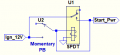
Just have the button connected to the ignition switch, which powers a standard relay connected as a latch, that allows the car to start (example circuit below).
When the ignition is turned off, the relay loses power and reverts to off, so the car won't start after the ignition has been off and then turned back on, until the button is momentarily pushed to latch the relay.

1682619403184.png
 
Last edited:

MrSoftware

Joined Oct 29, 2013
2,273
Still don't see a reason to have the delay, which requires an expensive delay relay.
Just have the button connected to the ignition switch, which powers a standard relay connected as a latch, that allows the car to start.
When the ignition is turned off, the relay loses power and reverts to off (example circuit below), so the car won't start after the ignition has been off and then turned back on, until the button is momentarily pushed to latch the relay.

View attachment 292942
That's not a bad idea.
 

Thread Starter

jawdoss

Joined Apr 25, 2023
27
Still don't see a reason to have the delay, which requires an expensive delay relay.
Just have the button connected to the ignition switch, which powers a standard relay connected as a latch, that allows the car to start.
When the ignition is turned off, the relay loses power and reverts to off (example circuit below), so the car won't start after the ignition has been off and then turned back on, until the button is momentarily pushed to latch the relay.

View attachment 292942
What would happen if he was to push the button and then not start the vehicle for whatever reason? Will it stay in that state until it’s then started and shut down?
 
Top