Facebook
 Google
 GitHub
 Linkedin

Hi All,
I have an Arduino sending digital signals through transistors, driving some DIY motor coils, simple:
Arduino digitalWrite() -> transistors -> coils.
It works great, plenty of force and no fire. V-in is 5 volts and each coil is 2 ohms, so about 2.5 amps per coil.
One problem though is resonance. The rotor often overshoots the coil too quickly and gets pulled backward.
Looking into this, I found microstepping is a common solution. So now I want to do:
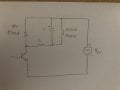
Arduino -> PWM -> transistor -> (low pass R+capacitor?) -> coil.
But a raw 500hz PWM signal is going to feed a lot of HF noise into the coil, inducing unwanted voltage spikes.
So the question is, what goes between the transistor and the coil, to smooth out the PWM into a more gradual wave? If it's just an RC filter like above, what values are reasonable? Highest priority is to avoid fire.
(BTW yes the circuit is protected by flyback diodes, but still...)
Thanks,
John
I have an Arduino sending digital signals through transistors, driving some DIY motor coils, simple:
Arduino digitalWrite() -> transistors -> coils.
It works great, plenty of force and no fire. V-in is 5 volts and each coil is 2 ohms, so about 2.5 amps per coil.
One problem though is resonance. The rotor often overshoots the coil too quickly and gets pulled backward.
Looking into this, I found microstepping is a common solution. So now I want to do:
Arduino -> PWM -> transistor -> (low pass R+capacitor?) -> coil.
But a raw 500hz PWM signal is going to feed a lot of HF noise into the coil, inducing unwanted voltage spikes.
So the question is, what goes between the transistor and the coil, to smooth out the PWM into a more gradual wave? If it's just an RC filter like above, what values are reasonable? Highest priority is to avoid fire.
(BTW yes the circuit is protected by flyback diodes, but still...)
Thanks,
John
Last edited: