Facebook
 Google
 GitHub
 Linkedin

Wuerstchenhund
- Joined Aug 31, 2017
- 189
You don't need 5 times per sample to reconstruct a valid waveform, you need more than two. As long as the signal is BW limited, a sample rate that is slightly higher than 2x the highest frequency (Nyquist-Shannon) to sample is completely sufficient.SAMPLE RATE
=================
An oscilloscope does just one thing- it looks at voltage levels so many times per second. In order for you to capture enough samples, your scope should be able to capture at least 5 data points for the fastest signal you ever intend to examine.
Let's look at a 32MHz MCU, just as an example. Brand doesn't matter- clockrate is all you're interested in.
32MHz means, that the MCU has a hearbeat pulse every 1/32000000th of a second. How fast is that? Well, that's 0.00000003125 seconds per heartbeat/pulse, or 31.25ns per pulse. Divide that by 5, at a minimum so the scope can read at least 5 samples to display that waveform with some cleanness- and that means the scope should be able to sample at atleast 6.25ns-- or 160MHz.
For the scopes discussed, the Rigol DS1054z has a sample rate of 1GSa/s in single channel mode, 500MSa/s in dual channel mode and 250MSa/s in 4 channel mode, which is more than sufficient to get a valid reproduction of a 100MHz sine wave. The Siglents are the same or better.
While I agree that older DSOs can be a great alternative, this isn't really true for the bottom of the barrel price range. For the <$350 a brand new Rigol DS1054z goes for you will have a hard time to find a 2nd hand DSO that even comes close to it's performance and capabilities, and your $200 TDS360 doesn't look like such a great bargain any more when considering it's ridiculously small sample memory (1kpts) which means your fancy 1GSa/s sample rate (and with it its useable BW) will drop like a rock on longer time bases, it's limited feature sets (no serial decode for a start), it's awfully slow processing making even low resolution FFTs painful, or the simple fact that it's a over 25 year old instrument which is likely to fail sooner rather than later.Don't be afraid of purchasing an old scope either- Tektronics, Agilent, Lucent, all made fine scopes in their day. Finding a TDS360 for $200.00 could give you all the scope you ever need.
The TDS 360 wasn't great back when it was new, and unlike wine it doesn't get better with age.
Of those $200, half of it was just for the Tektronix name, which may be of value to you but for the OP I'd recommend to buy after performance not for some faded brand image.
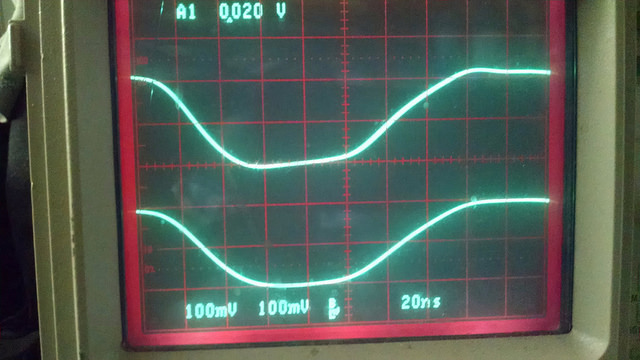
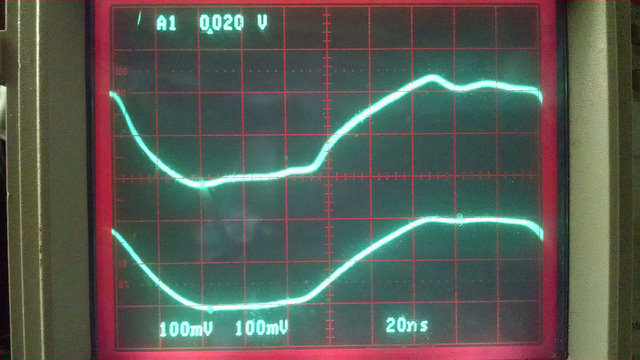
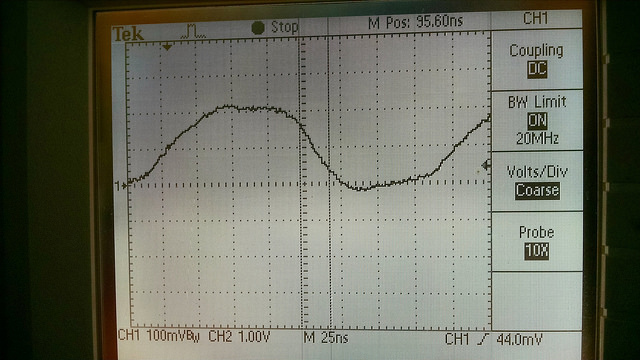
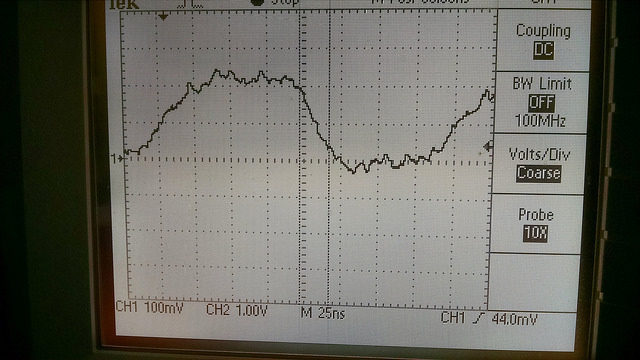
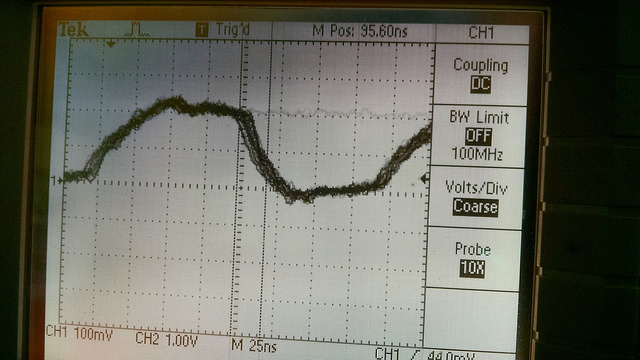
That's nonsense, sorry. I know it's still common belief amongst fans of old analog scopes but there is no 'clean up' on digital scopes, which if used correctly show the real waveform with a precision in accordance with its specs (which are worlds above those of analog scopes). In fact, there's a certain amount of 'clean-up' with an analog scopes, as they tend to hide signal noise in the gloming phosphor trace (which is why a trace on an analog scope often looks cleaner, while on a DSO it looks noisy).This is one of those areas where people say digital is better, but the main difference is that with analog, you see the actual waveform, not 'cleaned up'.
Last edited:


 Rather, I'm hoping to get a better understanding of what features I should be looking at in my product research.