Facebook
 Google
 GitHub
 Linkedin

Wuerstchenhund
- Joined Aug 31, 2017
- 189
The original signal isn't BW limited but the input signal into the ADC is, because the scope's inputs are BW limited.Oversampling. Keep in mind Nyquist applies to band limited signals.
Often not the case in digital work, eg. pulse fidelity considerations,
signals not band limited with many harmonics >> fundamental.
The 5x 'rule' is used to essentially compensate for the difference in spec'd BW (which also is only to the -3dB point) and in real BW (which is larger, sometimes only slightly, sometimes a lot). Besides, sample rates are stepped (often in multiples of 2), so the next lower sample rate may already be insufficient.
I'd rather use the real BW, even more so as on many better scopes you can setup and define your own filters so the actual BW can be variable.
Also keep in mind that the spec'd sample rates aren't fixed, they are maximums! Which means depending on your settings and available memory your scope may not be able to achieve them. That means while the analog BW is the same, the discernible BW may have now dropped more or less dramatically, and any frequency component above the discernible BW will show as aliasing.
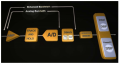
Many DSOs offer oversampling as a means to increase resolution (HiRes modes) or reduce noise (averaging). One thing to remember is that with oversampling the discernible BW drops dramatically, increasing the chances for aliasing.Some other comments on oversampling, SNR for example.
https://www.silabs.com/documents/public/application-notes/an118.pdf
http://www.ti.com/lit/an/slaa594a/slaa594a.pdf
Which is why these are only optional modes.
But if you really need higher than 8bit resolution then buying a real high definition scope would be the better option than relying on HiRes modes.

 .
.