Ok.
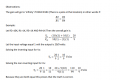
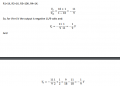
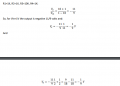
Vin/R1 = -Vout/R2
Vout/Vin = -R2/R1
Get it now?
Your answer is “Something in the middle?”
The correct answer is “indeterminate”.
This is an analog servo mechanism. It will find its own solution by automatically adjusting V- to some very small value.
Look at the current through the resistors,
Knowing that of the currents must be such as to keep V+= V- (for an ideal op amp) will show what the output must be for any input.
(The finite Aol of a real op amp will affect the voltage slightly but not enough to have a significant effect in most actual circuits).
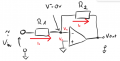
So for the inverting op amp (hand drawn circuit in post #1) IR1 = Vin / R1 for V-=0.
This means the output must be Vout / R2 = - IR1 (to keep V- at 0V).
So the output must have the opposite polarity of the input for either a positive or negative input.
Understandable.
Calculating Vout/Vin knowing that V- = 0V is simple.
I wanted to try understanding it using the equation from the beggining : Vout = Aol(V+ - V-). That was one of my goals. Second one was why if we calculate the gain for positive feedback then it is incorrect. Also calculating V+ and V- like in the second picture on the post#1.
Look at the current through the resistors,
Knowing that of the currents must be such as to keep V+= V- (for an ideal op amp) will show what the output must be for any input.
(The finite Aol of a real op amp will affect the voltage slightly but not enough to have a significant effect in most actual circuits).
So for the inverting op amp (hand drawn circuit in post #1) IR1 = Vin / R1 for V-=0.
This means the output must be Vout / R2 = - IR1 (to keep V- at 0V).
So the output must have the opposite polarity of the input for either a positive or negative input.
Why it doesn't apply ? It's just the fact why it doens't work.
oh and what is wrong then with the calculations for V+ and V- ? Or maybe more like Vout. Because there is also calculated for double feedback.
Oh and PS. If I had positive feedback Vin/Vout can be also calculated assuming that V- = V+ but we say that it doesn't work like that, even though it is calculated. hmmm
No, it's not "calculated" correctly.
The problem seems to be, you are blindly trying to apply equations (sometimes incorrectly), without any real understanding of how the circuit works.
If you understand how the circuit works, then the equations will become self-evident and you can derive them yourself.
If you are unable to do that, then I don't know how we can further help you, since all we seem to be doing is going in circles.
where
Ao is the open loop gain (typically a large number such as 100,000 to 10,000,000)
Vp = the voltage at the non-inverting input
Vn = the voltage at the inverting input.
Furthermore, the current that flows into or out either input is very, very small (nA scale) and, in most circuits, can be ignored.
So let's say that we have an opamp with an abnormally low open loop gain, such as only 10,000.
Let's see what happens in your original circuit:
Let's make R1 = 10 kΩ and R2 = 50 kΩ and let's make Vin = 2 V.
Using the assumption that Vn (what you call V-) is 0 V (i.e., exactly equal to Vp (what you call V+), we would get a current I1 of
I1 = (Vin - Vn)/R1 = (2 V - 0 V) / 10 kΩ = 200 µA
Since no appreciable current flows into (or out of) the opamp input, all of this current must flow through R2.
I1 = 200 µA = (Vn - Vout) / R2
This means that
Vout = Vn - I1·R2 = 0V - (200 µA)(50 kΩ) = -10 V
In general
Vout = Vin · (-R2/R1)
Now, let's look at things another way.
Vout = Ao*(Vp - Vn)
With a gain of 10,000, what does Vn need to be in order to be -10 V?
Vn = Vp - Vout/Ao
Vn = 0 V - (-10V / 10,000) = 1 mV
So there only needs to be a millivolt difference between the two input voltages -- and this is for an opamp with an really poor open loop gain. For actual opamps, that is more likely to be only a few tens of microvolts. Another thing to consider (which will be important when we talk about positive feedback situations) is that if the difference is much more than this, the output of the opamp will saturate near the supply voltage levels. For instance, if the supply voltages are +/-15 V, then the differential input voltage even for our low-gain opamp only needs to be above 1.5 mV to rail the output.
Now, let's see why the output is at (or very, very near) -10 V and stays there. This is where negative feedback comes in.
First, let's see what the voltages and currents really are:
So what happens if the output were to change and go slightly less negative from -9.9940 V to, say, -9.9900 V?
Now the current would decrease to 199.83 µA and that would make Vn become 1.667 mV, which would make the opamp want to output -16.67 V.
But as soon as the output started moving more negative, the voltage at Vn would start dropping from 1.667 mV back toward 1 mA and the opamp would now want to output something closer to -10 V.
The same thing happens if the output were to, for some reason, go slightly more negative -- the voltage and Vn would change such that the opamp would drive the output back toward -10 V.
That is the beauty of negative feedback.
But with positive feedback, the opposite happens. A small change in the output will result in a change at the opamp inputs that drives an even larger change, in the same direction, at the output. This drives an even bigger change at the input and this continues until the output of the opamp saturates at one of the rails. There are situations, such as a comparator (or in digital logic circuits), where this is exactly the behavior we want.
Why it doesn't apply ? It's just the fact why it doens't work.
oh and what is wrong then with the calculations for V+ and V- ? Or maybe more like Vout. Because there is also calculated for double feedback.
Oh and PS. If I had positive feedback Vin/Vout can be also calculated assuming that V- = V+ but we say that it doesn't work like that, even though it is calculated. hmmm
This might be true why I shouldn't calculate the V+ and V-.
It's more like why in the negative feedback it is stable but in positive not. Magic power ?
Because for both negative and positive feedback I can calculate the Vin/Vout (which is a gain as I know) right ?
But as soon as the output started moving more negative, the voltage at Vn would start dropping from 1.667 mV back toward 1 mA and the opamp would now want to output something closer to -10 V.
The same thing happens if the output were to, for some reason, go slightly more negative -- the voltage and Vn would change such that the opamp would drive the output back toward -10 V.
It's more like why in the negative feedback it is stable but in positive not. Magic power ?
Because for both negative and positive feedback I can calculate the Vin/Vout (which is a gain as I know) right ?
No magic. It's like setting a marble at the bottom of a bowl or on top of a ball. In both cases you can find the position that can sit there and be happy. But if it is disturbed away from that position, the bowl provides negative feedback such that a movement away from the equilibrium position will result in forces that move it back toward that position. But when sitting on top of a ball, any movement away from equilibrium will result in forces that drive it further away from equilibrium.
In an opamp circuit, feedback means that the actual opamp output influences the voltage at the opamp's inputs. So changes in output voltage change the input voltage. Those changes can either result in the output voltage being driven back in the direction it came, or drive it further in the direction it was going.
But as soon as the output started moving more negative, the voltage at Vn would start dropping from 1.667 mV back toward 1 mA and the opamp would now want to output something closer to -10 V.
You are right.
Because I'm trying to understand it using the statements I've mentioned before.
something like it must work this way, but why it doesn't work this way ?
Maybe because I am stuck to one result which are in the picture from Post#1.
I'm trying to find the answear why positive is going into saturation even though it is possible to calculate closed loop gain (Vin/Vout) like in negative feedback. There must be a reason behind it right ?
Like difference in V- and V+. Like here: Vout = Ao*(Vp - Vn)
Something that is universal.
Also I've received answears like : "even though for positive feedback when Vin is connected to positive input of OP Amp the Output must be positive but is negative."
No magic. It's like setting a marble at the bottom of a bowl or on top of a ball. In both cases you can find the position that can sit there and be happy. But if it is disturbed away from that position, the bowl provides negative feedback such that a movement away from the equilibrium position will result in forces that move it back toward that position. But when sitting on top of a ball, any movement away from equilibrium will result in forces that drive it further away from equilibrium.
hmmmm.
I don't know maybe I'm just stupid. But just saying that it must work like that I don't know.
I thought that it is related to Vp and Vn. I received an information like : "even though for positive feedback when Vin is connected to positive input of OP Amp the Output must be positive but is negative.". I don't know why is it like that.
Because closed loop gain can be also calculated for positive feedback, but don't know why it isn't stable. what is the reason ? Vn and Vp ? Because Vout isn't positive even though I connected Vin to positive input of Op Amp ? What is the reason ?
It is a continual process. As soon as the output starts to move away from the stable value, the input to the opamp changes, which results in the output of the opamp changing, which results in the input to the opamp changing, and so on. To illustrate this, we pick an arbitrary excursion of Vout in one direction and show that the result will be Vout being forced to change in the other direction, thus indicating negative feedback.
The more proper way to show it is to calculate the derivative of the output as a function of a perturbation in the output (or some other parameter).
It is a continual process. As soon as the output starts to move away from the stable value, the input to the opamp changes, which results in the output of the opamp changing, which results in the input to the opamp changing, and so on. To illustrate this, we pick an arbitrary excursion of Vout in one direction and show that the result will be Vout being forced to change in the other direction, thus indicating negative feedback.
The more proper way to show it is to calculate the derivative of the output as a function of a perturbation in the output (or some other parameter).
Okey so how does it look for positive and negative feedback ?
If both of them can have stable state V+ = V- and in both of them can have closed loop gain.
Also what do you think of an answear I've also received about positive feedback ? : "even though for positive feedback when Vin is connected to positive input of OP Amp the Output must be positive but is negative." Because it was for this moment :
Closed loop gain calculated but it will be still saturated.
When Vin is equal 1V.
Or a different example where there is only Op amp with positive feedback and with some resistors. The closed loop gain can be calculated, the V+ = V- can be calculated and they (in math) will be equal.
So what is making him go unstable? if not V- = V+ or this equation Vout = Ao*(Vp - Vn), or not because Vin is 1V and plugged to positive input results in negative output then what ?
Yes.
And if you look at the voltage polarities you will see that it is not possible for the circuit with positive feedback to be stable with the output at other than one of the rail voltages.
That's what you are ignoring.

 Facebook
 Google
 GitHub
 Linkedin



 Same thing.