MOSFET Positive side switching circuit

crutschow

Joined Mar 14, 2008
38,535
The solution is either getting a stronger PNP (not really needed)
A stronger PNP does not limit the current, which would then likely zap the Zener.
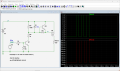
I simulated the suggested topology, but I see spikes of 250mA @ Q2's collector node. What am I missing?
Understanding?
If you look at M1's gate current you will see the same current spike.
It's the current for the transfer of the MOSFET's large gate charge (19nC for the MOSFET shown) as it is rapidly turned on.
Will wait for crutschow to finalise his modification if any. Then will try it out.
No modification needed that I'm aware of.
 
Last edited:
That was insightful.

I havent tried out the crutschow's modified Zener moved to the drive transistors circuit yet. I am waiting for any other changes that may be suggested in that circuit then I will try it out.

Without that modification I used a 2.2 k resistor between the collector of Q3 and ground. This is what happened:

It worked perfectly for about 3 to four minutes without any issues. Then the switching stopped. Here is what I found. The diode is shorted and the source and drain of the MOSFET is shorted. Think we are missing something here.

Will wait for crutschow to finalise his modification if any. Then will try it out.
Sorry for the loss of MOSFET. Before I or anyone can help you out, they need to know more about the inductive load, and more detailed observation. Since you did not mention "MOSFET was too hot during the test before it died" I do not suspect partial / weak gate drive was the issue, unless you did not check the MOSFET to see if it was getting increasingly hot or it was just warm and suddenly died. Do you have a flyback diode for your inductor? How much current passes thru it when it is on ?
 

crutschow

Joined Mar 14, 2008
38,535
Try this circuit. Its simple and provides fast switching.
My sim shows a MOSFET turn-off time of about 1µs, which is not particularly fast.
Reducing the value of R3 to 1kΩ significantly speeds it up to about 200ns.
Also note that the power dissipated in the Zener when the MOSFET is on is about 500mW.

Substituting a diode for the PNP transistor is not a significant reduction in complexity or parts cost.
 

eetech00

Joined Jun 8, 2013
4,709
My sim shows a MOSFET turn-off time of about 1µs, which is not particularly fast.
Reducing the value of R3 to 1kΩ significantly speeds it up to about 200ns.
Agreed. but 1us is plenty fast for 2Khz signal. TS can change it if desired.

Also note that the power dissipated in the Zener when the MOSFET is on is about 500mW.
Noted.

Substituting a diode for the PNP transistor is not a significant reduction in complexity or parts cost.
The circuit is simpler than previous post. Up to the TS.
 

Thread Starter

sab201

Joined Nov 18, 2023
297
Sorry for the loss of MOSFET. Before I or anyone can help you out, they need to know more about the inductive load, and more detailed observation. Since you did not mention "MOSFET was too hot during the test before it died" I do not suspect partial / weak gate drive was the issue, unless you did not check the MOSFET to see if it was getting increasingly hot or it was just warm and suddenly died. Do you have a flyback diode for your inductor? How much current passes thru it when it is on ?
Yes I do have a flyback diode. The current was 3 Amperes. The MOSFET was not too hot since it was switching at 0.1 Hz. Anyways not a problem loss of MOSFET is not an issue. I have more spares to try out.
 

eetech00

Joined Jun 8, 2013
4,709
While I suppose the substitution of a 2-terminal device for a 3-terminal device is simpler, but not by much. :rolleyes:
Well...there is also the calculations that go along with the 3-term device. More complexity.
To you it's insignificant, but to others it may be significant.
 
Yes I do have a flyback diode. The current was 3 Amperes. The MOSFET was not too hot since it was switching at 0.1 Hz. Anyways not a problem loss of MOSFET is not an issue. I have more spares to try out.
If you use a very large heatsink, it can mask the circuit design problems such as insufficient gate voltage. In such cases, the internal metal oxide layer of the FET gets stressed without heating the heatsink. 3A should be comfortable for that MOSFET and the flyback protects the circuit from high voltage kick back to the circuit.
Since you are testing with such low frequency, a simple voltmeter can show the your gate voltage when it is "ON" and it should be at least 10v, measuring from high rail to gate or 50v to 45v from ground to the gate during "ON" period. Since it works for sometime before it fails, I would recommend measuring you gate voltage the moment you power the circuit, before testing the main project (those series of windings etc.)
The fact the both zener and MOSFET died at the same time, points more toward voltage kick back. Insufficient gate voltage can kill the MOSFET but not the zener. If there was a war between the PNP and the zener, one of the two would have died and shorted but the MOSFET should have remained unaffected. When the Zener shorts out, it completely turn off the MOSFET, so it would not even conduct any current to be affected.
 

Thread Starter

sab201

Joined Nov 18, 2023
297
The fact the both zener and MOSFET died at the same time, points more toward voltage kick back. Insufficient gate voltage can kill the MOSFET but not the zener. If there was a war between the PNP and the zener, one of the two would have died and shorted but the MOSFET should have remained unaffected. When the Zener shorts out, it completely turn off the MOSFET, so it would not even conduct any current to be affected.
Yes that could be because of voltage kickback. I found some loose connection in the variable resistor wires due to overheat. I corrected it. It could be because of loose contacts. Thanks for the troubleshooting.
 
Yes that could be because of voltage kickback. I found some loose connection in the variable resistor wires due to overheat. I corrected it. It could be because of loose contacts. Thanks for the troubleshooting.
You are welcome. I also recommend using a "dummy load" like a lightbulb that is rates 110v and replace it with the inductor. Generally, any resistive load is much safer for the MOSFET than an inductor. Then run the circuit and measure the gate voltage as in post #113 and also feel the components like that zener and that PNP for a few minutes. This eliminates one big suspect from the detective job.
 

Thread Starter

sab201

Joined Nov 18, 2023
297
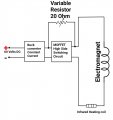
I think I found the problem. The circuit looks like this with the MOSFET switching circuit in it.

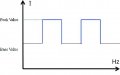
sketch-1773510058158.jpgThe waveform of the current through the load looks like this:

sketch-1773509910271.jpgWhen the MOSFET is OFF the current flows through the variable resistor and when the MOSFET is ON the current passes through the MOSFET bypassing the variable resistor.

I used to do adjustments in the variable resistor when the MOSFET is switching ON and OFF. Nothing went wrong at low supply voltages of 36 Volts. But when I am using 60 Volts and a current of 3 A, when I adjust the variable resistor during operation, it kills the MOSFET. So everytime I did it, I lost one MOSFET. In crutschow's modified circuit I lose only the MOSFET, the diode is safe. But in the previous circuit both the MOSFET and the diode is damaged while doing this.

So the problem was that I was adjusting that variable resistor during switching operation and that kills the MOSFET.

Now I do it safely with the MOSFET OFF and then adjusting the variable resistor. I suppose this was the problem. I don't understand why it was not a problem at lower voltage and currents.
 
You said previously that your max current was 3A. With what I see now, the switching is not doing anything because I=V/R which returns I=60/20= 3!! Your entire current goes thru that variable resistor. In addition, if the resistor is always there, your inductor is always saturated and there is nothing to measure/observe about the inductor.
 
Top