Facebook
 Google
 GitHub
 Linkedin

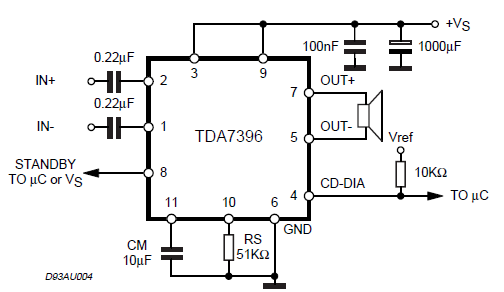
The supply was 16V in post #305. Now you have the TDA7396 bridged amplifier using the absolute maximum supply of 18V which produces a little more power and a lot more heat.Yes. And in an earlier post it was just fine, what changed?
Its datasheet shows a graph of power into a 4 ohm speaker vs supply voltage. When the distortion is 1% (many people can hear it) the power is 27W and with 18V the power is about - (dangerous, they do not show it), I guess about 32W. Then if it is not bridged its output power with an 18V supply is 32/3.5= 9.1W with 1% distortion or about 7W with low distortion.If you look at AG's post #318 now all of a sudden it's 27W or 40W. If you use that formula "which I know is correct" then the actual watts are 6.65W with 18V
Don't forget that a bridged amplifier almost doubles the voltage swing across a speaker which almost doubles the current in it. Then double-double= 4 times but more voltage losses reduce the increase in power to about 3.5 times.
27W with 1% distortion is about 25W with low distortion. An ordinary car radio produces about 15W with low distortion and 30W sounds only a little louder. Here you will have 25W which will sound a little less than a little louder. Is it worth doing?
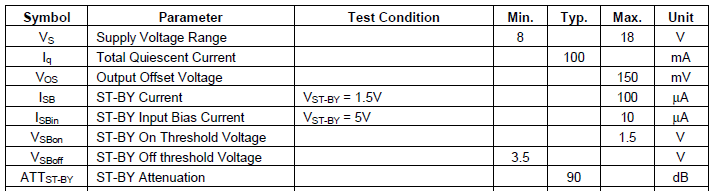
The datasheet for the TDA7396 shows all its spec's with a 14.4V charging car battery, not 18V. The graph stops at 16V. Then with your 18V boosted voltage it will roast itself to death soon. Bad idea.