basic questions about soldering. Beginner

Thread Starter

circuityes

Joined Jun 20, 2019
39
HI I m beginning.
Do you accept to help me?

000 I have couple questions in this short video. one of them is how why and when to use the metal shreds ball.


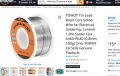
111 the picture , the store offer to choose 0.6, 0.8, 1.0 1.2mm. Those wire look bigger than 1mm by the way, what am i misunderstanding?. There is a lot of variation. I have to take into account that I will use soldering for some electronic in the future. So which diameter is too big to solder electronic? Would be my question.

222I understand that the 2 wires will be kind of holding togehter by being twisted One is much bigger than the other. I understand that i have to heat the big wire. But until when or what. Also what is the material that will make the tin melt? will it melt because it is touching the copper now so hot? or do i have the tin melt by depositing it on the tip of the iron and then sort of painting it onto the copper twist?

333 About the resin inside the core of the tin wire. Is it dangerous , will it burn chemically my skin if i touch the end of the tin wire? At the end of the job, do i have to do something with the tin wire to prevent rosin from leaking or drying like maybe curving it in a tight U?
Is it better for me to cover the tip of the iron with tin-rosin before i store it?

I know , lots of questions, more than 3 lol, :) thanks
 

Attachments

dl324

Joined Mar 30, 2015
18,308
one of them is how why and when to use the metal shreds ball.
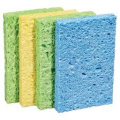
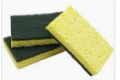
It's used for cleaning the tip. I prefer to use a damp sponge.
So which diameter is too big to solder electronic?
It depends on what you're soldering.

I use 0.032" (0.8mm) for most soldering. When I need smaller amounts of solder, I use 0.015 (0.4mm). When I need a lot of solder, like when I'm cleaning oxidation from the iron tip, I double up and twist 0.032" solder.
I understand that i have to heat the big wire. But until when or what.
Both wires have to be touching, but not necessarily twisted, and you heat both of them until they're hot enough to melt the solder. It helps to have a small blob of solder on the iron tip to facilitate heat transfer.
About the resin inside the core of the tin wire. Is it dangerous
It's not overly dangerous. Just don't put it in your mouth and wash your hands after handling the solder (particularly if it has lead in it).

The picture is for 100g of 60/40 rosin core solder for $15.99. That's pretty expensive for some Chinese no-name brand. I have 1-pound rolls of Alphametals 63/37 0.032" (0.8mm) solder for barter in this thread. I'd sell outright for about half the per ounce Amazon price, but you need to take a pound and you'd need to pay for shipping (assuming you're in the U.S.).

63/37 solder is generally better than 60/40 because it's eutectic and less likely to make cold solder joints.
 

MaxHeadRoom

Joined Jul 18, 2013
30,627
I aslo have a tin of flux on the bench when doing circuit soldering, If using a printed CCT or perf board etc, give it a good polish with soft loth to remeve any tarnish, however slight.
Use Isopropyl alcohol and a lint-free cloth, If you use 70% Rubbing Alcohol, ensure you dry it thorouly afterwards.
 
Last edited:

Rf300

Joined Apr 18, 2025
84
It's used for cleaning the tip. I prefer to use a damp sponge.
Some years ago an engineer from Ersa (a big german manufacturer of solder stations, professional rework stations and reflow machines for SMD) told me not to use a damp sponge because this means thermal stress for the solder tip which can lead to hairline cracks in the solder tip. The metal shreds ball is much better because this is less thermal stress for the solder tip when cleaning it.
 

dl324

Joined Mar 30, 2015
18,308
Some years ago an engineer from Ersa (a big german manufacturer of solder stations, professional rework stations and reflow machines for SMD) told me not to use a damp sponge because this means thermal stress for the solder tip which can lead to hairline cracks in the solder tip. The metal shreds ball is much better because this is less thermal stress for the solder tip when cleaning it.
I've replaced one tip in 50 years of soldering and that was more likely due to the iron coating being worn away. Weller provided sponges with their soldering stations in the 1970's.
 

Thread Starter

circuityes

Joined Jun 20, 2019
39
It's used for cleaning the tip. I prefer to use a damp sponge.
It depends on what you're soldering.
Great lots of usefull info . thanks everyone.
about the quote. why do you use sponge since thin do jump only on metal? what kind of sponge and why is it your prefered choice.If there is a video explaining the why to use sponge and metal shreds I would like to know how and see how it is done. If fact to take care of the iron right if there is a video showing good maintenance practice I would appreciate it.

thanks
 

MrChips

Joined Oct 2, 2009
34,758
I use cellulose sponges. I wet the sponge and squeeze out excess water. Simple pull the soldering iron tip towards you on surface of the sponge.

1778090835206.png
 

Irving

Joined Jan 30, 2016
5,104
I grew up on Weller irons, including a massive red-handled 100W iron that's at least 45y old and is still used for soldering tin, brass and copper sheet. So the scouring pad has been ubiquitous until I got a few TS100 soldering pencils with different shaped tips - for those I use a copper wool ball that cleans without substantially cooling the tip.
 

dl324

Joined Mar 30, 2015
18,308
why do you use sponge since thin do jump only on metal? what kind of sponge and why is it your prefered choice.
It's how I learned soldering at HP while repairing boards in refrigerator sized computers. There was one soldering station for the whole assembly line and it used a damp sponge for the soldering iron. A year later, when I transferred to HP Labs, all of the soldering irons were Weller and they used sponges.

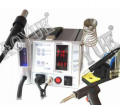
The Aoyue 2702+ hot air tool with solder sucker and iron also provided a sponge for the soldering iron. I purchased it about 20 years ago.
1778093962182.png
 

Thread Starter

circuityes

Joined Jun 20, 2019
39
Some years ago an engineer from Ersa (a big german manufacturer of solder stations, professional rework stations and reflow machines for SMD) told me not to use a damp sponge because this means thermal stress for the solder tip which can lead to hairline cracks in the solder tip. The metal shreds ball is much better because this is less thermal stress for the solder tip when cleaning it.
makes sens.
is the metal shred only to get rid of used tin or do we also have to put directly some tin on the iron form times to times to get rid of it on the metal shred to kind of wash it?
thanks
 

crutschow

Joined Mar 14, 2008
38,481
63/37 solder is generally better than 60/40 because it's eutectic and less likely to make cold solder joints.
For those not in the know, eutectic means the solder goes directly to the liquid state at a specific temperature without going through a "slushy" intermediate phase, which can lead to joint movement when going back to the solid state, and thus a greater chance of a cold joint,
 

Thread Starter

circuityes

Joined Jun 20, 2019
39
It's us

63/37 solder is generally better than 60/40 because it's eutectic and less likely to make cold solder joints.
Hi i ordered 63 37 . I received it it is written sn 63 pb 37. Im surprised Iwould have though 63 or 37 whould have been lead.Did i buy the right stuff?
i is from sain smart 0.8mm .activity rosin flux 2.0pourcent.

---
also about the solder wire: is the rosin mixed in the metal or is the rosin inside the metal wire tube like in the center? if it is like a tube or metal pipe containing rosin. how do i manage the end of the solder wire when ill be finish with a soldering job to prevent the resin from getting out of the wire or dying

thanks
 

MrChips

Joined Oct 2, 2009
34,758
Hi i ordered 63 37 . I received it it is written sn 63 pb 37. Im surprised Iwould have though 63 or 37 whould have been lead.Did i buy the right stuff?
i is from sain smart 0.8mm .activity rosin flux 2.0pourcent.
Sn (stannum) = tin
Pb (plumbum) = lead

Hence 63/37 sn/pb means 63% tin + 37% lead.
also about the solder wire: is the rosin mixed in the metal or is the rosin inside the metal wire tube like in the center? if it is like a tube or metal pipe containing rosin. how do i manage the end of the solder wire when ill be finish with a soldering job to prevent the resin from getting out of the wire or dying
It is like a tube. The solder wire has a hollow core and the rosin is inside the core. The rosin does not dry out. You do not have to do anything with the solder.
 

dl324

Joined Mar 30, 2015
18,308
Im surprised Iwould have though 63 or 37 whould have been lead.
By 63/37, I meant Sn 63/Pb 37. You bought the right stuff.
is the rosin mixed in the metal or is the rosin inside the metal wire tube like in the center?
The flux is in the core. Sometimes, it's multiple (like 5) cores.
if it is like a tube or metal pipe containing rosin. how do i manage the end of the solder wire when ill be finish with a soldering job to prevent the resin from getting out of the wire or dying
The flux is in a solid form. No risk of it leaking out or drying out. I've used rosin cored solder that's 50 years old.
 

dl324

Joined Mar 30, 2015
18,308
Great thanks everyone it helps a lot I will jump into it more confidently :)
It's helpful if you practice on something not important to get your technique down.

If you apply too much heat to insulated wires, the insulation will start to melt. If you solder on printed circuit boards, pads will lift and/or the board will burn with too much heat. Removing components from boards requires melting all of the solder. Solder removal works best with a solder sucking type of tool. It's too easy to cause problems when using solder wick and not keeping things hot enough.
 
Top