Facebook
 Google
 GitHub
 Linkedin
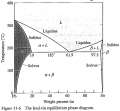
traditionally solder is 60/40 lead and tin. (60% lead 40% tin)
there are lead free solders that are 96.5% tin, 3% silver, 0.5% copper. (I was looking at weller solder, thinking about trying it out after having used my weller iron which my dad gifted me for the last year or so and having had such a great experience with it. Typically I was buying whatever cheapest iron, and the tips would dissolve into the solder after only a month or so. My weller iron has shown 0% visible degredation, and i've used up 1/2lb of 60/40 solder during that time)
I don't know if the solder would be improved using tin, or actually get worse. My rate of cold-joints is not that high, and generally I would attribute it to knowing when the pcb needs to be cleaned first, but just ignoring it and using lots of heat and time instead to make the joint. There have been some times, however, particularly with smt dip8 packages (like in those rdm5087 radio kits, or there are other larger ic's in kits like those little oscilloscopes) where looking at the joint it is perfect, and fits the description of how a good joint should look perfectly, yet it is not joined, and after desoldering the IC i can see that somehow it made a perfect fit over the pad, yet did not bond to the pad itself, and instead was bonded to some kind of ultra-thin invisible layer. I can usually see this because after removing the component, all of the other pads have solder still bonded to them, but the one pad is basically untouched. It looks new and never soldered to.
I did buy more 60/40 solder, and 1/2 pound, so unless I continue to buy endless little kits (unlikely as I feel I am approaching the end of that bender) I probably won't run out for years, but I am thinking I should try some other solder compositions to see if I learn something, or find that with some pcbs that are just hard to solder to with the 60/40, some kind of SnAgCu will actually be superior.
For anyone who wants to talk about the joints more than the solder, I often do not clean the pcbs, almost never, but I do use a flux paste often when doing the smt components, as i find it easier to keep the pads from bridging with my giant tip. I don't use liquid flux because although i have some, it's a much bigger mess. I don't have a nice bench, i basically sit on the floor in an oversized closet which is my room and work on the floor, and then I have to pack everything into some form of "going to tumble for sure" mishmash of stuff when putting it away, so I don't want opened bottles of liquid if I can avoid it. The paste does a good job of staying in the pack regardless of orientation or velocity of impact. I can't really solve my space issues. actually, cleanig the pcbs is also a case of storage, although i do have some isopropyl alcohol and occasionally use it when i just feel like it. It's a larger bottle and stores elsewhere standing on a shelf. Perhaps there is concern I will knock it over, but it's not like the small bottles of flux that are better stored in my kit than spread onto some unrelated shelf. So cleaning more is something I could do, but technically i have only one little kit that doesn't work right, and it does work intermittently, so my failure rate is very low, I'm really interested in discussing the differences in solder more than workflow, because I am aware of the workflow but do not know much about what to expect from other alloys of solder.
I have enough experience to see the value in semiconductor-factory quality workflow, though, so am still open to any discussion.
Anyway, here are the times when i have difficulty making a joint:
- solid core wire can sometimes be hard to join to, I think this is because the wire is so effective at sinking the heat away from the joint. In a separate conversation, I have spent some time wondering if solid-core wire would be more appropriate for many devices where stranded wire is used instead, as particularly with lighter gauges of stranded wire i have found the wires to break internally (and not associated with a solder joint, or at least not near the joint, although the stress of pulling on a single strand could still be leading to a break in the middle of the wire). I basically wonder if stranded wire is just generally more available being more appropriate more often, and therefore people just use it since it is easier to not buy even more types and guages of wire.
- some pcb materials, even brand new, even after cleaning, seem much more difficult to bond to. What I percieve as being "older style" acid-etched pcbs do seem more difficult to solder to, although I do not know if this is because of the amount of material that is in the trace is so much more thermally significant, that it sinks the heat away just like the wire. They do also appear to be a different metallurgical material than the materials in more modern style pcbs.
- smt components. Smt components are this unusual thing where it seems like nothing should be different but the size of the joint, yet somehow making good joints seems much more difficult. There is no logic here that makes sense for the heat being sinked away, because all of the traces, pads, and leads are so much smaller. These are the joints where I can see (with magnification and plenty of light) no sign at all of a bad joint, while it is reflowing these joints that will result in the device starting to work properly. With larger through-hole joints, the evidence of a bad joint is just more apparent, while with the smt smaller joints, I just feel like I can look at it for a very long time, with magnification, and see what should be a perfect joint, and then I can fix the device by redoing that joint. I can also see joints I have made that look clearly like bad joints, and then of course the device does not work, but with through-hole joints it rarely or never happens that a bad joint looks so perfect, while with smt it is basically very frequent.
I would love to hear more about whatever brands, but there are lots of posts talking about popular brands, I'm more interested in the alloys themselves, and presently am shopping the weller brand solder after my iron is so good, which is selling a lot of their lead-free tin-silver-copper.
there are lead free solders that are 96.5% tin, 3% silver, 0.5% copper. (I was looking at weller solder, thinking about trying it out after having used my weller iron which my dad gifted me for the last year or so and having had such a great experience with it. Typically I was buying whatever cheapest iron, and the tips would dissolve into the solder after only a month or so. My weller iron has shown 0% visible degredation, and i've used up 1/2lb of 60/40 solder during that time)
I don't know if the solder would be improved using tin, or actually get worse. My rate of cold-joints is not that high, and generally I would attribute it to knowing when the pcb needs to be cleaned first, but just ignoring it and using lots of heat and time instead to make the joint. There have been some times, however, particularly with smt dip8 packages (like in those rdm5087 radio kits, or there are other larger ic's in kits like those little oscilloscopes) where looking at the joint it is perfect, and fits the description of how a good joint should look perfectly, yet it is not joined, and after desoldering the IC i can see that somehow it made a perfect fit over the pad, yet did not bond to the pad itself, and instead was bonded to some kind of ultra-thin invisible layer. I can usually see this because after removing the component, all of the other pads have solder still bonded to them, but the one pad is basically untouched. It looks new and never soldered to.
I did buy more 60/40 solder, and 1/2 pound, so unless I continue to buy endless little kits (unlikely as I feel I am approaching the end of that bender) I probably won't run out for years, but I am thinking I should try some other solder compositions to see if I learn something, or find that with some pcbs that are just hard to solder to with the 60/40, some kind of SnAgCu will actually be superior.
For anyone who wants to talk about the joints more than the solder, I often do not clean the pcbs, almost never, but I do use a flux paste often when doing the smt components, as i find it easier to keep the pads from bridging with my giant tip. I don't use liquid flux because although i have some, it's a much bigger mess. I don't have a nice bench, i basically sit on the floor in an oversized closet which is my room and work on the floor, and then I have to pack everything into some form of "going to tumble for sure" mishmash of stuff when putting it away, so I don't want opened bottles of liquid if I can avoid it. The paste does a good job of staying in the pack regardless of orientation or velocity of impact. I can't really solve my space issues. actually, cleanig the pcbs is also a case of storage, although i do have some isopropyl alcohol and occasionally use it when i just feel like it. It's a larger bottle and stores elsewhere standing on a shelf. Perhaps there is concern I will knock it over, but it's not like the small bottles of flux that are better stored in my kit than spread onto some unrelated shelf. So cleaning more is something I could do, but technically i have only one little kit that doesn't work right, and it does work intermittently, so my failure rate is very low, I'm really interested in discussing the differences in solder more than workflow, because I am aware of the workflow but do not know much about what to expect from other alloys of solder.
I have enough experience to see the value in semiconductor-factory quality workflow, though, so am still open to any discussion.
Anyway, here are the times when i have difficulty making a joint:
- solid core wire can sometimes be hard to join to, I think this is because the wire is so effective at sinking the heat away from the joint. In a separate conversation, I have spent some time wondering if solid-core wire would be more appropriate for many devices where stranded wire is used instead, as particularly with lighter gauges of stranded wire i have found the wires to break internally (and not associated with a solder joint, or at least not near the joint, although the stress of pulling on a single strand could still be leading to a break in the middle of the wire). I basically wonder if stranded wire is just generally more available being more appropriate more often, and therefore people just use it since it is easier to not buy even more types and guages of wire.
- some pcb materials, even brand new, even after cleaning, seem much more difficult to bond to. What I percieve as being "older style" acid-etched pcbs do seem more difficult to solder to, although I do not know if this is because of the amount of material that is in the trace is so much more thermally significant, that it sinks the heat away just like the wire. They do also appear to be a different metallurgical material than the materials in more modern style pcbs.
- smt components. Smt components are this unusual thing where it seems like nothing should be different but the size of the joint, yet somehow making good joints seems much more difficult. There is no logic here that makes sense for the heat being sinked away, because all of the traces, pads, and leads are so much smaller. These are the joints where I can see (with magnification and plenty of light) no sign at all of a bad joint, while it is reflowing these joints that will result in the device starting to work properly. With larger through-hole joints, the evidence of a bad joint is just more apparent, while with the smt smaller joints, I just feel like I can look at it for a very long time, with magnification, and see what should be a perfect joint, and then I can fix the device by redoing that joint. I can also see joints I have made that look clearly like bad joints, and then of course the device does not work, but with through-hole joints it rarely or never happens that a bad joint looks so perfect, while with smt it is basically very frequent.
I would love to hear more about whatever brands, but there are lots of posts talking about popular brands, I'm more interested in the alloys themselves, and presently am shopping the weller brand solder after my iron is so good, which is selling a lot of their lead-free tin-silver-copper.