Facebook
 Google
 GitHub
 Linkedin
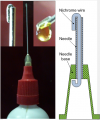
I don't disagree with that ....except the part highlighted , they very soon strike another gas molecule .....Go back to the uncapped bottle of ammonium hydroxide, even a full bottle with very little/no headspace of air to be affected by atmospheric pressure changes to push the air in and out. The vapor does leave the bottle even without any delta between inside and outside pressure. Molecules travel in a straight line until they strike another object and they travel from an area of greater to lesser concentration. That is diffusion. And that is why it doesn't take long for an uncapped bottle of ammonia water to stink up a large room without any aid from any form of induced air circulation. Even if I use a needle applicator bottle if I put fluid in it with a high vapor pressure such as anhydrous ether that bottle will magically become empty due to diffusion. The rate of diffusion depends on the "volatility" of the fluid and the environmental temperature and pressure. High volatility = high vapor pressure = rapid evaporation = more diffusion = empty bottle. Higher temp = faster evaporation. Lower pressure = faster evaporation. It's basic laws of physics. If I fill that needle dispenser bottle with a low vapor pressure fluid such a high-density oil with a very low vapor pressure my grandkids and their grandkids will probably still be waiting for it to evaporate, diffuse and magically disappear but it will eventually do so. And then there are hygroscopic fluids which left open to the atmosphere will absorb water molecules and increase in volume albeit due to water contamination of the fluid which will change it from it's original chemical properties.
As you point out , escape of fluid will depend on Vapor Pressure of the fluid , the length and fineness of the needle , and most importantly the volume of airspace above the fluid ....
I'd be willing to bet if temperature does not vary more than 5C in a day , and the bottle is 2/3 full of alcohol , you wouldn't loose more than 1% a month