Aside from not needing to handle both polarities, an additional benefit of a series regulator is that it puts much less load on the magneto-generator-alternator, whatever, at higher speeds. In fact, with a bit more circuitry it can be set to disconnect at higher engine speeds, allowing more power for going fast quicker.
As I revisited the original circuit I see that the battery charging is separated from the portion of the system that is regulated, although I am certain that clamping a portion of the voltage to six or 7.2 volts has an effect on the battery charge circuit. So my guess is that the posted circuit is a great simplification of the actual circuit, and that the load with the regulated power is far different than a lamp load.
So the bike may be quite different from the sixties bikes that got the series regulator circuit. What year and model is the motorcycle, if you don't mind telling us?
My concern is that the lightly loaded output of the generator at high RPM with a series regulator can result in damaging high voltages.
That's why most motorcycles with permanent magnet generators use shunt regulators
It's not just because they are simple.
OK, then the regulated voltage is for the electronic ignition system, not just lights.And it may need more than one stage of regulation. Probably starting with a series regulator that can handle those higher voltages, followed by a shunt clamper just in case. OR, totally redesign the system to utilize a switchmode series regulator that can handle the very high voltages. It would be elegant but not simple.
There is also another option, which is a series regulator feeding off the battery, or just using the old Mopar modules in place of the OEM ignition modules and powering them from the battery. We did that on a KOW back in 1971. IT DID WORK.
OK, then the regulated voltage is for the electronic ignition system, not just lights.And it may need more than one stage of regulation. Probably starting with a series regulator that can handle those higher voltages, followed by a shunt clamper just in case. OR, totally redesign the system to utilize a switchmode series regulator that can handle the very high voltages. It would be elegant but not simple.
OK then. A points system is a lot more tolerant of higher voltages and spikes and such. And really, a points system could run off the battery, although you might need a ballast resistor to assure longer points life as the supply voltage would rise with speed. But I have been ignoring the possibility of other electronics on the bike, like stereo systems and other radios. Radios like clean and stable power.
I went ahead and used N-Channel MOSFETS just for conformity sake.
However, today I connected the finished regulator into the system and there was no change in the voltage.
The 330 resistor got rather warm, but the MOSFETS did not seem to change temperature at all.
The AC voltage was unaffected whether the regulator was connected or not.
The initial setting on R2 was 1700ohms
Maybe I have something connected wrong?
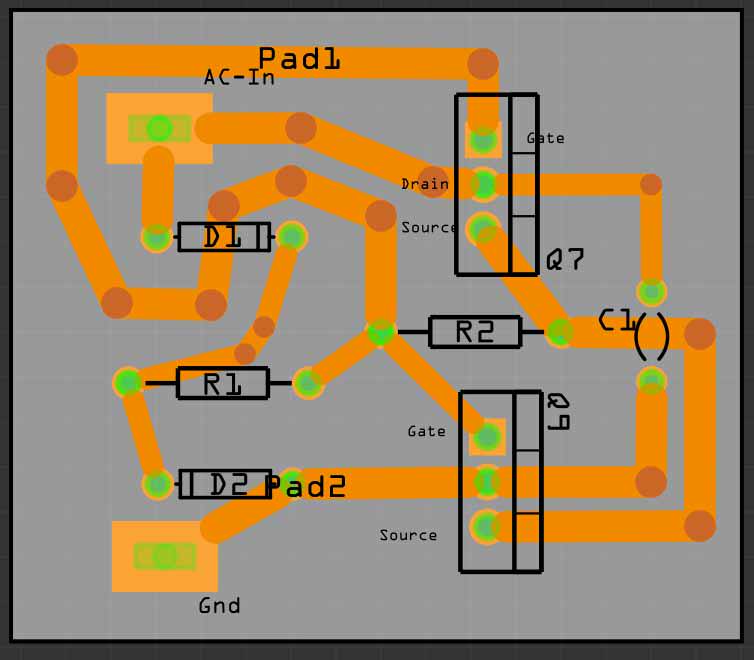
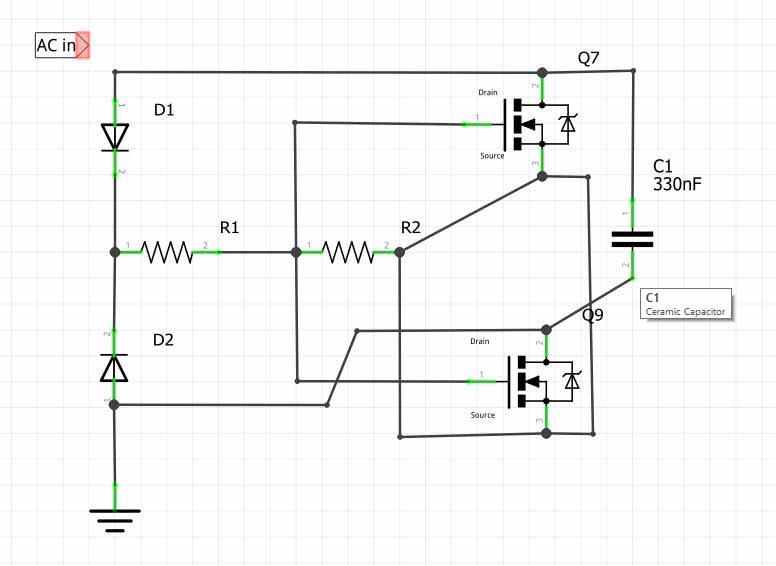
Here's the final PCB and schematic illustrations.....
And the Schematic......
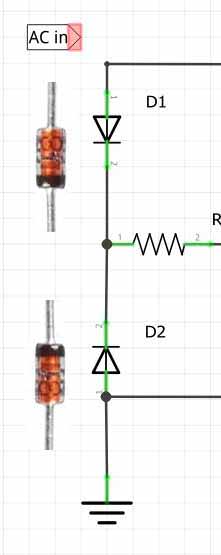
Is this the correct Diode Orientation?
The way I connected into the motorcycle is also questionable.....
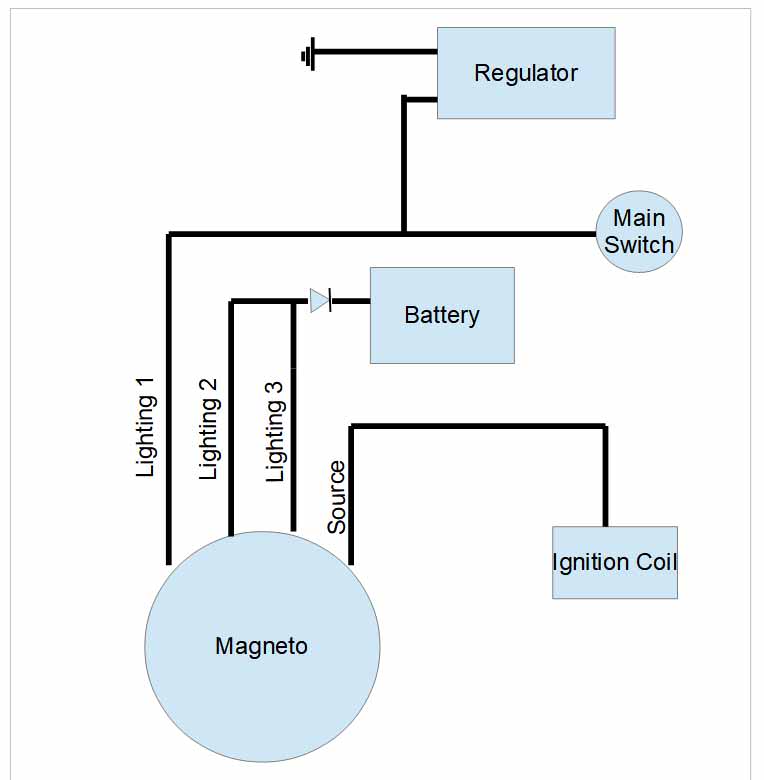
The Magneto has 4 output wires.
1). Source - Goes to ignition coil
2). Lighting 1 - Goes to main switch
3). Lighting 2 - Connects to Lighting 3 wire, goes through a diode and charges battery
4). Lighting 3 - Connects to Lighting 2 wire, goes through a diode and charges battery
I connected the GROUND wire of the regulator to the motorcycle chassis where I know there was a good ground.
I connected the AC IN from the regulator to Lighting 1 wire in-line (meaning the original connection was left connected and the regulator was jumpered to connect to that circuit wire) to Lighting 1 of the AC Magnetos output wires.
Lighting 1 voltage never changed
Basic schematic of Motorcycle and Regulator (3 coil magneto)
IRF3205 or something else?
R1 shouldn't be getting warm at all. Sounds as though R2 is shorted. That would also account for the FETs not switching on.
The pcb and component orientation look ok, so check for solder splashes bridging traces.
Assuming the Lighting1 coil is completely independent of the other coils and has one end grounded to the bike chassis then the connections look ok.
I owned a moped many moons ago .
I went ahead and used N-Channel MOSFETS just for conformity sake.
However, today I connected the finished regulator into the system and there was no change in the voltage.
The 330 resistor got rather warm, but the MOSFETS did not seem to change temperature at all.
The AC voltage was unaffected whether the regulator was connected or not.
The initial setting on R2 was 1700ohms
Maybe I have something connected wrong?
Here's the final PCB and schematic illustrations.....
And the Schematic......
Is this the correct Diode Orientation?
The way I connected into the motorcycle is also questionable.....
The Magneto has 4 output wires.
1). Source - Goes to ignition coil
2). Lighting 1 - Goes to main switch
3). Lighting 2 - Connects to Lighting 3 wire, goes through a diode and charges battery
4). Lighting 3 - Connects to Lighting 2 wire, goes through a diode and charges battery
I connected the GROUND wire of the regulator to the motorcycle chassis where I know there was a good ground.
I connected the AC IN from the regulator to Lighting 1 wire in-line (meaning the original connection was left connected and the regulator was jumpered to connect to that circuit wire) to Lighting 1 of the AC Magnetos output wires.
Lighting 1 voltage never changed
Basic schematic of Motorcycle and Regulator (3 coil magneto)
Did a test of the board, all traces for continuity and checked specifically across R2 and found the resistance is 1780ohms (which sounds correct as that's where I adjusted it.)
Strange. I don't see how excess current can flow through R1 unless there is a short across R2, or from R1 to some other point.
Edit: Is R2 a 2k trimmer? If so, with the wiper at 1780 the 'other part' is 2k-1780 = 220 Ohms. If that low a resistance is between gate and source then R1 would be drawing more current than in the original design and the FETs would probably not turn on.
That's as it should be. Current flows via the FET's body diode when a FET is off, or via the drain-source low resistance path when it is on.
Strange. I don't see how excess current can flow through R1 unless there is a short across R2, or from R1 to some other point.
Edit: Is R2 a 2k trimmer? If so, with the wiper at 1780 the 'other part' is 2k-1780 = 220 Ohms. If that low a resistance is between gate and source then R1 would be drawing more current than in the original design and the FETs would probably not turn on.
I wonder if I'm connecting the POT incorrectly? The circuit is designed for a regular resistor and of course, the POT has three pins.
I connected the center pin to resistor R2 pad-1 and then only one other pin on the POT can give me 1700ohms resistance so I connected that Pin to the Source Pins of the two MOSFETs. Is that not the way to connect it?
Checking the pins on the POT (R2), (connected to the PCB) I do in fact measure 1780ohms with my VOM. (not 220ohms)
Still, the circuit does not do anything and only R1 gets quite warm. What should I check next?
Temporarily disconnect the pot. That should enable the FETs to switch on (and get warm) at even a low generator voltage, whereas R1 should not be noticeably warm at all. If R1 still gets warm then you have a wiring error somewhere, or else one or other FET could be faulty. MOSFETS are static-sensitive, so it's possible the internal gate insulation has failed if the FETs have been handled a lot. Hint: don't wear nylon knickers or march about on a nylon carpet when working with MOSFETs .
Have you checked that neither FET drain is shorted to the heatsink?
Temporarily disconnect the pot. That should enable the FETs to switch on (and get warm) at even a low generator voltage, whereas R1 should not be noticeably warm at all. If R1 still gets warm then you have a wiring error somewhere, or else one or other FET could be faulty. MOSFETS are static-sensitive, so it's possible the internal gate insulation has failed if the FETs have been handled a lot. Hint: don't wear nylon knickers or march about on a nylon carpet when working with MOSFETs .
Have you checked that neither FET drain is shorted to the heatsink?
Ok, I'll disconnect R2 and try that. Will report back on that later.
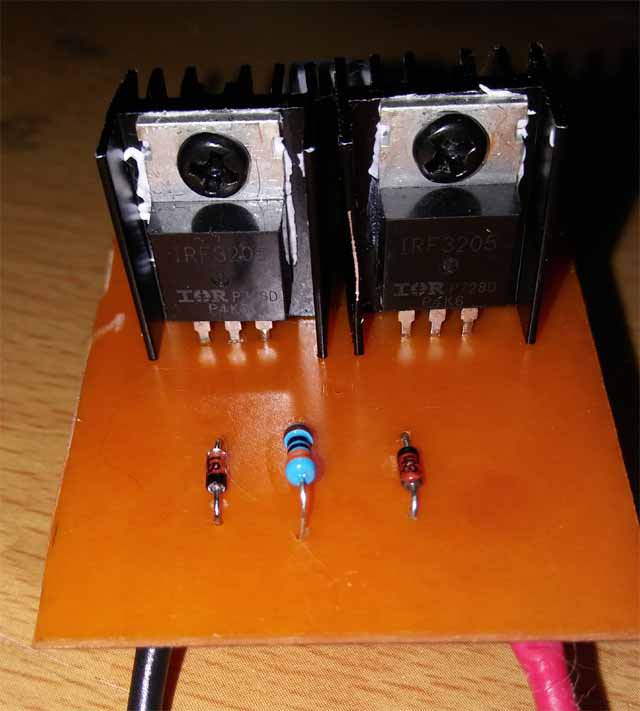
Yes sir. Checked. The Heat sinks are coated electrically insulated and do not conduct. I specifically checked to make sure the Drains do not have continuity with black heat sinks, they do not. But the do have continuity with the aluminum backside of the MOSFEET itself.
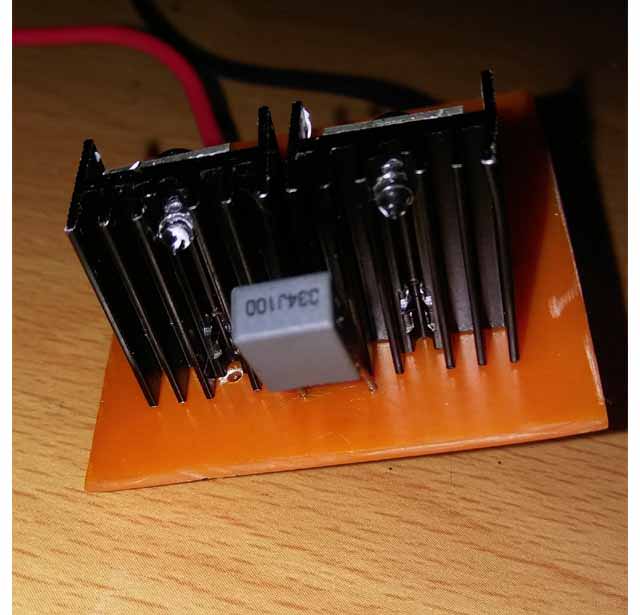
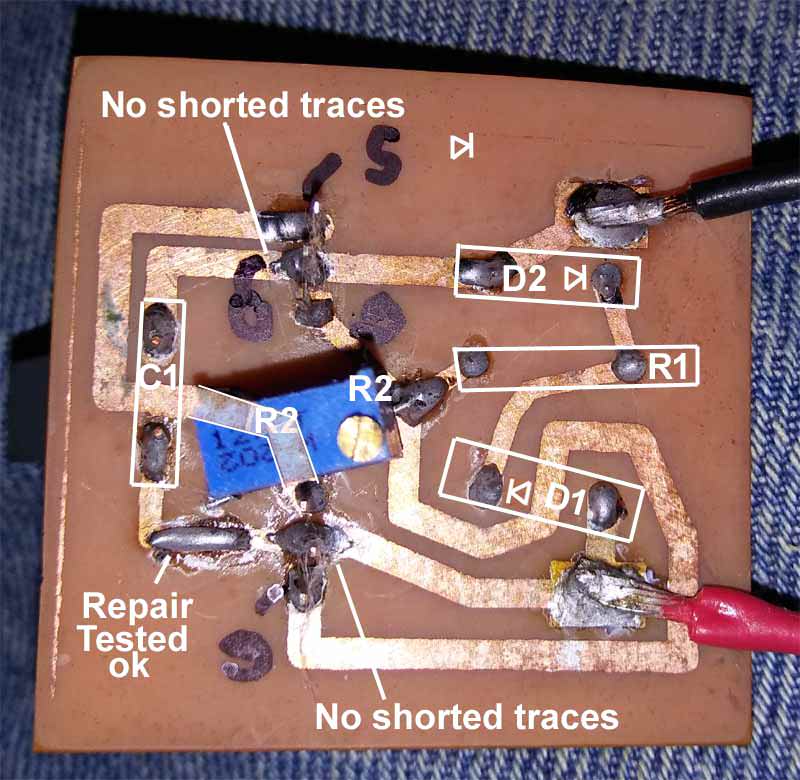
Here are some photos.
The capacitor leads are not touching anything even though close.
This is just a rough draft test board.....
I know, bad soldering, ugly ugly ugly but I checked every trace and every solder connection with VOM and everything checks out ok
Hard to tell from photo but red AC IN wire is not touching trace below it.

 Facebook
 Google
 GitHub
 Linkedin