How To - Build a 6V AC Regulator

Thread Starter

Lumenosity

Joined Mar 1, 2017
614
Thanks ebeowulf17.

I REALLY appreciate the help. I'd be sunk without you guys on this forum. I feel awful having to keep asking and asking.

I have enough parts on hand to fail about 10 times so frying the parts a few times won't kill me. I'll just keep trying.

According to Fritzing's Schematic and PCB layout, I have everything right as long as the schematic is correct. (Unless there's a flaw in the component design which was probably created by a Fritzing contributor (or staff?). I would think they're carefully checked for accuracy before the become a part of the Fritzing Library. I LOVE Fritzing personally. It helps me with my Arduino stuff, PCB's etc and has autorouting and is just easy to use IMO.
I'm sure there are others but I've learned to use it.

Thanks again for your patience and your help :)
 

ebeowulf17

Joined Aug 12, 2014
3,307
I REALLY appreciate the help. I'd be sunk without you guys on this forum. I feel awful having to keep asking and asking.
No problem at all. Always happy to help where I can.

I can certainly understand why you'd be confused if Fritzing is telling you one thing and a bunch of us are telling you the opposite.

Let us know when you get it working, and share pics of the resulting orientation if you don't mind (and of course, ask away if more questions come up between now and then!)
 

ebeowulf17

Joined Aug 12, 2014
3,307
Aside: Back in the day of vinyl LP records, there were two albums with 2 sides each labeled 1-4. U could not find the numbers. They were like 3" tall and made with a 1/2" wide "brush stroke" and essentially was the background in orange beige kind of colors. It took me a while before I found it.

The FET scheme was different. I've never seen it before. Note: I set the PDF to open to that page with the "#page=" directive.

One time there was lots of confusion to the point of arguments when the PDF page didn't equal the numbered page, so I now always specify.
 

rudio

Joined Jul 10, 2016
4
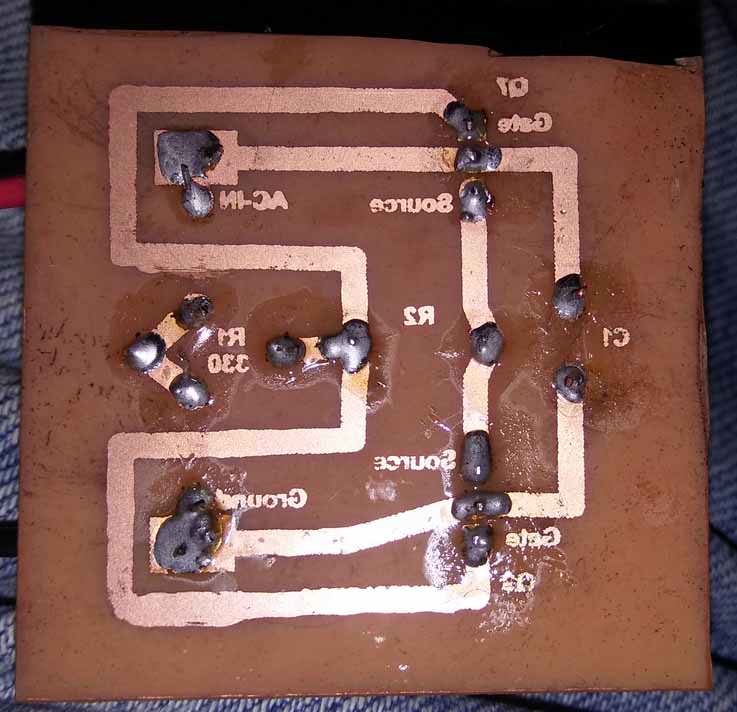
Here's a simple circuit I designed a year or two back for a biker. He reported it worked for him.
It's a shunt regulator which clamps the AC voltage when its amplitude tries to go above a set level. R1 and R2 set the level. I suggest using a trimpot initially to adjust the level to what you want, then measuring the pot resistance and replacing the pot with a fixed resistor. Depending on the Vgs(thr) threshold voltage of the particular FETS, you may need to tweak R1. Ideally the FETs should be from the same batch. They should be a 'logic-level' type.
Current flows through the body diodes of the FETs and the FETS will get hot, so require a good heatsink. Choose beefy FETs and use insulated mounts for them so that the heatsink(s) can be thermally coupled to the bike chassis to take heat away.
View attachment 155764
Congratulations - this is indeed a simple but very clever circuit!
One question: what is the purpose of C1, i. e. have you simulated with and withot this component?

Rudi
 

MisterBill2

Joined Jan 23, 2018
27,706
I went back to the beginning and started following the thread until I came to the explanation that the sole purpose of the regulation of an AC voltage is to power a light on a motorcycle. And the reason that some bikes use AC to power the light is to save weight, and avoid needing an electronic voltage regulator.
So is there any actual advantage to running the headlight on AC?? I do not think so.
A rectifier and switching regulator can give the required voltage and generate a lot less heat, meaning that they are wasting less engine power and reducing fuel consumption. In addition, the rectifier and switching regulator will be smaller and lighter. AND there will be the added benefit of being able to use an LED headlight if you want to.
 

MisterBill2

Joined Jan 23, 2018
27,706
No. when we changed to DC heating of tantalum heaters, reliabilty went up from phase angle fired AC.
OK, so is it reasonable to consider powering the headlight with DC instead of AC?
And a phase control regulator might be really simple, because super-tight regulation is not needed. OR just rectify the magneto output and use a switching regulator.
 

Alec_t

Joined Sep 17, 2013
15,125
All that would be nice, BUT ....
Motorcycles, especially older low-end models, typically have a simple magneto with a single coil generating the lighting voltage. That coil has one terminal permanently grounded, as does the lamp, so full-wave rectification is out of the question and half-wave rectification doesn't give enough light.
 

MisterBill2

Joined Jan 23, 2018
27,706
All that would be nice, BUT ....
Motorcycles, especially older low-end models, typically have a simple magneto with a single coil generating the lighting voltage. That coil has one terminal permanently grounded, as does the lamp, so full-wave rectification is out of the question and half-wave rectification doesn't give enough light.
If neither side of the headlight is grounded then certainly a bridge rectifier can be used, but the lighting system must be non-grounded. That does complicate the other lights a bit, but it is one alternative. AND, there is also the half-wave voltage doubler circuit, which carries the ground through from input to output. It is a bit more complicated and also it needs capacitors. In addition, a step-up autotransformer is an option. And the very simple choice is to allow the light to dim when the engine is idling, which mostly is while the bike is stopped, where long distance viewing is not so important. And if there is a battery, then it can power the light while idling, and be recharged when the engine is spinning faster.
So there are several ways around the low voltage at idle.
 

rudio

Joined Jul 10, 2016
4
It's to suppress voltage spikes if the regulator load is inductive. Yes, I've simulated with and without C1.
Tnx for your reply.
I now have some ideas to refine the circuit, and use it for a 12 V system. This requires further simulations.
I'm not familiar with LTSpice, worked up to now with QUCS (specialised in RF) and a quite old version of Berkley Spice. So, I could not find any MOSFET model parameters for LT Spice. Where did you get them? I#m interested in p-channel MOSFETs as well.
I promise to post any useful results of my attempts.

tnx in advance Rudi

p.s as a first step, could you please attach your .asc file?
 

rudio

Joined Jul 10, 2016
4
LTspice comes free with a bunch of good MOSFET models (just don't use the default model). You can also add third-party models.
I'm attaching my asc file
I'm just on the lower part of learning curve for LTSpice. I found out how to select a certain MOSFET, but did not change them yet.
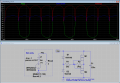
I modified R1 in your circuit for 12V operation, and changed the alternator values to those measured on mine (~70V AC@100 Hz, ~0.2 ohms winding resistance, ~4 mH inductance).

Snap 2020-03-28 at 19.33.34.png


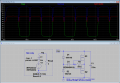
By exchanging R1 by a zener diode, imho the circuit could be improved due to a steeper opening behaviour of the MOSFETs. The result is: more power diverted to the load, less to the MOSFETs.

Snap 2020-03-28 at 19.31.13.png


My planned next step: use P-channel MOSFETs, revert diodes D1, D2 and replace the zener by a TL431 and 2 resistors for it's necessary voltage divider.
This will need some time, please be patient. I will definitely post results.

Rudi
 

MisterBill2

Joined Jan 23, 2018
27,706
If the magneto low voltage output varies from six volts at idle to 70 volts at max RPM, then a half-wave voltage doubler supplying a standard switching power supply should work fairly well. The double output would be connected to the same point as the output of the AC line rectifier. The result being no need to design or simulate anything. It may even be possible to purchase the exact wide input range regulator module ready made. If the 12 volt output was not adequate at idle then the LED headlight can run off of the battery. A simple and easy way around a lot of problems.
 
Top