Build a regulator rectifier using buck converter method

Thread Starter

Kakaaggy

Joined Mar 27, 2021
6
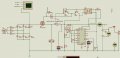
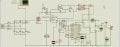
hello everyone, please help me as a beginner. (Maybe I will copy the same question on several forum sites to add references) I am making a regulator rectifier (RR) for a motorbike that uses the buck converter method. which is generally used for motorbikes is the shunt & series/open method. I have experience making shunt & series type (which uses SCR), where the shunt type can run normally at all RPMs but the drawback is extreme heat on the heatsink. but for the series/open type it is cooler but it errors/overcharges at RPM 10K++. therefore I decided to make a series type using a MOSFET & buck converter system. The basic scheme is as in the picture. The power source comes from a permanent magnet generator (3 phase big bike / 1 phase small bike) then goes to the diode bridge. Driver uses TL494, frequency 10kHz, used 240uH &/ 1mH inductor, mosfet used IRFB4115 &/ IRFP4242. But still the problem is that the mosfet gets hot & eventually breaks down, even though in the first few minutes everything works fine when the motor RPM is low. My personal prediction is that the error lies in the voltage spike that occurs when the MOSFET is off, because the power source comes from a generator which is inductive in nature. I once measured using an avometer, the voltage from a 3 phase generator at 10K++ RPM can reach around 150Vac (voltage can vary according to RPM), & some information says the generator's max power is around 200-350W. Please give me the best input so I can improve this project. thank you very much friend
IMG_20250305_235718.jpg
 

MisterBill2

Joined Jan 23, 2018
27,159
OK, what I got from post #1 is that a shunt regulator gets way to hot and that a series regulator has various problems. Certainly a non-regulated alternator on a motorbike engine will have a very wide speed range and likewise a very wide voltage output range.
So now I see a battery in the circuit as well. So the alternator needs to charge the battery, what other loads does it need to supply???
The most efficient scheme will be a series SCR voltage controller, or maybe a series MOSFET switching regulator. That scheme would switch the unfiltered alternator output off every time it exceeded some voltage limit, Sort of like a buck voltage regulator.
The circuit shown is a lot more complicated than what I was thinking about. Also, no hint as to what that IC type is.
Actually, a buck regulator by itself could do the job.
 

Thread Starter

Kakaaggy

Joined Mar 27, 2021
6
I use IC TL494, it is an SMPS IC. The installed load if the motor is in factory condition may only be around 80W in total. but if you add other electrical accessories, it can reach 200W +/-.
 

LowQCab

Joined Nov 6, 2012
5,101
Since You mentioned that the Alternator could be either 3-Phase, or Single-Phase,
I have to assume that You believe that You have a better idea than the hundreds of thousands
of Generic-Regulators running around on the streets right now.

This has been thoroughly figured-out over decades of use.

Readily available MOSFET-Bridge-Regulators are everywhere, and they work great, and they're dirt-cheap.
Don't try to reinvent the Wheel, it's already been done long ago.

When designing a custom-engineered-Regulator for a particular Alternator design,
the Inductance of the Alternator, and the following added Capacitance,
create a fully-automatic, roughly~80%- regulation of the Voltage, with no other components required.
This regulates the Voltage with a simple Filter arrangement.
This greatly simplifies, and reduces the cost of,
designing the final ~20% of the required Voltage-Regulation.
.
.
.
 

Thread Starter

Kakaaggy

Joined Mar 27, 2021
6
Since You mentioned that the Alternator could be either 3-Phase, or Single-Phase,
I have to assume that You believe that You have a better idea than the hundreds of thousands
of Generic-Regulators running around on the streets right now.

This has been thoroughly figured-out over decades of use.

Readily available MOSFET-Bridge-Regulators are everywhere, and they work great, and they're dirt-cheap.
Don't try to reinvent the Wheel, it's already been done long ago.

When designing a custom-engineered-Regulator for a particular Alternator design,
the Inductance of the Alternator, and the following added Capacitance,
create a fully-automatic, roughly~80%- regulation of the Voltage, with no other components required.
This regulates the Voltage with a simple Filter arrangement.
This greatly simplifies, and reduces the cost of,
designing the final ~20% of the required Voltage-Regulation.
.
.
.
yeah actually I'm also curious about the mosfet bridge system that you suggested. but unfortunately when searching like on google/youtube, very few people discuss it. even if there is, it's only an outline (not the entire control circuit). if you have one of the complete references that I can learn, please share it here.
 

LowQCab

Joined Nov 6, 2012
5,101
The question is .........
Why are You trying to re-invent the Wheel ?

Is it because ............
1) You think that You have "a-better-idea"
that You have aspirations of manufacturing and selling ?,
or,
2) Is it for personal Education / Entertainment purposes ?

Motorcycle manufacturers spend a great deal of time and Money figuring-out
what the most cost-effective way of regulating the Voltage is on a particular Model of Motorcycle.

Every Model is different in some way.
There is no "universal" solution, unless You don't mind it being
too-big, too expensive, and too complex.

.
.
.
 

kaindub

Joined Oct 28, 2019
176
Motorcycle alternators these days are always three phase.
The standard shunt regulator has been optimised for cost and space.
As another poster has pointed out, there are many series regulators available at a pretty low price.
If this is just a learning exercise, then go for it. But you will find that the testing process is long and expensive. Remember this is power electronics youre talking about, where the parasitic inductance and capacitances are not known to you.
I would suggest using something like LTSpice to model your circuit before committing to solder.
 

Thread Starter

Kakaaggy

Joined Mar 27, 2021
6
my goal is of course for the learning process. trying to make a better system than the hot shunt system & series regulator with overcharge issues (using SCR). yes I have run a lot of experiments in proteus before making the original circuit, because I am not familiar with LTspice.
 

Thread Starter

Kakaaggy

Joined Mar 27, 2021
6
The question is .........
Why are You trying to re-invent the Wheel ?

Is it because ............
1) You think that You have "a-better-idea"
that You have aspirations of manufacturing and selling ?,
or,
2) Is it for personal Education / Entertainment purposes ?

Motorcycle manufacturers spend a great deal of time and Money figuring-out
what the most cost-effective way of regulating the Voltage is on a particular Model of Motorcycle.

Every Model is different in some way.
There is no "universal" solution, unless You don't mind it being
too-big, too expensive, and too complex.

.
.
.
as my previous answer, for learning purposes. FYI, in my country Indonesia, this type of mosfet kirpok is still rarely sold & must be imported. Even if I have it, it is very difficult to know the circuit inside because it is sealed with hard glue
 

Ramussons

Joined May 3, 2013
1,567
hello everyone, please help me as a beginner. (Maybe I will copy the same question on several forum sites to add references) I am making a regulator rectifier (RR) for a motorbike that uses the buck converter method. which is generally used for motorbikes is the shunt & series/open method. I have experience making shunt & series type (which uses SCR), where the shunt type can run normally at all RPMs but the drawback is extreme heat on the heatsink. but for the series/open type it is cooler but it errors/overcharges at RPM 10K++. therefore I decided to make a series type using a MOSFET & buck converter system. The basic scheme is as in the picture. The power source comes from a permanent magnet generator (3 phase big bike / 1 phase small bike) then goes to the diode bridge. Driver uses TL494, frequency 10kHz, used 240uH &/ 1mH inductor, mosfet used IRFB4115 &/ IRFP4242. But still the problem is that the mosfet gets hot & eventually breaks down, even though in the first few minutes everything works fine when the motor RPM is low. My personal prediction is that the error lies in the voltage spike that occurs when the MOSFET is off, because the power source comes from a generator which is inductive in nature. I once measured using an avometer, the voltage from a 3 phase generator at 10K++ RPM can reach around 150Vac (voltage can vary according to RPM), & some information says the generator's max power is around 200-350W. Please give me the best input so I can improve this project. thank you very much friend

View attachment 343815
Is'nt a Capacitor required at the output of the 3 Phase Bridge Rectifier?
 

LowQCab

Joined Nov 6, 2012
5,101
as my previous answer, for learning purposes. FYI, in my country Indonesia, this type of mosfet kirpok is still rarely sold & must be imported. Even if I have it, it is very difficult to know the circuit inside because it is sealed with hard glue
.
The "Peak" Voltages that are possible with only a Buck-Converter-configuration,
and no other overall design safeguards,
have the potential to smoke every Component in Your Circuit instantly,
all it takes is one loose connection or even a simple blown-Fuse.

Electrical-System on a Motorcycle is exactly that,
a system,
with all Components affecting each other,
and depending on each other, for reliable operation.

The System is not as simple as it may seem to be on the surface.

You evidently have a smoked Regulator,
but there may be other problems that were created that caused the Regulator to smoke,
the Alternator-Windings must be thoroughly inspected, and properly tested,
to insure that they are not damaged by excessive heat or physical damage.
Then a separate Battery must be used to run the Engine for
testing and measuring the Alternator Windings,
and for testing and measuring ANY and ALL changes to anything in the "system".

You need to figure-out how to get a Regulator shipped into your Country.
.
.
.
 

MisterBill2

Joined Jan 23, 2018
27,159
"Damaged alternator windings" will mostly lead to a reduced output voltage, which is not the complaint here.
As for the capacitor at the output of a 3-phase rectifier, WHY??? Neither battery charging nor illumination require pure DC. Certainly an in-line fuse , along with a ZENER diode of adequate power handling ability to clear the fuse, if regulation fails, is a good choice. Likewise, a fused source connection for the switch-mode voltage regulator.
 

LowQCab

Joined Nov 6, 2012
5,101
"" As for the capacitor at the output of a 3-phase rectifier, WHY??? ""
.
I think I may have mixed-up a Single-Phase-setup, and a 3-Phase setup.
The 3-Phase-setup needs 3-Capacitors BEFORE the Bridge(s),
this is not for "Bulk-Storage",
this is part of an AC-Filter, which when combined with the Inductive-Winding,
acts as a Load helping to regulate the Voltage BEFORE the Shunt-Regulator, 3-times.

Looking back over my notes on this project,
I started with 3-Phase, but changed over to Single-Phase.
I've got 5 RTF text-files and didn't want to put them all in a ZIP-File and
post them unless it was really worth the effort, and valuable to somebody.

The project of a DIY-Regulator is not all that valuable unless the whole setup is thoroughly worked-out
and the person doing it has the required equipment, and experience,
and the willingness to abuse themselves for several weeks, just for entertainment.

There's nothing simple about making it 100% reliable.


There's plenty of danger of having ~80 to ~100-Volts getting loose and smoking everything.
( as is proven by the fact that the Tread-Starter is replacing a smoked-Regulator,
and maybe some burnt-Windings too, both are a semi-common occurrence with Motorcycles ).
( and of course it will happen when you're ~30-miles from home, in the middle of nowhere )
.
.
.
 

MisterBill2

Joined Jan 23, 2018
27,159
A series linear regulator, but with a series resistor between the alternator output and the regulator input, along with a SHUNT ZENER to limit the current was the way to go a lot of years back. The biker had some poor connections in the original shunt zener and so it did not clamp adequately, resulting in the lights failing riding home from the bar with his O.L. in the dark of night. Amazingly he never crashed, but it always scared her.
 
Top