... can't conclusively say if the varistor is faulty and the cause of the failure. It sounds like they are made to absorb excess energy from overvoltages. They can lose effectiveness from repeated overvoltage events. ... Worst case would be if the varistor failed to absorb energy from an overvoltage event and caused damage to another component. ... A sketch of any connected parts might assist ... if that is possible.
No. As I said, when they blow they fail to a short (by design), act like a fuse and typically blow apart. Finding it "open" is the expected result for an unblown MOV.
No. As I said, when they blow they fail to a short (by design), act like a fuse and typically blow apart. Finding it "open" is the expected result for an unblown MOV.
... just so you know ... the electrolytic caps (cylindrical barrel type) have a + and - polarity. There will be a + mark on one or the other of the barrel sides someplace ... This is so they can be installed correctly with respect to + and - voltages within the circuit board. Usually it is a lot simpler to mark the polarity on the board at each cap location prior to removing them. So, take some care when replacing each cap.
... Can't offer any useful advice regarding finding the defective part.
The test that matters is ESR and only specialized meters can measure that. I’ve had many caps fail that still tested within specs for capacitance.
I built my own ESR meter but it’s easier and faster to just buy new caps. There’s a nice kit available for a component tester, if you’re looking for a project.
Caps are ordered will report back when they arrive.I mentioned the diode D3 in post 6 there is power on both sides and the diode test reading was 1.8 and 0.4.Should I replace this before I put new caps in.
... in order to be 100% confident, note the anode and cathode orientation of the questionable diode as it is placed on the circuit board ( + and - ends), then carefully desolder the diode and use the diode check function of a multimeter to verify that it is in working order. If there is any doubt, replace it with an equivalent part.
... in order to be 100% confident, note the anode and cathode orientation of the questionable diode as it is placed on the circuit board ( + and - ends), then carefully desolder the diode and use the diode check function of a multimeter to verify that it is in working order. If there is any doubt, replace it with an equivalent part.
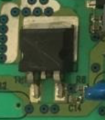
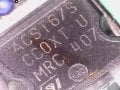
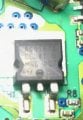
Yes this was working for years.Does the Triac have to be taken off the board to check?Bought the caps on ebay and was searching for a replacement Triac in case I need it can't get exact match of want is printed on it
ACST67S
CCOXT U
MRC 407
I live in Northern Ireland there are no places I can go and buy it anywhere near me.

 Facebook
 Google
 GitHub
 Linkedin