Buck-Boost Converter Mosfet Problem

Thread Starter

Oğuzhan Demir

Joined Aug 12, 2021
34
Further to the simulation, your MOSFET losses are around 38W and so are your diode losses...

For this sort of output current you should really be considering:
  • Synchronous rectification;
  • Multiphase conversion;

Look at the VRM on a PC motherboard, ok they are buck not boost, but the output currents are 30A+ and to keep things small and cool they run 8, 10 or even 14 phases... essentially multiple 'parallel' converters. Its much easier to design a good 5A converter and have 4 or 5 of them in parallel...

Thank you. i will consider parallel converter method. If it will be cost efficient then i will be going with it. I need to design and find components again because the components i choosed failed. So i will compare the costs and work efficiencies and go with the proper one. Thanks again.
 

Irving

Joined Jan 30, 2016
5,133
Thank you for your answer. I am very impressed that you did a simulation for the thread, thank you so much. Can you tell the simulation program's name so i can learn it? And, thank you for the recommandations for inductance and mosfets. I am learning that calculations are very small portion of the design marathon. Thanks for the tips for choosing components. Also in your simulation, input current peaks to 240A, i will be feeding the circuit with car batteries and 240A is not reachable for me. I want to ask, is it possible to add a PID circuit with operational amplifiers for current control with shunt resistors to reduce the peak and make input current more stable? Circuit will be like this and feedback will come from shunt resistor's voltage: View attachment 245451

Also, i think my variable to control the current will be the switching frequency for this circuit, right?
The simulation was done in LTSpice, its a free download from here. Its a good 'go to' for a first view if an idea will fly or not... and can save a lot of time and magic smoke on breadboarding...

A good switching regulator controller implements most of that for you, including a soft-start; you won't need to do your own PID in most cases, and yes, switching frequency/duty cycle is your control variable. Shunt resistors are a bad thing, and I'm not sure you meant a shunt - you may need a series current sense resistor but it'll be 5mOhm or so.

240A is achievable with car batteries - its about the same as starting the engine but only for a millisecond or so.
Car batteries raise another interesting thought... what size batteries, how many and how long do you plan to run off them?
 

Thread Starter

Oğuzhan Demir

Joined Aug 12, 2021
34
The simulation was done in LTSpice, its a free download from here. Its a good 'go to' for a first view if an idea will fly or not... and can save a lot of time and magic smoke on breadboarding...

A good switching regulator controller implements most of that for you, including a soft-start; you won't need to do your own PID in most cases, and yes, switching frequency/duty cycle is your control variable. Shunt resistors are a bad thing, and I'm not sure you meant a shunt - you may need a series current sense resistor but it'll be 5mOhm or so.

240A is achievable with car batteries - its about the same as starting the engine but only for a millisecond or so.
Car batteries raise another interesting thought... what size batteries, how many and how long do you plan to run off them?
Thank you for you answers. I am very eager to use LTSpice, thanks.

Then i will cancel the pid idea for now and i will focus on choosing the proper inductor, mosfet and diode. I found shunt resistors with this specs before if i had to use pid,
specs: RES.SHUNT 5m Ohms 5% 1.6mm 9.5A
i planned to connect 2 resistors parallel with non-inverting amplifier to microcontroller for current feedback.

Okay then it is the same logic with inrush current in motors. Then we have no problem.
Car batteries specs will be approximately 12V 60Ah 540A minimum and 12V 74Ah 680A maximum.

EDITING---

I forgot to inform i will use only 1 car battery, and they must run max 8 hours.
 
Last edited:

Irving

Joined Jan 30, 2016
5,133
I thought so...

If you want 60A from a 12v battery for 8h you'll need 16 or so batteries... If you don't understand why... ask...

And BobTPH is right, 3 in series would be far more efficient..., 4 would be even better...
 

Thread Starter

Oğuzhan Demir

Joined Aug 12, 2021
34
I thought so...

If you want 60A from a 12v battery for 8h you'll need 16 or so batteries... If you don't understand why... ask...

And BobTPH is right, 3 in series would be far more efficient..., 4 would be even better...
Thank you for your answers. Again, i gave informations poorly, i will run brushless dc motor 36V 6A, and batteries can be charged by Bosch C3 battery charger and the circuit will not run 8 hours straight, 8 hours a day max, generally not even 3-4 hours in a day. But sometimes obstructions cause the motor to draw 15-16-17 A current in short time intervals, also motor has inrush current of 18A. That's why i decided to design 36V 20A boost converter.
 

Juhahoo

Joined Jun 3, 2019
302
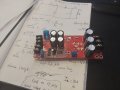
Hi, i designed a buck boost converter for 12v-60A input and 36V 20A output with 200kHz switching frequency and variable duty cycle with a desired effiency of 90%. With respect to my calculations i need 1,77 uH inductor and 183 uF capacitor with 200kHz switching frequency in order to complete the circuit. I used 1,5 uH inductor (in the picture there are 2 inductors parallel but i tried the circuit with 1 inductor) and 200 uF capacitor. When i start the power supply with 12V 1A limits, power supply gives 1A constantly and the mosfet acts like short circuit because of the inductor and heats up too much, and i only get 19V output. I don't know where i did wrong and any help is much appreciated.View attachment 245425View attachment 245426
High current Boost converter with output diode is a waste of energy to heat. Better replace the chip with synchronous Boost controller, like LTC3769. Or if you want to get really fancy, you may want to go with the synchronous multiphase controllers like LTC3788. If you want to evaluate ready made designs you may purchase a demo board for them, expensive solution though. You can also purchase cheap ready made board from eBay, Ali etc and convert the design into lower/higher output voltage. Ready made boards are a good starting point rather than doing all by yourself and often the cheapest way without the need to purchase PCBs, components and heat sinks etc...
Like this:
https://www.aliexpress.com/item/1005001731453542.html?spm=a2g0o.productlist.0.0.5c4e23e4jdeEcS&algo_pvid=488cecc7-8c60-4b96-bf22-d1c0fd421850&algo_exp_id=488cecc7-8c60-4b96-bf22-d1c0fd421850-14&pdp_ext_f={"sku_id":"12000017377778939"}
 
Last edited:

Ian0

Joined Aug 7, 2020
13,132
SLI (starting, lighting and ignition) batteries are the wrong type to use - you will be lucky to get 100 charge-discharge cycles.

@BobTPH is correct: three batteries in series will be more efficient. Three batteries in series WILL cost LESS. If you use a single battery it will have to be MORE than three times the capacity to make up for the losses in the converter, and therefore it will be more than three times the price.

And the cost of a 720W boost converter isn’t going to be cheap.
 

Juhahoo

Joined Jun 3, 2019
302
SLI (starting, lighting and ignition) batteries are the wrong type to use - you will be lucky to get 100 charge-discharge cycles.

@BobTPH is correct: three batteries in series will be more efficient. Three batteries in series WILL cost LESS. If you use a single battery it will have to be MORE than three times the capacity to make up for the losses in the converter, and therefore it will be more than three times the price.

And the cost of a 720W boost converter isn’t going to be cheap.
I dont know where is he using such motor, but if its an electric boat, any man size vehicle etc and able to carry more batteries, then that's the way to go, series connected batteries rather than boosting one up.
 

Thread Starter

Oğuzhan Demir

Joined Aug 12, 2021
34
High current Boost converter with output diode is a waste of energy to heat. Better replace the chip with synchronous Boost controller, like LTC3769. Or if you want to get really fancy, you may want to go with the synchronous multiphase controllers like LTC3788. If you want to evaluate ready made designs you may purchase a demo board for them, expensive solution though. You can also purchase cheap ready made board from eBay, Ali etc and convert the design into lower/higher output voltage. Ready made boards are a good starting point rather than doing all by yourself and often the cheapest way without the need to purchase PCBs, components and heat sinks etc...
Like this:
https://www.aliexpress.com/item/1005001731453542.html?spm=a2g0o.productlist.0.0.5c4e23e4jdeEcS&algo_pvid=488cecc7-8c60-4b96-bf22-d1c0fd421850&algo_exp_id=488cecc7-8c60-4b96-bf22-d1c0fd421850-14&pdp_ext_f={"sku_id":"12000017377778939"}
Thank you for your answer. I searched the controllers you recommend but they are too expensive. They are around 7.5-9 dollars each 5.5 dollars if you buy 500 of them. Also i have the exact same board that you recommend and started the design with respect to it, but i do not want to just copy it and actually the board is inefficient. I want to design a more powerful board.
 

Attachments

Thread Starter

Oğuzhan Demir

Joined Aug 12, 2021
34
I dont know where is he using such motor, but if its an electric boat, any man size vehicle etc and able to carry more batteries, then that's the way to go, series connected batteries rather than boosting one up.
Thank you for your answer. As Juhahoo mentioned above, the device i will use the motor will be modular and a person will carry it to use it. The device will be mobile while using it can not work with 3 batteries. only solution is a good quality boost converter.
 

Irving

Joined Jan 30, 2016
5,133
So you plan to run the motor from 1 battery, trickle charged from the mains supply?

Lets test that. 36v x 6A x say 5h a day = 1080Wh into the motor but we'll be generous and say that's into the controller. The boost converter is about 90% efficient so input is 1200Wh. During the motor run time the battery supplies 240W of energy, the charger supplies 50W*** so battery supplies 190W, so over the 5h the battery supplies 950W. During the remaining 19h of the day the charger replenishes that 950W, but it needs to supply 10% more typically so needs to replenish 950*1.1 = 1045W at 50Wh = 21h. So at 5h runtime a day your battery won't last - it'll be fully discharged in a week...

I'm guessing you don't have 24h guaranteed mains supply hence the battery... sorry, but I think you have a problem... If you think my numbers are wrong feel free to challenge them...

Why don't you explain what the motor is doing and how you chose that motor? Maybe there's another way to skin this cat...


***this is a BIG assumption. Many so-called 'intelligent' chargers won't charge a battery if they sense a discharge rate > charge rate.
 

Ian0

Joined Aug 7, 2020
13,132
Thank you for your answer. As Juhahoo mentioned above, the device i will use the motor will be modular and a person will carry it to use it. The device will be mobile while using it can not work with 3 batteries. only solution is a good quality boost converter.
Why? for the same energy storage, the weight and size of the batteries will be the same. A boost just reduces the available energy by 10%
 

Thread Starter

Oğuzhan Demir

Joined Aug 12, 2021
34
So you plan to run the motor from 1 battery, trickle charged from the mains supply?

Lets test that. 36v x 6A x say 5h a day = 1080Wh into the motor but we'll be generous and say that's into the controller. The boost converter is about 90% efficient so input is 1200Wh. During the motor run time the battery supplies 240W of energy, the charger supplies 50W*** so battery supplies 190W, so over the 5h the battery supplies 950W. During the remaining 19h of the day the charger replenishes that 950W, but it needs to supply 10% more typically so needs to replenish 950*1.1 = 1045W at 50Wh = 21h. So at 5h runtime a day your battery won't last - it'll be fully discharged in a week...

I'm guessing you don't have 24h guaranteed mains supply hence the battery... sorry, but I think you have a problem... If you think my numbers are wrong feel free to challenge them...

Why don't you explain what the motor is doing and how you chose that motor? Maybe there's another way to skin this cat...


***this is a BIG assumption. Many so-called 'intelligent' chargers won't charge a battery if they sense a discharge rate > charge rate.
Thank you for your answers. You helped a lot. My design criterias are based on hypothetical maximums which generated by me. I started at 8 hours a day and found out that is not possible with 1 battery and a charger :) . The information about device properties that i am not authorized to share, i am so sorry. But if we talk about reality circuit will not run even 2 hours a day. The max is 4 hours a day but i will not recommend it since from your numbers it is the limit.
 

Thread Starter

Oğuzhan Demir

Joined Aug 12, 2021
34
Why? for the same energy storage, the weight and size of the batteries will be the same. A boost just reduces the available energy by 10%
Thank you for your answers. I think i am missing something here. The energy storage will not be the same, i will use only one 12v 60ah car battery, 3 of them will be heavier and will cost higher. The same is valid for more powerful car battery right?
 

Juhahoo

Joined Jun 3, 2019
302
Thank you for your answers. I think i am missing something here. The energy storage will not be the same, i will use only one 12v 60ah car battery, 3 of them will be heavier and will cost higher. The same is valid for more powerful car battery right?
Boosting 12V to 36V from single battery will require 3 times more amps than you need from 3 x 12V battery therefore you need 3 times more capacity. You can use 1/3 of the capacity batteries if you have 3 in series to achieve the same energy. Boosting the voltage up will eat 10% in conversion too... that's what the guys try to tell here...
 

LesJones

Joined Jan 8, 2017
4,511
You would use three 12 volt 20 ah batteries (3 x 12 x 20 = 720 Watt hours.) instead of one 12 volt 60 ah battery (12 x 60 = 720 watt hours.)

Les.
 
Top