Facebook
 Google
 GitHub
 Linkedin
Basic Explanation of my System:
The proposed design is a battery-powered wearable device that integrates advanced sensing and power management features. The system operates primarily from a single-cell Li-ion battery (3.7 V nominal) and includes a USB Type-C interface for charging and external power supply.
The device uses a battery charger with power-path management ( BQ24075) to ensure seamless operation:
When USB power is connected, the system is powered directly from the USB input while simultaneously charging the battery. When USB is disconnected, the system automatically switches to battery power without interruption. A fuel gauge IC monitors battery health parameters such as voltage, state of charge (SOC), and remaining capacity, reporting these to the microcontroller via I²C.
The system includes an electrochemical front end (AD5941) with a 16-bit ADC for high-precision sensor measurements.
Sensor signals are routed through a multiplexer (MUX) to the AD5941, which interfaces with an STM32 microcontroller development board for data acquisition and processing.
Power Tree:
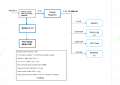
Power Supply Design:
I designed the below circuit using for powering the ADC and remaining circuitry using ADP2503. My simulation results and circuit diagram are given below.The ferrite bead P/N is MPZ1608S601ATA00. The simulation results are given below.
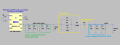

The voltage rails are respectively 3.2551427 V (AVDD) , 3.2995143 V (DVDD & IOVDD)
The proposed design is a battery-powered wearable device that integrates advanced sensing and power management features. The system operates primarily from a single-cell Li-ion battery (3.7 V nominal) and includes a USB Type-C interface for charging and external power supply.
The device uses a battery charger with power-path management ( BQ24075) to ensure seamless operation:
When USB power is connected, the system is powered directly from the USB input while simultaneously charging the battery. When USB is disconnected, the system automatically switches to battery power without interruption. A fuel gauge IC monitors battery health parameters such as voltage, state of charge (SOC), and remaining capacity, reporting these to the microcontroller via I²C.
The system includes an electrochemical front end (AD5941) with a 16-bit ADC for high-precision sensor measurements.
Sensor signals are routed through a multiplexer (MUX) to the AD5941, which interfaces with an STM32 microcontroller development board for data acquisition and processing.
Power Tree:
Power Supply Design:
I designed the below circuit using for powering the ADC and remaining circuitry using ADP2503. My simulation results and circuit diagram are given below.The ferrite bead P/N is MPZ1608S601ATA00. The simulation results are given below.
The voltage rails are respectively 3.2551427 V (AVDD) , 3.2995143 V (DVDD & IOVDD)
- Can I go ahead with this power supply design.Or do I need to go with Buck-Boost + LDO
- Could you please check my battery current consumption calculation.
- If I am using internal reference, will the ripple on the AVDD line is an issue?