About opamp.

Thread Starter

q12x

Joined Sep 25, 2015
2,227
- Yes, now when you tell it, i remember something from that period. The 80's and 90's. It was as you say, very basic,very analog. I remember some titles in the magazines i read but not understood that well because i was too young and really not very knowledgeable. I remember some awful circuits, very complicated, and as you say all analog, doing gods know what. But it rise my imagination about (some) posibilities, even i didnt understood them. Ofcourse I was smelling electronics back then. Yes, i start to forget ,sign that i get old. Can you describe in Words, the modules in your circuit? Or on picture if you want. I dont mind. As long as i get the context better (for the opamp integration). For example: I used That to link with that and feed its signal to this, then processed and split to X and Y ...etc.
- I start to get the feeling that in this case, i mean your pingpong circuit, you used the opamp simply because you needed to generate a triangular waveform. And it was the simplest variant to build. I suppose there are other ways to make such a waveform, but probably are more complicated in circuit, so this opamp basically saved you space and made everything more logical and easy to build, because as you said is "like a black box". To be fair, every IC is a little "black box" that does "someting" and this is the first time i encounter the idea of the "black box", i never cross over it before and it is a fun concept, i like it. So choosing the opamp not only saved space on the circuit board but also made everything more logical and easy to see and link and troubleshoot perhaps.
I hope im guessing right.
- Then.... hmmm, my next Logical question is: How many outputs an opamp can make? Like your triangular waveform, you choose it because you knew that is one posible output that this IC can make. I think, you mentioned already, that because opamp is making mathematical operations, the waveforms outputs are about them? And when you think -opamp- you basically think -mathematical operation- ? Like add,substract, and this one integrator, and so on? Im again, guessing now. Not really sure im hitting the right nail, yet. But im sure im very close.
 
Last edited:
Thread Starter

q12x

Joined Sep 25, 2015
2,227
How to make an inverted power source, to power -V pin (pin4) on my 741 opamp?
Here is what i successfully managed to compile so far, but its way more complicated than I originally imagined.
I did searched a ton of documentation about opamps and in the end I just ask the good google for a "negative voltage circuit" and he give me this circuit.
1600245831965.png
It is working alright but what i find here, is the only way? I imagined doing it with a voltage divider and/or a capacitor divider in paralel, but it is not working like that at all. Maybe only for me is not working? The hell? I was also imagining inverting it directly from an opamp, and feeding the second opamp after that. But nooooo. Again, the hell?
Im happy that i started to finally make a more clear idea about opamps, and also thanks to you.
- And here is what i imagined should work .... it is working, by bringing to gnd (1V) the output voltage instead of -VS (-12V).

1600246750335.png
Dont worry, I understand its doing the right thing,for this configuration, but i was trying to find out the "easy way" of inverting the same power source.
Is there a "easy way" to do it?
(Realistically)Im imagining some transistors or dedicated IC?
Fantastically, should be a simpler circuit somewhere with only resistors,transistors,caps,diodes .
 
Last edited:

dl324

Joined Mar 30, 2015
18,328
It is working alright but what i find here, is the only way?
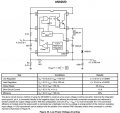
A capacitive voltage doubler inverter can't provide much current. For higher current requirements, you'd use a switching regulator.

This is from AN920-D from On Semiconductor:
clipimage.jpg

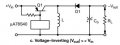
Here's an example of an inverting regulator:
clipimage.jpg
EDIT: Just noticed that the output capacitor in Fig 33 is backwards. They didn't use the correct symbol for 1N5819; it's a Schottky diode.
 
Last edited:

Thread Starter

q12x

Joined Sep 25, 2015
2,227
@dl324 nice, thank you.
I also find out about LM7905.... but it looks that it is not inverting anything, but working with already inverted voltages. Ghhh. Not quite what I need. https://pdf1.alldatasheet.com/datasheet-pdf/view/1154341/ISC/7905/+01WWW74XhSDbvw-z+/datasheet.pdf
Im also imagining 2x7805 regulators splitting voltage and hopefully getting an output as from 2 bateries in series... only imagining at this point.
Im also thinking of the simplest version possible, series voltage sources...somehow. But its tricky.
 

Audioguru again

Joined Oct 21, 2019
6,826
A 780x is a positive voltage regulator and a 790x is a negative voltage regulator. They do not produce the opposite polarity.

An opamp can use a plus and minus power supply or it can use a positive supply but have its + input biased at about half the supply with 2 resistors so that its input and output can swing up and down.
 

Thread Starter

q12x

Joined Sep 25, 2015
2,227
An opamp can use a plus and minus power supply or it can use a positive supply but have its + input biased at about half the supply with 2 resistors so that its input and output can swing up and down.
Though i see it everywhere, i never thought of it as you just explained it. Formidable answer mister @Audioguru again
Love it. Really helpful ! (as always).
I also had to look about the word "bias" on wikipedia. I know "something" about its meaning, but not the full and correct meaning as it is explained there. Now i get it better what you are telling me.
Though you explained it very well, you have 10 points from me, and also i try it many times in my simulator, your voltage divider on the V+ input is only bringing down to the 0V rail (close to it), but NOT UNDER it. Now... this is the real way.
The abstract way (Your way), following what you just said, is basically to split the output voltage in half and think about it as 0-6V as being the negative PS, and 6-12V as positive PS. (PS=power supply). In this case with an input (and PS) of 12V, but it can be any V supply.
The problem is that i need it to actively power an opamp to actually see its real potential, function, usability. And it has some interesting functionality when is correctly and real powered!
- There are some circuits with opamp that Require! this [real] setup (and not the virtual one) to properly obtain the result they are supposed to make.
Here is your idea that you just mentioned, and the proof that is how i say it until here.
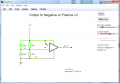
1600312445065.png
You are welcome to make me a circuit and disprove what I just said. Again, remember, this is a learning curve for me. Any help is a great help for me at this point.
 
Last edited:

Audioguru again

Joined Oct 21, 2019
6,826
You must never ever connect the - input of an opamp to the positive or negative supply or disconnect it.
The - input is for negative feedback from its output and/or as an inverting input.
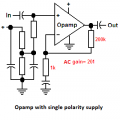
Usually an opamp using a single polarity supply has an audio AC input signal, capacitor-coupled into its +input in addition to its half the supply DC biasing. Like this:
 

Attachments

Audioguru again

Joined Oct 21, 2019
6,826
q12x, you and your simulation software did not read the datasheet of a 52 years old 741 opamp.
1) It will not work with a 5V supply. It is designed to use and is spec'd for a 30V supply.
2) Its inputs do not work within 3V from the positive supply or within 3V from your ground.
3) Its output cannot go within 2V from a supply voltage with no load or within 5V with an LED for its load.
 

dl324

Joined Mar 30, 2015
18,328
I also made an artpage, here
Image for future posterity...
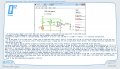
q12-q20200919-ldr-and-opamp-copy-1.jpg

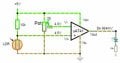
Ive tested today a very nice opamp circuit and also i did understand it pretty well, im very proud now.
clipimage.jpg
As previously mentioned, uA741 will not operate from a single 5V supply. Your simulator isn't giving you realistic results.

The input range is only guaranteed to be 3V from either supply. With a 5V supply, there is no valid input voltage.

clipimage.jpg
clipimage.jpg

Even the LM358, which was designed to operate from as low as 3V, won't accept an input voltage higher than 1.5V below the supply voltage (3.5V with a 5V supply).
clipimage.jpg
clipimage.jpg

You're using an opamp as a comparator. While it will work for slow speeds, we generally use a comparator when we need a comparator; and an opamp when we need an opamp (comparators can also be used as slow opamps).
 

Thread Starter

q12x

Joined Sep 25, 2015
2,227
Thank you. I do what i can with what i have. I am still learning this IC. I managed to figure out more form it in these weeks. I now have a better idea of what is and what it can do. As for the simulator, it is a good one. I also did the test in reality and is very close to the simulator, even though you are not agreeing because you know (probably) more about it than i do. But im testing and learning it as i go, making a lot of mistakes but surfacing some elementary truths about it, in the same time. Thats my quest im doing here. Your input is good to me, because you see it from your perspective, is making me seeing from yours as well. Im not there yet, but you help me.
The problem is that it is not THAT eficient as i thought. I tested with some very damaged ldrs and they work with my transistorized (older) circuit, giving me more clues of how good they are... but with the opamp...they must be medium to good ldrs. Else, its out of some limits i cant see them yet. I think i dont have some very basic measurments tools, like an osciloscope. I hope im right.
Thanks for your input.
 

dl324

Joined Mar 30, 2015
18,328
they must be medium to good ldrs
What is the light and dark resistance?

If the only opamp you have is uA741, at least get some that will work with a single supply. LM358 is my go to general purpose opamp. The uA741 is still a useful opamp, but it has some limitations that novices overlook.

Unless you start using opamps with rail-to-rail inputs and/or outputs, you should pay attention to the input and output voltage specifications.

None of the voltages in your simulation are within specifications and you can't expect the opamp to operate correctly. If you do happen to have actual devices that work, you can't count on it to work for all devices.

You've probably already been told this, but circuit designers will design for worst case parts so the circuit will work even if you have a component that's an outlier.
 

Audioguru again

Joined Oct 21, 2019
6,826
Many opamps like a TLE2141 single, TLE2142 dual or TLE2144 quad have a max allowed supply of +44V and 0V. Their inputs work from 0V to up to 2.1V less than the positive supply. Their outputs can go from almost 0V up to about +40V and drive many series LEDs. The maximum output current of 15mA to 20mA is limited because of the heating it causes.

The maximum voltage gain of an opamp depends on the frequency. The maximum voltage gain drops above about 10Hz to avoid oscillation at high frequencies caused by phase shift.
 

Thread Starter

q12x

Joined Sep 25, 2015
2,227
@Audioguru again
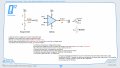
Im very happy that you understand my goal here (to learn this thing) and you are contributing to it. Bravo, thats what I want. So all is ok with what i write there. This is how i imagined the Amplification of an opamp would work... also check the title of the artpage, left down corner. All this is how i imagined and thought about it from my very limited beginer starting point of view. Im very glad you understand my position and dont hit me in the head with it. : )
Yes, i agree, i didnt do a thorough research for all the opamps out there,as you mention some very new models for me, for sure i will in the future, thanks to your help. But for now i will concentrate on understanding this thing and its capabilities...i mean, what i can practically do with it. Thats all im interested to figure out, with all my stupid questions and experiments. They look stupid from outside but for me, hitting the wall with a bang a couple of times, through complete darkness is how i learn the road.
I have also part 2 of this, though is a bit more comprehensive. I am explaining there as clear as i can what it meant to me in the begining, how i perceive it, what i plan to do with it, where to use it, how i understand it so far. And is probaly a bit more hard to read, and a lot more than this here, and more in depth as well. Im curious what you will tell me about it. Im happy with your response for this one here. : ) I was expected to be hit in the head with it. But you surprise me. Which is good.
 

Thread Starter

q12x

Joined Sep 25, 2015
2,227
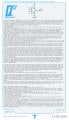
- Voltage divider and opamp part2 is the file name (generic). I discuss about amplification that is made with these 2. Check the title of the artpage,left down corner. Here is the link to the same artpage in my account: https://www.deviantart.com/q12a/art/Q20200921-Voltage-Divider-And-Opamp-Part2-855786106
- The problem that i was trying to avoid posting on your server here, is about the size of my images. They are gigantic. For example this one here is 2000x3491 px and 1.7Mb in size. Thats why I post it there where is a dedicated server and link it here. But your concern is also valid, so ill do it your way also. I can resize it for you if its too big. Tell me a limit that you are comfortable to have it posted here and ill do it, but if its not such a problem as i imagine and 1.7Mb is not a concern, then problem solved.

- Keep in mind, that these artpages i make, are for me in the first place, is like writing down the conclusions i have about the subject i learned until i made it. The fact that i post them publicly is to potentially help other "researchers"/beginners like me in the future. All im doing posting here with you, is to verify the facts if are right. So you are my big brother in this sense, and as you know already, i do exactly as you say... well, filtered by my level and understanding. But definitely i have more to learn from you that are way more experienced than me, im just beginning to smell this things. Also worth mentioning is that my mind is towards megatronics, mechanical electronics, robotics, so all my approach and mentality is in that direction. That is why i write how i write, and think how i think. I mentioned this before, but repetition is the mother of understanding.

q20200921 voltage divider and opamp v3 part2 copy 1.jpg
 
Last edited:

Audioguru again

Joined Oct 21, 2019
6,826
An opamp is NEVER used with a voltage gain or current gain higher than about 200. Instead it always uses plenty of negative feedback to reduce its open loop voltage gain, reduce its distortion and increase its high frequency response higher than the 10Hz with no negative feedback. A voltage gain of 200 can amplify the 0.01V from a microphone to 2V.

Your antique 741 opamp does not work with only a 5V supply. With a +9V and -9V supply its max output with no load is +7.5V and -7.5V. A load current reduces its max output voltage swing.
 
Top