About opamp.

Thread Starter

q12x

Joined Sep 25, 2015
2,227
@dl324
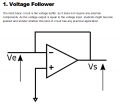
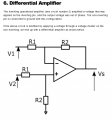
I do not think this circuit is a pure [voltage folower].
1599555663037.png1599555698174.png1599555733562.png
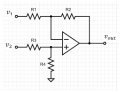
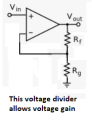
It must have a clean Vout to V- wire. But looking on this circuit, it does not having it at all. But by inspecting other classes, i figure it out that this circuit is actually more a [differential amplifier] class. Because it have a voltage divider on both inputs, but both draining to gnd, while in the original configurations, both voltage divider and differential amplifier V- are draining to Vout. Because of V- draining to gnd, i can't find it's equivalent in my opamps classes. Probably is a bit from everything, a bit of voltage divider, another bit from differential amplifier, and so on. Im a bit too inquisitive sometimes. Sorry for that, but its how i learn, and learn it well.
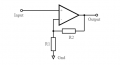
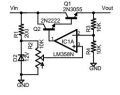
Here's a follower type circuit that's a regulated power supply:
View attachment 216562
 
Definitely not a differential amplifier.

In general the inputs of an OP-amp are the same value when working properly. The difference is essentially zero.

You set a reference. Using a reference IC is a better choice, but we're cheap.

So you divide the output by some number to make in the range of the reference. You don't have to divide.

So, the little OP-amp tries really hard to make the differnece of it's inputs to be zero.
 

Thread Starter

q12x

Joined Sep 25, 2015
2,227
Here is a good question for you guys:
Where do you use most an opamp? In what circuits you used it the most? What was your most used functionality with it? Thanks.
 

MrChips

Joined Oct 2, 2009
34,811
Opamps are used to:

  • amplify voltages
  • boost current output
  • shift DC levels
  • add two or more signals
  • subtract two signals
  • rectify AC signals to DC
  • build low-pass and high-pass filters
  • build regulated DC supplies
  • create triangle wave generators
  • create sine wave generators
  • convert from current to voltage
  • convert from voltage to current
  • convert to log
  • convert to anti-log
 

MrChips

Joined Oct 2, 2009
34,811
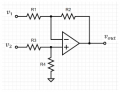
I have given you the two most basic opamp circuits.

1599568230834.png

1599568256248.png

Now let us play around with the first circuit and see what we can do with it.

Connect v2 to GND. This puts R3 in parallel with R4. Replace these two resistors with one, written as R3 || R4.
In essence, the +ve pin is at 0V (well almost, depending on the leakage current of the opamp).
If we are not too concerned with the leakage current, we can eliminate R3 || R4. This is what we have.

1599568541430.png

Forget about the idea of voltage dividers. This is not a voltage divider. Since the +ve pin is at 0V, the -ve pin is also at 0V.
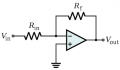
This is your basic inverting amplifier.

Voltage Gain = A = Vout / Vin = - Rf / Rin = - R2 / R1

The input impedance = Rin

Now do the same thing with the other input.


1599568761798.png

Connect v1 to GND.

1599568975500.png

This is your basic non-inverting amplifier.

Voltage Gain = A = Vout / Vin = 1 + (R2 / R1)

Input impedance is very high.
 

Thread Starter

q12x

Joined Sep 25, 2015
2,227
So, for today, I did put in simulator, all 10 circuits from this page: https://www.arrow.com/en/research-and-events/articles/fundamentals-of-op-amp-circuits
They are indeed basic. But i learned something, because in the begining, i practically didnt know where to start and where to finish with an opamp. But after doing this little practical exercise, by simply copy-ing them and test and little play with some values here and there, I got a bit more used to them.
My conclusion after this exercise i did, and after talking with you mister @MrChips , is that you choose a class of opamp and use it wherever you require the function of that class to be satisfied. A bit too fancy explained... in other words (i presume of course) when you, the designer, want a circuit that must have a -(minus) voltage into it, then you go to the class about Inverting opamp. If you want a circuit that will secure 1 side from the other side, then use class of buffers, if you want some bits counted or digital to analog conversion, then use class of DAC or inverting summing amplifiers, and so on. Practically, with 1 IC you can make multiple circuits very diferent in the final result. Again, my mentality was wrap around the idea that an IC has single usage, single destination, and rarely put my head to think other usages for it that the ones specified by the datasheet or magazine. This opamp is also new to me but also hard because i have to adjust to its many usages. For now.
My thought about the MOST basic function that an opamp was conceived, ofcourse its extremly subjective thought and is very personal, to help me put a stick in the ground and link everything else to it, is the folowing: - An opamp original intention, was to simply amplify a voltage divider. And after the success of that breakthrough, people thought to find more usages, just because. Some more or less practical than others. Its how i see it at the moment, and im sure you will probably lough, but i need a good reason for its existance, its development, the truth, even if partially uncovered . I know its weird for you, i hope is not. But is important for me. I can extrapolate easier and faster from this solid belief. I also plan to make a artpage with this fundamental usage of an opamp, as an extension of a voltage divider.
 

MrChips

Joined Oct 2, 2009
34,811
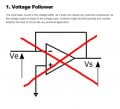
Firstly, circuit #1 in the link that you posted is garbage! Totally wrong!

Voltage Follower Wrong.jpg

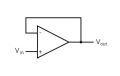
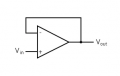
The correct voltage follower is the circuit I posted, also known as unity-gain non-inverting buffer:
1599573609986.png

Secondly, get the idea of a voltage divider out of your head. The circuit configurations I posted are not using voltage dividers.

Operational amplifiers were designed using vacuum tubes before the days of transistors. The concept was to create a voltage amplification module (black box) that a design engineer can utilize without having to worry about the details of the circuit construction.

1599573922573.png

The basic function of the amplifier is to amplify an input voltage to produce an output voltage.

Vout = gain x Vin

From here the designer is able to create new functions based on mathematical concepts, add, subtract, multiply, divide, square, square root, logarithmic, anti-log, derivative, integral, etc.

Control systems were designed using these mathematical models all based on analog amplifier circuits.
The first computers were analog circuits.

Thus, the application of opamps is almost limitless.
 

Thread Starter

q12x

Joined Sep 25, 2015
2,227
A helpful thought:
What do you think when you see a NE555? - I think of bistabile circuit (flip flop)
What do you think when you see a LM3914? - I think VU-meter with 10 leds.
What do you think when you see a LM317? - I think Regulator for 5V (most cases i used it for 5V but 1 time for 3V too).
What do you think when you see a UA741? - right now... as a voltage divider amplification, and also as a buffer. These 2 I understand the best (so far).
You get my point? Not what the entire globe thinks of it, but you, personally.
 

MrChips

Joined Oct 2, 2009
34,811
What do you think when you see a NE555? - I think of bistabile circuit (flip flop)
I think, scrap the NE555 and use TLC555 or LMC555. These are CMOS versions and will produce lower noise on your power supply lines. 555-timer circuits have many applications, the most common application is to generate continuous pulses.

What do you think when you see a LM3914? - I think VU-meter with 10 leds.
Useful for creating bar displays. LM3914 responds linearly with voltage. LM3915 is the correct version for VU-meter applications.

What do you think when you see a LM317? - I think Regulator for 5V (most cases i used it for 5V but 1 time for 3V too).
Useful as an adjustable linear 3-terminal linear voltage regulator. If you just want 5V output then use LM7805 or similar.

What do you think when you see a UA741? - right now... as a voltage divider amplification, and also as a buffer.
As Audioguru will say, 741 opamp is a lousy opamp. There are millions of opamps available today that are far superior than the 741 opamp. For starters, many applications call for single supply, rail-to-rail operation. Best to know your opamps first and your application in order to make a proper choice of opamp.

As I said, stop thinking voltage divider amplification.
A voltage divider reduces the voltage.
Amplification increases the voltage. Don't confuse the two.
 

Thread Starter

q12x

Joined Sep 25, 2015
2,227
@MrChips
I have been building opamp circuits longer than you can imagine.
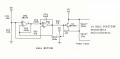
Here is a dual opamp circuit from my blog of a TV PONG game. The function of the circuit is to move the ball in a linear motion across the screen.
Hi again. I had an idea. I hope you will like it. You told me the function of your circuit using opamp. But can you tell me the cause of it? The problem that you face and the way you thought to resolve it using opamp? And please, be explicit and detailed, as you wish. I always like a good story. I imagine is a lot to write, then write a lot. I dont mind. I like to learn through others experience. Its the best and smartest way I did it from little boy but not very often, because i had to do it alone in 99% and that was super slow and very hard. Only if it makes you pleasure, of course. And as always, thank you !
 

MrChips

Joined Oct 2, 2009
34,811
An opamp is a black box.

The beauty of treating an opamp as a black box is that you do not have to worry about the operation of the inner circuitry. You can focus on the mathematics so long as you understand the limitations of the black box.

An ideal opamp has:
  • infinite voltage gain - it will amplify any voltage and make it infinitely large
  • infinite bandwidth - it will amplify all frequencies from DC to ∞Hz
  • infinite input impedance - it takes no current from the signal source
  • zero output impedance - it can output infinite current

A real opamp comes very close to being an ideal opamp:
  • voltage gain >100,000
  • bandwidth > 1MHz
  • input impedance 10^12 Ω
  • output impedance < 200 Ω

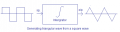
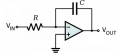
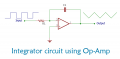
In the TV Pong game I needed to generate a triangular waveform. In other words, I needed a voltage that will increase and decrease linearly with time. From mathematics, I know that if you integrate a constant voltage the result is a linear ramp.

1599757626606.png

Hence I needed to build an integrator using an opamp. That is what I did in the TV Pong circuitry.

This is an integrator.

1599757686742.png

1599757750319.png
 

Thread Starter

q12x

Joined Sep 25, 2015
2,227
Thank you for your explanation. It's a very good explanation. Very engineer like.
I get that you wanted the ball to bounce from corner to corner or the screen. That was the context of the circuit to be made. And that voltage output from opamp probably was converted into some form of Digital input for some decoder or procesor. Im guessing right now, im imagining how i would make it. I hope im close enough to the reality.
And the signal coming into opamp, was from.... a memory of some sort? That stored the previous variables or something? At this point im thinking more like a programmer than an electronist.
 

MrChips

Joined Oct 2, 2009
34,811
There is no memory, program or computer processor involved in this TV Pong circuit. It is done entirely with analog voltage waveforms. There are some digital ICs used in order to count scan lines, generate position and width, and to detect when the paddle hits the ball.
 
Top