The deal is that the DC voltage after rectification is aprox sqrt(2)*Vac(secondary) AND the DC current is about 0.62 of the AC current.
the rule of thumb for capacitance is >1000uF/Amp.
Note that these http://www.farnell.com/datasheets/612776.pdf diodes have a max drop of 1.1 V. The max forward voltage per diod eis dependent on current. Two voltage drops need to be subtracted. i.e. Vdc ~= (Vac-2*Vd)*sqrt(2)
I'll grab that tonight if you feel that's still a pertinent detail.
Like mentioned previously, it was never connected to the unit outside of the - being connected so I guess I skipped the request on the basis/assumption that the solenoid couldn't have been an impacting variable.
The deal is that the DC voltage after rectification is aprox sqrt(2)*Vac(secondary) AND the DC current is about 0.62 of the AC current.
the rule of thumb for capacitance is >1000uF/Amp.
Note that these http://www.farnell.com/datasheets/612776.pdf diodes have a max drop of 1.1 V. The max forward voltage per diod eis dependent on current. Two voltage drops need to be subtracted. i.e. Vdc ~= (Vac-2*Vd)*sqrt(2)
This is pretty far over my head, but I did gain some understanding of what I'm looking at when considering putting my own transformer/rectifier assembly together.
I really had no idea what a rectifier actually did until this, so we're making progress haha!
Units matter:
I get 26.3 Ohms with a multimeter set to 200 Ohms
vs
I get 26.3 Volts with a multimeter set to 200 Volts
vs
I get 26.3 with a multimeter set to 200
vs
I get 26.3 with a multimeter set to 200 (Volts, Amps, deg C, deg F, gain, Hz?)
As well as KISS's comments about the lack of units in post #26 you do not say what the meaning of the numbers are. You should have said "The resistance of the solenoid is ....." or "The answer to the question in post #8 (Or #23) is ....." At least we finally know that the current taken by the solenoid is not excessive. (It would have been just under an amp) I thought it could have been drawing tens of amps. From yor comments in post #25 that you do not even know what a rectifier does I think it is very foolish to even considder attempting to repair a switched mode power supply.
Hmm, this is getting to less than productive at this point.
Isn't it the assumption that when one is speaking of resistance it would be assumed that the measurement would be relayed in Ohms?
How fast were you going on the highway when you got that ticket? "85"
It's assumed MPH, no? Not FPS, or KM.
Why would one feel the need beat their chest on things by inquiring of anything other than the assumed unit? To bolster an ego, or the aire of intelligence?
It also wouldn't be foolish to repair the pcb. I've done it with different items on several occasions, but in those cases the issue was easily identifiable.
In the end, I'm not any closer to understanding why this unit malfunctioned, but I will thank you for the knowledge that a transformer/rectifier is more suitable for my application, and very simple to put together.
While being pretty handy with literally everything, I've never delved into the engineering side of electronics. I've definitely learned a lot here and appreciate the links to different articles. I've gained a lot of understanding from there and now have a much better grasp of how to go about future projects.
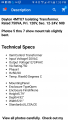
How does this transformer look for a future power supply for this machine?
Do I need to worry much about voltage drop when put through a rectifier? Also, is it possible to suggest with what you know of this machine to recommend the proper capacitor?
I already have another psu coming that I ordered before this one failed that is 48v, that I'll use a 8a rated stepdown to 24v on to run the 24v accessories.
So, you have a Fan, an induction heater and some sort of relay.
So, I'd like to put a Unidirectional Transorb at the power supply.
A Schottky diode in series. (this would lower the output slightly)
And diodes on your motor, heater and the relay coil. These would have to mounted close to the devices.
Need to know your general location to be most helpful.
Your Relay that activates your induction coil could also have problems with inductive loads. The ones above come in various forms and may require a heat sink and "heat sink grease (tiny amount)". One page is here: http://www.omega.com/pptst/SSRDC100V.html
It's unfortunate that "inductive loads" means new rules and repetitive "inductive loads" is even worse.
Switches won't work reliably. Relay contacts may not work reliably,Your power supply dies. etc. the "any switch" doesn;t work, just as the "Any key" doesn't -- Old joke.
What you probably should do is have the resistance of your inductor accurately measured and start from there to get an idea of what size power supply you really need, The current in an inductor can't change instantaneously, so the power supply briefly sees the resistance of the inductor.
When resistances get small we use special meters or do it the hard way which pass a current through the device and measure across the device,
So, a variable power supply and a resistor will do and voltmeter.
You get an estimate, Then find a precision resistor or an ammeter and power supply that will work to give you meaningful numbers. In any event, you measure the voltage across your device and the current through it. Where you put your probes is where you will be measuring the resistance from. See: http://www.tek.com/sites/tek.com/fi...es/2110_2Wire4WireKelvinResistanceAppNote.pdf
So, unfortunately, everything is harder and more expensive.

 Facebook
 Google
 GitHub
 Linkedin