Why won't my linear stepper motor work?

Thread Starter

Ben Varvil

Joined Apr 30, 2018
197
Be careful with ideas like "I'll just vary the supply voltage to control the shot strength"

You will end up with yet another complex problem to solve: how design and build a dynamically variable power supply capable of many amps output.
I was thinking a big potentiometer, but hadn't considered how to address this challenge with a controller. You are right, I'm going to avoid that challenge for now.

Use the micro-controller's PWM engine to control the coil current, it will be much simpler in the end
Ok! Nice. AnalogWrite commands. Super simple.
What if I just PWM the "Left" or "Right" signal pin in my hard wiring? (I'm making the massive assumption that my hard wiring works) If it does, I should be able to then control the cue stick motion with strength and direction with just two PWM pins. That would be fantastic.

As I still have work to do to turn my schematic into a PCB, I'll give programming a shot. My hesitation around doing the control using software is speed. Is this rational?
It seems like the hardwired solution would be instant. The programming solution needs to constantly cycle through each of the 6 sensors checking state. It feels like it would be slow to pick up sensor changes. I'd be using an Arduino, is that an accurate hesitation or is an arduino going to be just as fast as the hardwired solution?

Thank you for your help.
 

Thread Starter

Ben Varvil

Joined Apr 30, 2018
197
Na I can't see how a BLDC looks like a center tap coil too LOL


But I'm sure I no nothing after 34 year of control wiring and motor control .
What is the one on the left doing and what is the one on the right doing?
There both tapped in the center of a coil.
Wonder what they call the left one LOl
Hey Be80be. You've lost me a little on this one. I think you're responding to others on the thread, so I'll not dig into it.

I also want to say that I very much respect your knowledge in this field. I don't mean to be insulting by saying that I need to prove it to myself in the shop tomorrow, but that is how my mind works... If the magnetized steel comes out rather than in, I'll gladly rework my solution based on the new fundamental understanding I'll have gained.

In the meantime, what are your thoughts about the control circuit with the hall sensors? Here is an update with a few more issues resolved:

Judith linear motor schematic 2.PNG
 

Sensacell

Joined Jun 19, 2012
3,785
Micro-controllers function at light-speed compared to almost any electro-mechanical device, don't worry.
What you gain is the total flexibility and control-ability of software.

A good plan would be to design the hardware so that you don't need to create the PWM in software directly, use the built-in PWM engine to create the signal. Use gates to "steer" the PWM signal to the appropriate coils, with ENABLE signals from the micro's IO pins.

Read the sensors, enable the correct coil(s), drive with PWM.

Looking at your circuit, the gate drive will be very slow for falling edges, not a good design for PWM operation, the charge on the gate will slowly decay via the 10K pulldown.

Look into using gate drivers that drive the gate to a full 0-12V swing- at high speed, this makes MOSFET's easy.

http://ww1.microchip.com/downloads/en/DeviceDoc/21946B.pdf $1.00 saves a lot of pain.
 

Thread Starter

Ben Varvil

Joined Apr 30, 2018
197
what's the Resistance of your coils
I used your technique and checked a few times. Coil resistance is 4.5ohms.

This let's your coils push
I activated one coil to pull one piece of steel. I then flipped the steel, and activated the coil again to see if I could get it to push. I tried every orientation I could think of, partially in, fully in, both sides of the coil, and so on. Each time, the coil immediately pulled the steel to the center as it did the first time. Can you please clarify how to get it to push? As of now, I have to stick with the methodology that I can only pull...
 

Thread Starter

Ben Varvil

Joined Apr 30, 2018
197
Epoxy shrinks as it cures, creating very high pressures.
There was a lot of truth to this today. Getting the tube out of the new coils was an absolute beast and my hands are blistered to hell.
But I got it out and connected everything up:


I have a "left" and a "right" button that cycles the appropriate coils, each on for 100ms. (The 4th coil is unused at this point)
The system seems super weak. Definitely not a break shot.

but I have to remind myself:
You braking in your Video you pull then are holding
My hope is that the sensors will resolve the braking issue. But even then, it seems week.

potential ways to strengthen:
- add 2 more coils (6 total) to have 2 duplicate, 3-coil sets.
- increase the input voltage to 24V.
 

Sensacell

Joined Jun 19, 2012
3,785
Your configuration with the steel slugs is most akin to a "variable reluctance" stepper motor, which contains no magnets.
The rotor-stator pole configuration relies only on magnetic attractive forces- only pulling forces.

Glue a strong axially-magnetized magnet to a wood stick, stuff it into your coil and energize it.
This will give you a "feel" for what is going on.
 

Sensacell

Joined Jun 19, 2012
3,785
Going to 24 volts will increase the coil heating by a factor of FOUR.
Double the current times double the voltage = 4 X the power, while only doubling the magnetic field.

For power and smoothness, add more phases.

If you imagine the force on the steel slug as it move through the coil, it's zero in the middle, strongest at a point offset from the center.
The more coil "phases" you have, the more you can use the sweet-spot of each coil. The more phases you add, the smoother the force output will be.

With more coils, you can overlap the drive waveform, so more than one coil is active at a time. imagine an overlapping wave passing through.
 

Thread Starter

Ben Varvil

Joined Apr 30, 2018
197
Glue a strong axially-magnetized magnet to a wood stick, stuff it into your coil and energize it.
This will give you a "feel" for what is going on.
I'm not sure what you're responding to here.

For what it's worth, this was an earlier experiment leading me here...
 

Thread Starter

Ben Varvil

Joined Apr 30, 2018
197
Going to 24 volts will increase the coil heating by a factor of FOUR.
Double the current times double the voltage = 4 X the power, while only doubling the magnetic field.

For power and smoothness, add more phases.

If you imagine the force on the steel slug as it move through the coil, it's zero in the middle, strongest at a point offset from the center.
The more coil "phases" you have, the more you can use the sweet-spot of each coil. The more phases you add, the smoother the force output will be.

With more coils, you can overlap the drive waveform, so more than one coil is active at a time. imagine an overlapping wave passing through.
Yes. So the second set of 3 coils is half a step over.
Easy enough. Thank you.
At first glance, this feels like 12 sensors.
 

be80be

Joined Jul 5, 2008
2,395
Your using steel it will not work with. Just a piece of steel.
Iron will hold its magnetism for bit but steel isn't as good at that.
You have to use a magnet with the steel
Or just magnets
 

shortbus

Joined Sep 30, 2009
10,050
Going to 24 volts will increase the coil heating by a factor of FOUR.
Double the current times double the voltage = 4 X the power, while only doubling the magnetic field.

If you look at the available/commercial tubular motors that do have the force to do this they all use voltages higher than 100 volts.
 

shortbus

Joined Sep 30, 2009
10,050
Na I can't see how a BLDC looks like a center tap coil too LOL


But I'm sure I no nothing after 34 year of control wiring and motor control .
What is the one on the left doing and what is the one on the right doing?
There both tapped in the center of a coil.
Wonder what they call the left one LOl
You aren't really calling those center tapped are you?
 

Thread Starter

Ben Varvil

Joined Apr 30, 2018
197
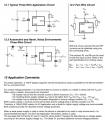
Anybody have experience with hall sensors?
specifically, can I get away with doing the fig 12.1 wiring? Or should I do the 12.3?
There will be 12 sensors mounted near each other. The sensors will be 6 inches or so from the coils. (I could do further if needed, but 6" felt like enough)

hall sensor application details.PNG

Here is testing for the wiring from fig 12.1 (I had to use 2, 100nf capacitors. I don't have any 4.7nf).
It seems to pick up the gaps between steel ok. I'll need to secure everything and test the trigger points.
note: The bias magnet is attached to the wire cutters


Thread Starter

Ben Varvil

Joined Apr 30, 2018
197
Does the wiring diagram above have a typo and they mean uf instead of nf on the capacitor specs?
Is 100nf and 4.7nf a normal spec?
My assorted capacitor kit has all sizes labeled in uf... and has 100uf and 4.7uf capacitors.
 

Thread Starter

Ben Varvil

Joined Apr 30, 2018
197
@Ben Varvil , new up dates on the project?
Hey Shortbus! Thanks for asking.
I'm in a rabbit hole so deep I don't know which way is up...

I'm working to make my own PCB to handle the 12 hall sensors and the 6 coils. I invested a bunch of time learning Autodesk's Eagle software and I made serious progress. Drawing schematics, then laying out parts, traces and layers is absolutely fascinating. Then found out Eagle can only handle 160cm^2 boards. There is no work around and the design I have in mind is larger than that. Damn. Scrap those days of study...

I then shifted to DesignSpark PCB for the design work. Size limitations aren't an issue there. Conceptually the software is also similar to Eagle so that's nice. I'm learning DesignSpark and making progress. I have to say, it took more time than I want to admit to figure out how to import downloaded components from the web. They make it seem so simple. It wasn't... at least for me. Once I figured that out, I was able to import all components in my project except for the Arduino Mega. I have been scrubbing the web trying to find somebody who has made an Arduino Mega that I can import into DesignSpark. No luck.

Soooo, now I'm investing time trying to figure out how to make my own component file for the Arduino Mega in Design Spark. It feels daunting and far removed from my goal, but unless it miraculously shows up as a link here in this thread (wink wink), I'm bogged down in that mire.

Thanks again for asking. Hopefully I'll have a layout to post for your review shortly. Sooner, if I can find an Arduino Mega file for DesignSpark.
 

shortbus

Joined Sep 30, 2009
10,050
Hi, thanks for the update. If you are wanting an easy to use/learn schematic program, to my way of thinking DipTrace is the way to go. I tried bot Eagle and DesignSpark and still couldn't get it, but Diptrace was pretty easy and that's what I've stayed with. https://diptrace.com/download/download-diptrace/ You can even import any parts you might have made in Eagle or their schematics. DipTrace also has mot of the micros in it's libraries.

Like much of what your doing in this, I don't understand why you want to use 6 hall sensors? Most electronically commutated motors only use 3. BLDC, SRM, they all only use 3 sensors to do the job no matter how many "poles" in the particular motor. Basically what you have going on is a linear BLDC, in your latest configuration.
 
Top