Why won't my linear stepper motor work?

Thread Starter

Ben Varvil

Joined Apr 30, 2018
197
If button = high
{
Do this
means it dose
everything that's here
you have a 1.4 second delay
guess what it does that
your coil is on for 1.4 seconds
}
Now read up on how a coil works you'll see that it is trying to move power even after you turn it off so your coil is on for the whole loop
you told it
(If button = high) do this what happens is if this was 1 the (do the loop) starts happening it doesn't check nothing till it's done.
So you can hold the button down or press once all the do stuff will happen till it get's done.
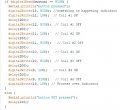
Here is more clearly commented code showing when the coils go off. I recognize you know this, so I'm wondering what you're really saying... the 4 coils close together act like one coil thermally? The turn off time for the coils is equal to the time they are on?

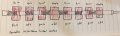
judith code.jpg

Post 203 also shows the code running and the lamp going off 4 times... It also shows me pressing and releasing the button. I understand the button status is only checked after the "if { }" code is completed. I only wanted one cycle.

I'll read up on coils and study how they shut off.
 

Thread Starter

Ben Varvil

Joined Apr 30, 2018
197
It didn't take much digging.

"Coils can have more than one winding, insulated electrically from each other. When there are two or more windings around a common magnetic axis, the windings are said to be inductively coupled or magnetically coupled.[9] A time-varying current through one winding will create a time-varying magnetic field which passes through the other winding, which will induce a time-varying voltage in the other windings. This is called a transformer.[10] The winding to which current is applied, which creates the magnetic field, is called the primary winding. The other windings are called secondary windings."

I see. My coils are magnetically coupled, so it is one coil.
 

shortbus

Joined Sep 30, 2009
10,050
Hi Ben, I don't know or understand the whole coding thing. But do know a little bit about motors. And like I've been saying I don't think this will ever do what you are wanting. Going back to posts #14 and #18, you aren't even close to how a stepper motor is made or how it works. Just having a series of coils, without pole pieces, all you have is a solenoid, it will maybe pull in your magnetic shaft, but not do anything beyond that. I really hate to keep raining on your parade and will quit if you just say the word, but would like to see you get the end project working. Changing wire gauge, coil turns, etc, is only going to be good for the guy selling you the wire, sorry to say.

I hate to argue with the others here trying to help, but unless you do some real research into linear motors you're just doing things that are wasting time and money. It's your to do with like you want but I'm pretty sure all your going to keep doing is finding out what doesn't/won't work. Like I said though, just tell me to "buzz off" and I'm out of here.
 

be80be

Joined Jul 5, 2008
2,395
shortbus If he made it like I posted it would do as he wants, But his code it no good for what he wants
But I would do this with a servo it could be setup to have the same movement as a arm.


Changing his wire will save him some money in part his coil is burning them up LOL
And I think I said five or so times he don't understand how a
linear stepper motor works. I posted a Unipolar stepper there magnets on a round disk.

Now take the disk and cut them off like a roll of wire you now have a strait rod
set coil to move it and he has a linear stepper
 

be80be

Joined Jul 5, 2008
2,395
If you straitening this out so you have a rod move the coils to be the right space alone the rod it will work
and use it in Unipolar


Thread Starter

Ben Varvil

Joined Apr 30, 2018
197
Hi Ben, I don't know or understand the whole coding thing. But do know a little bit about motors. And like I've been saying I don't think this will ever do what you are wanting. Going back to posts #14 and #18, you aren't even close to how a stepper motor is made or how it works. Just having a series of coils, without pole pieces, all you have is a solenoid, it will maybe pull in your magnetic shaft, but not do anything beyond that. I really hate to keep raining on your parade and will quit if you just say the word, but would like to see you get the end project working. Changing wire gauge, coil turns, etc, is only going to be good for the guy selling you the wire, sorry to say.

I hate to argue with the others here trying to help, but unless you do some real research into linear motors you're just doing things that are wasting time and money. It's your to do with like you want but I'm pretty sure all your going to keep doing is finding out what doesn't/won't work. Like I said though, just tell me to "buzz off" and I'm out of here.
Hey Shortbus,
I appreciate you being very clear.
I'll be ready to move on after I prove to myself that this idea doesn't work. I figured this would have been a quick test. Unfortunately I haven't been able to dump full current through the coils... I've been learning a lot about circuits. Once I am able to dump full current and am underwhelmed with the result, I'll be ready to entertain another design approach. Until then, you'll still have to help me with the circuit problems I encounter. :) Please do not buzz off.
 

DNA Robotics

Joined Jun 13, 2014
670
I think you are on the right track with the 3 amp coils.

Maybe this will help you visualize it. Start watching at 3:00 minutes.

https://www.youtube.com/watch?time_continue=3&v=jeHNMjBrvLk

https://longtailpipe.com/video/radial-solenoid-engine-electric-motors-of-a-different-kind/

I don't like that inverted MOSFET driver. As soon as you declare the pins as output, they go low, turning all MOSFETs on for that split second before you set them high.

When I first started playing with CNC toys and interfacing stepper motors, I used GW Basic and the PC parallel port going directly to the final stage MOSFET gates on Epson printer circuit boards. Epson was using 5 volt 74LSxx chips to turn on their MOSFETS to control their stepper motors, so that is what I did with no problems.

Now I would use 100 ohm gate resistors an snubber diodes but Epson didn't.

Now that you are not trying to turn on a 50 amp load, I would try it without the MOSFET driver.
 

be80be

Joined Jul 5, 2008
2,395
This would be the way to go it could be made a lot smaller and the speed and control is great
Seeing it could move a printer head to sign on the doted line. LOL
 

shortbus

Joined Sep 30, 2009
10,050
If you straitening this out so you have a rod move the coils to be the right space alone the rod it will work
and use it in Unipolar

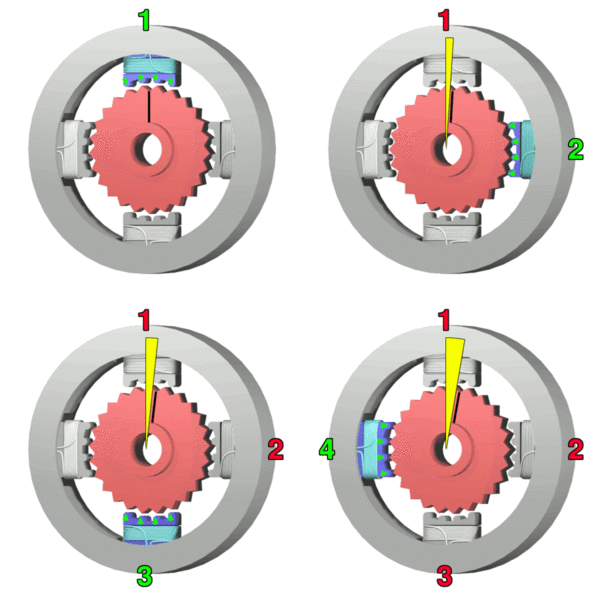
The only thing is even that illustration isn't correct. There are actually two sets of notched stator poles in a "Hybrid stepper" along with two rotors with the notches inline, separated by a permanent magnet. This is what gives them the ability to move, due to the small offset angle between the two sets of stator poles. The offset angle gives a "variable reluctance gap" to the poles. without the variable reluctance once all of the notches are inline there is nothing to make the rotor move to the next step.

The book I have shows it in a more simple form as a stator with four poles and a rotor with five poles. A stepper actually doesn't need to have the permanent magnet in the rotor to work. It just gives one a way of holding position while between steps. The same book shows your illustration but also shows both stators and both rotors. This is a book on electro-mechanical movement theory, that I bought when doing research into making a SRM.
 

shortbus

Joined Sep 30, 2009
10,050
This would be the way to go it could be made a lot smaller and the speed and control is great
Seeing it could move a printer head to sign on the doted line. LOL
This was what ink jet printers used before they found the faster and cheaper way of movement for the heads. It is a linear variable reluctance motor. They use a similar set of notched segments and a notched full length rail, like a rack gear. One set of the moving segments is offset to cause the 'variable reluctance'. to get the movement. This is very similar to how maglev trains move forward and backward, and how the modern amusement park rides do their movement.

I've tried to give a easier way of doing this for him but since it was his idea and it's his time and money, I'll just keep quiet and watch until all of the other ideas are tried and not working. In the end it has nothing to due with coil amps or driers or anything like that, it comes down to proven theory on elector-mechanical movement that there are many books and even PHD Thesis papers written on the web about how it's done. I've been down the rabbit hole in my own research, the only hold up on my project is not having my EDM machine finished so I can modify the motor stator.
 

be80be

Joined Jul 5, 2008
2,395
Are you kidding lord I could make a working linear stepper motor in hour I posted one coil moving a steel rod both ways
made out of gunk laying around.

And the ink jet printer ink thing came out of a year old printer most newer printers have only motors that is not a stepper
it's a plain old 24 volt motor
People buy a new one every time the ink runs out.
A $39 ink jet and it's $40 for new ink LOL
You find them all the time for nothing but none of the newer one's have steppers even a lot of newer blue ray's have motors no stepper's

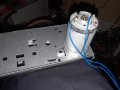
motor.jpg

And I said what TS is doing is not going to work not being mean or nothing but if there was only one kind of car that's what we would get.

The only reason I said to change his coil wire is you can clearly see it's maybe 16 gauge couldn't be more the 50 turns
that would pop his fet alone he has a dead short the way he has it wired the back emf could be who knows but I'm sure it's more then
his fet's can handle
 
Last edited:

be80be

Joined Jul 5, 2008
2,395
The problem Here is what the TS has is a coil the way he has made it and trying to use it is not much good

He need to have coils that have space and are wired for push pull that way he can draw the rod across the coil then the next coil fires it pull it across the next coil without space it ends up holding the rod in place to move back the coil has to change poles.
You have two ways to do this unipolar or Bipolar or go with what shortbus said linear variable reluctance motor

But there more cars in the world so there is more ways
Solenoid which is made for along stroke
Servo
stepper
 

Thread Starter

Ben Varvil

Joined Apr 30, 2018
197
Maybe this will help you visualize it. Start watching at 3:00 minutes.
Wow. What a project. So that's what a 3amp coil looks like. Interesting that he put washers on the ends. I wonder if that was purposefully to amplify the magnetic field or just a means of containing the windings. When I visualize turning the plunger of his 3 amp coil into a pool cue, it makes me feel like my coil would need to be 5 times bigger.

I don't like that inverted MOSFET driver. As soon as you declare the pins as output, they go low, turning all MOSFETs on for that split second before you set them high.
I feel the same way. Anything in the controller fails and the system goes full power. Terrible. If a version of this idea makes it on the machine, I will definitely have to figure out a non-inverted solution.

When I first started playing with CNC toys and interfacing stepper motors, I used GW Basic and the PC parallel port going directly to the final stage MOSFET gates on Epson printer circuit boards. Epson was using 5 volt 74LSxx chips to turn on their MOSFETS to control their stepper motors, so that is what I did with no problems.
I'm just putting together that the wires in a parallel port transmit MOSFET gate signals. HA!
Am I looking at the right data sheet? https://www.futurlec.com/74LS/74LS00.shtml
I'm trying to understand how 4 NAND gates drives MOSFETS... not getting it. But it's a tangent anyway.

Now that you are not trying to turn on a 50 amp load, I would try it without the MOSFET driver.
This line really gets me thinking. I have seen that dumping 50 amps makes the rod JUMP. I have also seen that using less current (post 203) doesn't move the rod. I'm very much second guessing going the 3 Amp approach, especially after seeing the scale of a 3 Amp coil in that video.
Just for conversation, if you were to try to precisely control much higher amperage what you do?
 

Thread Starter

Ben Varvil

Joined Apr 30, 2018
197
This would be the way to go it could be made a lot smaller and the speed and control is great
Seeing it could move a printer head to sign on the doted line. LOL
It is impressive what you pull together in 5 minutes.
I agree that what you show here has great speed and position control. How are you controlling the motion?
It would be interesting to do the numbers on what motor would be required to supply force enough to reach professional level break strength.

I'm hoping to move a load that is at least 5x that of a cue ball... 2.2lbs.

I'll circle back to this if and when I give up on the electromagnetic solution.
 

Thread Starter

Ben Varvil

Joined Apr 30, 2018
197
One set of the moving segments is offset to cause the 'variable reluctance'. to get the movement. This is very similar to how maglev trains move forward and backward, and how the modern amusement park rides do their movement.
Interesting. So one pole is half aligned making each step length half the width of a rotor pole. Smoother operation. Yes, I was intending to have my ferrous material fully aligned with the first coil and to then have it pulled towards full alignment with the next. I see now how that creates tremendous "torque ripple".

I've tried to give a easier way of doing this for him but since it was his idea and it's his time and money, I'll just keep quiet and watch until all of the other ideas are tried and not working. In the end it has nothing to due with coil amps or driers or anything like that, it comes down to proven theory on elector-mechanical movement that there are many books and even PHD Thesis papers written on the web about how it's done.
I'm not reading the PHd papers. BUT, I proved to myself that magnets, or ferrous materials, jump to the center of an activated coil. My idea to put magnets or metal in a pool cue and to then advance the cue with precisely activated coils feels like such a small step from that observation. Here is an updated sketch incorporating my understanding of variable reluctance. That do you think?

linear motor pool cue.jpg

up on my project is not having my EDM machine finished so I can modify the motor stator.
Whoa. You're making an EDM machine. Have any progress links to share?
 

be80be

Joined Jul 5, 2008
2,395
The unipolar it using center tap coil or haft of the coil your still abe to push pull with it.
It's controlled with 4 transistors or mosfet's
Bipolar needs 4 H-Bridge's to control it.

@ post #211 they move lot more then 2 pounds this way only needs one h-bridge and a arduino

Variable reluctance linear motor is like calling a car ford so you don't owe Chevy any money for making your own car.
A reluctance motor is a type of electric motor that induces non-permanent magnetic poles on the ferromagnetic rotor. The rotor does not have any windings. Torque is generated through the phenomenon of magnetic reluctance.
Variable reluctance linear stepper there all about the same
when you use a rod for the rotor in linear fashion with coils spaced alone the rod
that is your rotor.
As a matter of fact i showed you a video of that yes it was just one coil I didn't make 4
but it could move rod in or out did not burn up your fet's .
If you made 3 more the rod could move in and out as long as you wanted it to point.
To move your rod you need to have space the coils can't just be next to each other or you just pull and stop just like 2 magnets you can push till you get to close then it pulls in and stays. I'm sure you know that.
 
Last edited:

DNA Robotics

Joined Jun 13, 2014
670
I don't know the amps of the coils in that video. I would think a lot less than 3 amps.

I got the 3 amps number from your calculations.

As was mentioned earlier, I'm likely pulling much more current than I think I am. So, it feels like time to redesign the coils. I'm balancing the numbers: Wire gauge, number of coils and overall resistance... It feels like the system I have will be able to handle 3A, motivating me to shoot for 4ohms. Does this sound like a good plan? 4ohm, coils?
If I selected a thin, 30 gauge (0.01" diameter) wire with 103ohms per 1000' I'd only need 38 feet to get my 4ohms. 4 ohms gives 3 Amps, but 30Ga wire gets to 1600F at 3 amps. So no go.

25 Gauge wire (.0179" dia) gives 4 ohms at 123 feet. 3 Amps gets 25 gauge to 800F. 123 feet is better, but that is only 20 wraps around my 2" diameter tube.
 

Thread Starter

Ben Varvil

Joined Apr 30, 2018
197
The unipolar it using center tap coil or haft of the coil your still abe to push pull with it.
It's controlled with 4 transistors or mosfet's
Bipolar needs 4 H-Bridge's to control it.

@ post #211 they move lot more then 2 pounds this way only needs one h-bridge and a arduino

Variable reluctance linear motor is like calling a car ford so you don't owe Chevy any money for making your own car.
Variable reluctance linear stepper there all about the same
when you use a rod for the rotor in linear fashion with coils spaced alone the rod
that is your rotor.
As a matter of fact i showed you a video of that yes it was just one coil I didn't make 4
but it could move rod in or out did not burn up your fet's .
If you made 3 more the rod could move in and out as long as you wanted it to point.
To move your rod you need to have space the coils can't just be next to each other or you just pull and stop just like 2 magnets you can push till you get to close then it pulls in and stays. I'm sure you know that.
I needed to call it something. I'll call it a chevy.
Post 211 is code from the arduino. Not following.
Yes, I agree now after everything you've said and after what I've read: I need space between the coils.
I'm struggling with the H-bridge design, so motivated to go Unipolar. I'm also motivated to use steel "rotors" rather than magnets because I'd like to not have permanent magnets around the other sensors in the machine.

I have enough wire on the way to make 4, 3 amp coils. I'll build everything starting tomorrow (half of the sketch I posted before) and hopefully get far enough to prove to myself that this idea has merit or evidence to enough to warrant a whole slew of "I told you so"s.

Will post.
 

be80be

Joined Jul 5, 2008
2,395
Magnet is not amps in a small loop of big wire, The more wire used the stronger the electro magnet.

There one more thing you really need to be careful this could end up hurting you .
This can move a rod at great speed once you get it right.
So don't point it at you when testing
 
Top