@bertz, Don't waste your time on this. He claims not to be an electrical engineer or know how things work, but refuses to listen to people that do. Tonyr had the right idea, bail on this thread.
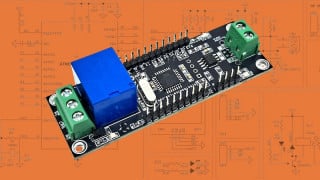
Hey Alec, this is where the buck boost converter comes into play.
It automatically increases BOTH the current AND the voltage at the same time, within the set limits you programed into the unit.
It does not drop only one or the other. it pushes both to maintain preset levels.
Think of it this way you have 3 H3 12v @ 4.8A(55 watts) halogen bulbs, a transformer, and a rheostat.
If you have just a transformer putting out 16 @ 7 amps,
First if you apply 16v of power at 5A the bulb will exceed the recommenced 55 by 25w, and will be very bright (shortening the life of the bulb)
The only way to reduce the power to 12v is by using a rheostat between the transformer and the first h3 bulb. This will manually decrease the power in exactly the same way as reducing the CC on a buck boost pot.
If you apply the 12v to the first h3 bulb (this will represent the wire in the air without any load) the h3 bulb will shine very brightly you are at 12v and the maximum amperage about 4.8a the bulb desires to use at that voltage . Correct? in this case the voltage does the work and carries the amps at 55w of power
Now if you put in series the second H3 bulb (this one represents the load in the cut) AND If you have not adjusted the power on the rheostat and are running 12v what happens? Both bulbs will dim down until the current is balanced between them correct? 55w/2 = 22.5w per bulb.
So now if you adjust the rheostat to full power 16V@7A the bulbs will shine full power 16x7-105w (or near enough) In this case the amperage does the load and carries the voltage. correct?
So now if you forget to reduce the power on the rheostat as you approach the end of the cut, all of a sudden that 55w bulb will be using 35w, then 20w then 10w then 0w and it will apply 16v@7A to only the first H3 bulb, what happens?? It will send 105w of power to the bulb the bulb will use about 80w of power shining extremely bright and perhaps, (maybe not the very first time but eventually) it will burn out the bulb.
Now lets say you have a massive load 5 (in total 1+4) you ramp up the transformer to say 72v@5 A the bulbs will still work but as soon as you start removing the load (because more wire is being exposed to the air getting hotter), (220w down to 110w, to 55w to 10w to 0w on the load,) remove the load and forget to dial down the rheostat, you will be sending 75v to a 12v bulb, what will happen? If you are lucky it will burn the bulb out in a spectacular flash, (in the case of a hotwire, it will melt or sometimes explode)
Now lets say you have your system set up for a heavy load, but can not be bothered to adjust the long wire shorter or to reduce the power because you are lazy. So you have it set up for 800 degrees on a long wire with high voltage, the temp is the wire? It will exceed 800 degrees, probably closer to 1100 degrees. Now you decide to cut a 1” wide piece of foam, what is going to happen probably burn the foam at worst, and make an uneven jagged cut at best.
This is why so many hobbyist complain that their wires don’t last long and they get jagged cuts chainsaw cuts at the end of their cuts when using the 800 degree mark. As the wire pulls out of the foam, the part of the wire that is in the air starts to heat more than the wire in the cut. And the wire being conductive will try to balance out the heat.
This also why when you watch so many DIY systems, when they make the cuts, they are hauling hard on the wire and at the end of the cut you hear twangggg. Why? Because to avoid the jagged cuts at high temps,800 degrees, they keep the wire cooler to get a smoother cut relying on pressure and lower heat to keep the cut clean.
Now if you take and put in a 12v 10A transformer, remove that rheostat, and put in a buck boost converter it will automatically adjust to your presets.
If you set the presets to the recommended voltage and amps suggested by the wire mfg, into the buck boost converter, when there is no load on the system the wire will be 800 degrees, the moment you put a load on the wire it automatically adjust no matter what the load is large or small it will automatically adjust.
With a buck boost converter you can set an infinite values, say you want 1v@ 10A you got it 87v@3A you got it, or 13.4v @100ma you got it.
With the listings of buck boost converters they say constant current, what they are really saying is that the amps and volts will be adjusted automatically to make a stable output within the presets. This is done by adjusting the voltage to create a constant amp current that is independent of the voltage but part of the voltage at the same time.
@bertz, Don't waste your time on this. He claims not to be an electrical engineer or know how things work, but refuses to listen to people that do. Tonyr had the right idea, bail on this thread.
Yeah Shortbus, I'm afraid your right. He is clueless regarding basic DC circuit theory, yet pontificates in this long epistle full of inaccuracies. I had to respond to set the record straight since a lot of neophytes watch these threads.
As a sidebar, I have a lot of experience cutting foam cores and built my own power supply from stuff around the shop. I still have it, so today I opened it up just to see what I did back then (circa 1985). Low and behold I paralleled a couple of control transformers and built a homemade dimmer with a pot, triac, a couple of resistors and a diode. Puts out 0 to 28 VAC. Ah, but what do I know!
Yeah Shortbus, I'm afraid your right. He is clueless regarding basic DC circuit theory, yet pontificates in this long epistle full of inaccuracies. I had to respond to set the record straight since a lot of neophytes watch these threads.
As a sidebar, I have a lot of experience cutting foam cores and built my own power supply from stuff around the shop. I still have it, so today I opened it up just to see what I did back then (circa 1985). Low and behold I paralleled a couple of control transformers and built a homemade dimmer with a pot, triac, a couple of resistors and a diode. Puts out 0 to 28 VAC. Ah, but what do I know!
That is exactly like the Jacobs circuit I linked to for him, on page #2 I think. He responded by telling me about how low voltage AC won't work. Later he told me how the low voltage AC would "cook the internal organs of the operator, like a microwave oven"! He is clueless! He may have read a book about the Edison vs Tesla electric wars though.
PS, is the "Bert's hot dog stand" still in business outside of Washington? Or was it Burgettstown?
That is exactly like the Jacobs circuit I linked to for him, on page #2 I think. He responded by telling me about how low voltage AC won't work. Later he told me how the low voltage AC would "cook the internal organs of the operator, like a microwave oven"! He is clueless! He may have read a book about the Edison vs Tesla electric wars though.
PS, is the "Bert's hot dog stand" still in business outside of Washington? Or was it Burgettstown?

 Facebook
 Google
 GitHub
 Linkedin