TPS61088 IC Boost circuit not up to parameters

Thread Starter

Sphades

Joined Mar 7, 2020
25
Hello everybody!

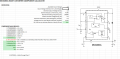
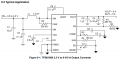
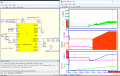
I am trying to design a boost converter using TPS61088 IC. I used the design tool from Texas Instruments to get the values for the components. Here is the circuit:
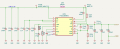
1737141585711.png

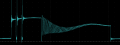
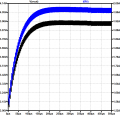
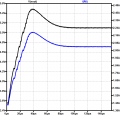
The voltage output seems to be fine. I get 5.1V output. The circuit it's designed to be supposed to handle a current output of 4A. However, as I try to increase the load current the behavior is unexpected. The following picture shows the waveforms for a 3.3V input and a 0.1A current draw. Keep in mind the labeling is wrong. The current is the output current:
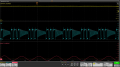
low_current.png

As I increase the current, it seems to get better:
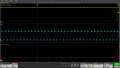
mid_2.png

Up to a point where it gets bad again:
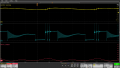
high_curent.png

And at around 1.6A output current, it completely breaks (notice the output voltage):
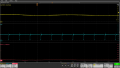
1.6A.png

Anyone got any idea what could be wrong? I suspect some weird interaction between the inductor and 100nF capacitors since the SW frequency is exactly their resonant frequency (600kHz) but I might be wrong. I don't exclude a layout mistake if that is possible given the behavior. The inductor saturates around 16A so I don't think that is the problem.

Thank you for your help!
 

MisterBill2

Joined Jan 23, 2018
27,160
What is the current capability of the voltage source?? AND what does the input voltage do?? If the input drops excessively that will be a problem.
 

Bordodynov

Joined May 20, 2015
3,429
I advise you to discard the C218 10uF capacitor. I have simulated your scheme in Qspice. It performed very poorly on a light load. Then I connected MODE to the common wire (GND). Everything started working well both at light load and at 4A.
1737181734986.png
 

Thread Starter

Sphades

Joined Mar 7, 2020
25
What is the current capability of the voltage source?? AND what does the input voltage do?? If the input drops excessively that will be a problem.
The source is not the problem. It goes up to 15kW. The input voltage is steady all the way. I had no problem with it dropping.

I advise you to discard the C218 10uF capacitor. I have simulated your scheme in Qspice. It performed very poorly on a light load. Then I connected MODE to the common wire (GND). Everything started working well both at light load and at 4A.
View attachment 340606
I will try that when I have time and see how it goes. Any ideea why it would work?

Thank you both for your responses!
 

MisterBill2

Joined Jan 23, 2018
27,160
The source is not the problem. It goes up to 15kW. The input voltage is steady all the way. I had no problem with it dropping.


I will try that when I have time and see how it goes. Any ideea why it would work?

Thank you both for your responses!
That capacitor, C218 was in the feedback loop and certainly created a phase shift so that it was no longer stable.
AND, while the power source was not the problem, certainly a marginal power source would cause problems.
 

Thread Starter

Sphades

Joined Mar 7, 2020
25
It seems i have managed to correct the weird current waveforms by removing that capacitor. Thank you both for your input. However, now, my output voltage drops as soon as I try to draw any current. By measuring the SW pin it seems the duty ciycle never gets changed. Any ideas why?
 

MisterBill2

Joined Jan 23, 2018
27,160
If there is o longer any regulation, then my first guess is that the feedback loop to pin 17 has been disturbed. So that will be the first area to check. And possibly a smaller value capacitor in place of the 10Mfd C218?
 

MisterBill2

Joined Jan 23, 2018
27,160
Just checked it now. It seems I have regulation but only up to 0.8A output current
OK, I recall there was a problem at higher currents before, also. It may be that the inductor is not able to store enough energy, and it might possibly be that the power supply voltage is dropping excessively. AND, it might also be excessive interconnect resistance. OR is this a siulation??
 

Thread Starter

Sphades

Joined Mar 7, 2020
25
Late update since I had to redesign the whole circuit due to another mistake, except for the boost part. I managed to get it working up to 1.2A now. However after that, the voltage drops to about 4.7V. I think that the inductor might be the problem. Although the datasheet says it should saturate at about 13A.

I also simulated the circuit exactly as I have it and it works properly.

One more thing that I noticed (might not be helpful at all but just a fact) is that if I probe the feedback pin with a multimeter, with no load or at small load, the output voltage drops to about 4.7V simply by using the multimeter. HOWEVER if I get past the 1.2A threshold as I mentioned and the output voltage drops to 4.7V, as soon as I probe the feedback pin with a multimeter, it jumps back to 5.1V.

Honestly I understand nothing of this behavior and currently I am stuck. Anybody has any other ideas?

Thank you!
 

BobaMosfet

Joined Jul 1, 2009
2,211
BOOST Converters are not magic. You are converting voltage to current. If you cannot input enough voltage, you CANNOT get enough current out of it. Period.

Just FYI, you CANNOT get both high voltage and high current out of a BOOST converter. It is one or the other, because that is how electricity works. Your circuit is ringing, likely because of improper capacitor values. DO NOT rely solely on the datasheet, as they can have errors. Remember, current output is a fraction of what you are asking the IC itself to generate within itself (peaking due to inductor) and it may be trying to protect itself thermally. You need to know these factors. Look at the datasheet power-curvves. Normally the example usage in a datasheet is the ACTUAL capability of the IC, not the "advertised" information- which is always made to look better than a competitor.

Learn how to calculate the values yourself, or use a different IC. Here is an example of an MC34063a Calculation, based on your values of: 2.8V in, 3.3V out @ 4A.

1741016012598.png

Look at the Ipk value- 11.4A! Look at the wattage through the IC 22.1W!

If you are stuck on using TI, I suggest alternatives that might work better (and require fewer components):

TPS63010
TPS63011
TPS63012
 

Attachments

BobaMosfet

Joined Jul 1, 2009
2,211
Did you even look at the datasheet recommended operating values, and max values? The datasheet starts at 4.8V output, 3.3 is too low per their recommendation.
 

BobaMosfet

Joined Jul 1, 2009
2,211
I hate to say things like this, but sometimes I'm utterly gobsmacked. OMG. Does anybody on this site ever look at a datasheet before popping their mouths off with inane answers?

It is unlikely you will find any BOOST converter that will ever output 4A with the voltage you're inputting and the thermal high that puts on it.

Further more, in the datasheet, for the IC you are using, the give you an exact example of what is happening to your scope signal:

1741017558765.png

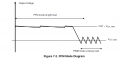
This in the datasheet under PFM MODE:

1741018249045.png

Maybe I'm the only actual Electronics Engineer on this board. IMHO.
 

Thread Starter

Sphades

Joined Mar 7, 2020
25
Ok. First of all, if you so not want to help, no one forced you to. But please refrain from being mean for uncalled reasons. It's just a question.

Second of all, if you answered, let's take a trip through your "opinions" and see what we can make of them:

BOOST Converters are not magic. You are converting voltage to current. If you cannot input enough voltage, you CANNOT get enough current out of it. Period.
Absolutely false statement. Any type of DC/DC converters work by converting input power to output power. Notice that if you get enough power at the input, you absolutely can get enough power at the output as long as you account for losses. There is no reason to not be able to get high current at the output as long as your source can supply enough current AND your switching IC can allow it. So it only matters if the boost converter is designed to handle that current, and the total input power meets or exceeds the required output power:

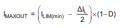
1741019921331.png

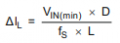
By taking a look at the picture above you can see that the max output current depends on the duty cycle, maximum allowed current through the IC and inductor ripple current which also depends on input voltage, inductance, switching frequency and duty cycle.

1741020025330.png
Remember, current output is a fraction of what you are asking the IC itself to generate within itself (peaking due to inductor) and it may be trying to protect itself thermally.
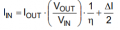
True. If we also account for the input current which also depends on output current, output voltage, input voltage, inductor ripple current and the efficiency factor η which accounts for losses n the circuit:

1741020145331.png

So, you can deduce yourself the fact that there is absolutely no law that states that you cannot get enough current if you don't have enough voltage. Only if you don't have enough power. Remember, we are talking energy here. That is the point.


Did you even look at the datasheet recommended operating values, and max values? The datasheet starts at 4.8V output, 3.3 is too low per their recommendation.
Sure I did. Let's take a look together!

1741020526226.png

Not sure where you got the 4.8V from. You can clearly see that the minimum voltage is 2.7V since it is also specifically mentioned in the datasheet that "the TPS61088 has a wide input voltage range from 2.7 V to 12 V to support applications with single-cell or two-cell Lithium batteries. "


I hate to say things like this, but sometimes I'm utterly gobsmacked. OMG. Does anybody on this site ever look at a datasheet before popping their mouths off with inane answers?

It is unlikely you will find any BOOST converter that will ever output 4A with the voltage you're inputting and the thermal high that puts on it.
If you hate to say things like this don't say them. Even if you were somehow right, your behavior is uncalled for. As for the "unlikely" part, let's take a look at the typical application in the datasheet:

1741020730602.png

Here it is clearly visible that the typical application is able to provide a 9V 3A output from a 3.3V supply source. Not too far from my application, is it?. I wonder where you got the information that you cannot output 4A with my voltage. I'm curious.


Further more, in the datasheet, for the IC you are using, the give you an exact example of what is happening to your scope signal:

View attachment 343661

This in the datasheet under PFM MODE:

View attachment 343664
Let's take another look at what you posted here. My plot from the oscilloscope contains the probing of the SW pin of the IC. The image you took from the datasheet which, by the way, barely resembles my plot (notice the dips to 0V), is showing the Output Voltage (not the SW node) as the load increases, and the fact that at heavy load the IC switches to PWM instead of PFM switching. Not really related to my picture at all.

Maybe I'm the only actual Electronics Engineer on this board. IMHO.
Not to sure about this one, but if you need some additional study material on boost converters I have attached two amazing starting material at this post. Please take a look at them.

And next time, please try to be considerate of other people and do not answer if you have no actual intention of properly helping.

One last point. Take a look at your signature here:

RACISM/BULLYING/PEER-PRESSURE/DOMESTIC-ABUSE-- These are NEVER ok. Only a mind governed by unreasoning emotion, bereft of true intelligence chooses such measures, such outright hate- and at a very real individual level it is outright terrorism. At what point do people try to be more, instead of usually taking the easy way and devolving to less?
And maybe read it once or twice. Because even if you were right you had absolutely no right to bully someone else who just wants some help, or to expand their knowledge.
 

Attachments

Thread Starter

Sphades

Joined Mar 7, 2020
25
On another note, @MisterBill2 if you are interested in the topic still, it seems I found the culprit. My circuit is designed to work with a 5mOhm DC resistance inductor. The ones i have have 50 times that amount, standing at about 250mOhms. Did not test it yet, but could be the reason.

Here is the LTSpice simulation with almost 2A current draw with 250mOhms DC resistance of the inductor

1741021649956.png

And here is the simulation with a 5mOhm DC resistance inductor:

1741021771849.png

Seems to match my problem pretty closely.
 

Thread Starter

Sphades

Joined Mar 7, 2020
25
Update. That did not solve my issue. It seems that the inductor was fine, I just measured wrong. The problem persists. I can draw up to 1.3A of current and it drops to around 4.99V. As soon as I draw 1.4A, the voltage dips to 4.3V.

Anyone got another idea?
 

MisterBill2

Joined Jan 23, 2018
27,160
I looked at the posted circuit and what I see is that the boosting ability depends a WHOLE LOT ON ALL OF THE "Ground" connections for those capacitors. Of course, if the failure is while in simulation then it does not matter, because in simulators all ground connections are perfect.

And certainly I am not intending to be critical of anyone, BUT as I have warned others, SWITCHER supplies are one of the most difficult designs for ANY EE to make work optimally. I AM a real EE, and what I can tell you is that EVERY part of that circuit matters, including conductors and terminations.
 

MisterBill2

Joined Jan 23, 2018
27,160
OK, now here is a specific suggestion: INvestigate the ground connections!! In detail, connect the scope probe ground to the two IC ground pins, shown as #20 and #21 on the circuit drawing in post #1, and then probe the grounded connection of those capacitors showing a ground symbol on that drawing. And tor the ungrounded side of those capacitors.

What it looks like to me is that one of the capacitors is not able to provide an adequate amount of capacitance to the control circuits inside the IC.
 

Thread Starter

Sphades

Joined Mar 7, 2020
25
Thank you for your suggestion!

I will try to analyze this in depth and come back with the results once I have some time.
 
Top