TL072 unity buffer circuit oscillating with floating input?

sghioto

Joined Dec 31, 2017
8,634
If that is the case, then put the second channel probe on the output and see if the signal disappears.
I thought that was mentioned in post #32. With the scope on the input the noise was eliminated.
The input impedance of most scopes is 1M with some capacitance.
 

Ian0

Joined Aug 7, 2020
13,132
I thought that was mentioned in post #32. With the scope on the input the noise was eliminated.
The input impedance of most scopes is 1M with some capacitance.
Not the way I read it. He said that the signal was present on pins 1 and 2, but not pin 3, but he didn't say that the signal on pins 1 and 2 disappeared when he connected the probe to pin 3.
 

Thread Starter

joulupukki

Joined Sep 9, 2022
271
What make is your TL072? Back in the 1990's when I used to work in professional audio, we always insisted in Motorola or Texas TL072s, because the SGS-Thomson ones were not unity-gain stable.
Texas Instruments. Most all our parts we’re using for these are from Mouser. I’ve tried TL072, LM358, TLV2372, OPA1642, OPA2134. The TL072 sounds the closest to me like my guitar with a 10 foot cable plugged straight into my amp. Some of the others are close, some make it sound thin, etc. TL072 seems to be a good balance of transparent sound and inexpensive … and also allows
 

Ian0

Joined Aug 7, 2020
13,132
Should give a shout out to crutschow.
Problem could have been solved hours ago.
:)
Steady on now! You've added a tiny amount of capacitance and this one works. Will the next one work? Bear in mind that the tolerance on that capacitor is ±120pF, more than half of the extra capacitance you added. Unfortunately, I think you have a sticking-plaster, not a long term solution.
 

Thread Starter

joulupukki

Joined Sep 9, 2022
271
What does the tiny amount of capacitance actually do? What’s the theory/practice behind this?

…and chances are we could potentially solve it by somehow improving our input trace layouts?
 

sghioto

Joined Dec 31, 2017
8,634
What does the tiny amount of capacitance actually do? What’s the theory/practice behind this?
…and chances are we could potentially solve it by somehow improving our input trace layouts?
It's a low pass filter.
I suspect noise from the screen is the culprit.
Can you disconnect power to the screen while still using the buffer amp?
And yes a different layout might help as well.
 

Thread Starter

joulupukki

Joined Sep 9, 2022
271

Thread Starter

joulupukki

Joined Sep 9, 2022
271
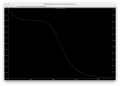
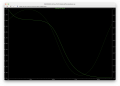
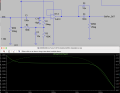
Buuuut, look at the simulation of the input impedance in LTspice...

First one is 1nF only. Second screenshot is 1nF with 10K resistor.

1746932414638.png
1746932442853.png
 

Thread Starter

joulupukki

Joined Sep 9, 2022
271
Also confirmed that now my guitar doesn't sound as bright in buffered bypass vs true bypass. I don't think this solution is gonna fly.
 

Thread Starter

joulupukki

Joined Sep 9, 2022
271
The lowest cap I have handy is a 10pF MLCC. I put it temporarily in place of the 1nF and the buffer sounds pretty good. I'll have to make some recordings and compare them more surgically, but this is how a 10pF cap impedance simulates:1746933840613.png
 
Top