Theory of Everything

MrAl

Joined Jun 17, 2014
13,724
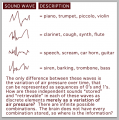
It's been condensed into this graphic... any answer?

View attachment 203347
The answer is obvious. According to the 1970's recipe, you put the lime in the coconut mix it all up.

What are you trying to prove?
I think maybe what you are missing are those brain teasers that are not able to be discerned by the brain.
The brain uses storage and heuristics and the use of heuristics does not always lead to the right solution.
Some brains will be able to figure out a certain passage others wont. It depends on their learning history and basic intelligence.
In the case of the game of chess the players use heuristics to assess the position and what lines are plausible based on a limited depth brute force analysis. Sometimes it works, sometimes it doesnt. If it doesnt and the other player picks up on the error, you loose the game or at best get a draw.
 
Greetings....

I'm no longer a lurker in this forum due to this thread.

OP -> See the following text books.

ISBN-13: 978-0030637452
ISBN-10: 9332550239

The first one is where I learned this stuff many years ago.The second is more current.

See also the software Spectralayers.

Have a Nice Day.
 

Thread Starter

Jennifer Solomon

Joined Mar 20, 2017
112
Greetings....

I'm no longer a lurker in this forum due to this thread.

OP -> See the following text books.

ISBN-13: 978-0030637452
ISBN-10: 9332550239

The first one is where I learned this stuff many years ago.The second is more current.

See also the software Spectralayers.

Have a Nice Day.
How’s this for clarity:

A microphone picks up a time-based waveform that is the union of all waveforms in a 3D space. If that is all that it is picking up, how is one able to subsequently do a spectrographic breakdown of this “one-dimensional” vibration of a single diaphragm?

E.g., One can have a room of various instruments playing and people singing. Each is a complicated wave with overtones, including reverb and other sounds. All of these sounds are added together and picked up by the mic as 1 vibration. The signal is hypothetically sent to an ADC, where all of that is reduced to binary info in a file.

So now, a section of the file might look like this:

0101011110101101010110100010101001011010110100101010011001
01010111010111101011010010101011011010101101010110110111010
101001101010101101010101010100110101010101011010010110010101
101010110101010101001011010101010101011010101010101010010101

It is now numeric and entirely non-dimensional.... we can now feed that into a DAC and reconstruct the voltages. At the section in bold above might be a trumpet, a rhodes, a blurb of speech and a cathedral reverb from the original capture,

This is almost like essentially “multi-track” dimensional data built into a dimensionless fluctuation of voltages represented as “morse code.”

How are we able to “magically” access spectrographic, dimensional fourier information after this process post mic and even ADC conversion?

Jordan
 

Thread Starter

Jennifer Solomon

Joined Mar 20, 2017
112
Hello,

This question is a much refined, more scientifically worded, succinct version of another question I posted.

A microphone can “hear” 1 waveform that consists of a time-based consolidation of all the waveforms in a given room.

This vibration is “dimensionless,” meaning, it simply is a single-waveform representing potentially dozens in, say, a cathedral hall peformance of a music band.

How is it possible, to digitize this signal into a binary file, a snippet of which might look like this:

01010100101110101001101010101010110101011101010101010100101
101101010101100101010101101101010101010101110110011010101010
101101001100110110010101011010101010010110011010110100101001
1010110101001010101101010101010110010101010101010110110101101

The area in bold above might represent 4 seconds of audio (greatly abbreviated for clarity here).

This sequence, devoid of dimensional fourier data can be sent to a DAC where variable voltages can recreate the waveform picked up by the mic that at the time of the recording, was composed of dozens of waves.

How is it now that one can perform a spectrographic, 3D analysis of this signal, after ADC->DAC, and isolate the various waveforms from that info now entirely devoid of that fourier data? The binary info above is now effectively carrying
“multi-stem” info within dimensionless binary numbers.

Any explanation?

Thanks,

JS
 
Last edited:

bogosort

Joined Sep 24, 2011
696
For what it's worth, I don't believe the OP is a troll. Without the requisite background, it's perfectly natural for someone looking for a qualitative answer to ask, "Yes, but what is it?", after hearing an answer that explains what "it" is in quantitative terms. This happens all the time in physics (e.g., electrons).

In this particular case, the "it" that's so very difficult to conceptualize is information. Thanks to giants like Shannon, Turing, Kolmogorov, et al, we can speak rigorously and precisely about the properties of information, but we have no simple way to define what it actually is. Hence, when the question is asked (and there are many ways to ask the question), the newcomer becomes frustrated at the lack of a clear answer, while the experts feel annoyed that they've given the answer in 42 different forms.

A guitarist and a pianist decide to record a song together. They've chosen a room with good acoustics and set up a single microphone to capture the performance on a digital audio workstation. They begin playing and the room comes alive with sound; in the corner, a computer is quietly storing a digital recording of the performance. Let's follow the information flow.

Before the first notes ring, the musicians themselves have a stored version of the performance in their brains. This is information, and their goal is to transform this information into sound by modulating the air in the room with their instruments. (In a very real sense, a musical instrument is an impedance converters between the performer's brain and the air.) As the musicians play, the instruments excite the air around them, causing local pressure changes -- waves -- that spread throughout the room as a sequence of compressions and rarefactions.

Like water waves, acoustic waves reflect off of surfaces and mix and interfere with each other; sometimes the mixing is constructive, sometimes destructive. But whatever the result of the mixing, the combination is always a single wave. Furthermore, except for extreme cases, waves behave linearly. Mathematically, this means that mixing waves is additive: if you mix wave1 with wave2, the resulting single wave is a sum of the original waves:

wave3 = wave1 + wave2

This is a crucial property, because it means that the original waves can always be recovered from the mix. For example, if we know wave3 and wave1, but we don't know wave2, we can easily find it by subtracting wave1 from wave3:

wave2 = wave3 - wave1

Note that we're not talking about the medium here. Waves behave like this regardless of the medium: it could be air, or water, or metal, or even empty space (for electromagnetic waves). It's thus a fair question to ask, Are the waves the information? The answer is no. To see why, let's move on.

So, the room is filled with a complex mix (sum) of waves from both instruments, plus all the reflections from the room, which are like copies of the original waves delayed in time and reduced in amplitude. But, as we saw, this complex mix is a single waveform. This single waveform carries with it all the information that was present in the original instrument-produced waves, plus a bunch of information about the room (added by the reflections). The microphone's diaphragm "sees" this one complex waveform; it responds to pressure changes, caused by the wave, with voltage changes at the microphone's output. The microphone is a transducer: pressure changes at its input become proportional voltage changes at its output.

The microphone cable leads to some signal conditioning electronics, which end at an analog-to-digital converter (ADC) circuit. Consider, though, that the time-varying voltage at the output of the microphone is a one-dimensional signal (it has one degree of freedom: voltage up or voltage down), while the complex acoustic wave has three degrees of freedom (x,y,z coordinates of space). Have we lost information? Yes! Fortunately, the vast majority of what we've lost is information about the room, which isn't nearly as important as the information from the instruments. Losing information about the room is a consequence of the microphone's diaphragm being located at a single point in space. As the constructive/destructive interference pattern of the complex wave is a function of space, different points in space will "see" different aspects of the wave that are static over time. (Note that we could greatly reduce the amount of room information lost by including another well-placed microphone and making a stereo recording. Evolutionarily speaking, this is why we have two ears -- because the "room" information, which may contain details about where the tiger is, can be quite important.)

So, we have a one-dimensional voltage signal that contains most of the information that we care about. To digitize it, the ADC samples and quantizes this signal: many times a second, the ADC measures the voltage and converts the measurement to a number that can be stored on a computer. There is an enormous literature on sampling and quantizing, but suffice it to say that if certain conditions are met, the original voltage signal can be fully restored from the digital version. This means that all of the information that was present in the original signal is still present in the digital version.

Consider where we are now. We've taken a complex, room-filling wave, turned it into a sequence of 1s and 0s, and have somehow managed to keep all the salient information throughout the process. So, what exactly is information? One way to find out is to ask what are the invariants throughout all of this, i.e., what property of the original thing remains the same throughout the various transformations. A possible candidate is energy. Though that's also hard as hell to explain, physics does tell us that energy is conserved, and there are various mathematical theorems that show us how energy is preserved through various transformations.

But if we look carefully at each step, we'll find that -- though total energy is conserved -- the part we care about actually varies significantly. In fact, I can't think of any invariant in this other than information. And so my conclusion (and I'm certainly not alone in this) is that information, like energy, is a fundamental physical quantity. Information just is; we can only describe it by its properties.
 

bogosort

Joined Sep 24, 2011
696
This vibration is “dimensionless,” meaning, it simply is a single-waveform representing potentially dozens in, say, a cathedral hall peformance of a music band.
It is not dimensionless. The microphone diaphragm responds to a one-dimensional (pressure up or down) time-varying signal, producing a one-dimensional (voltage up or down) time-varying analog.

How is it possible, to digitize this signal into a binary file, a snippet of which might look like this:
Sampling and quantization. Shannon's sampling theorem tells us how fast we need to sample a signal in order to be able to perfectly reconstruct it. Quantization is the process of transforming a voltage value in the real numbers (which are not computable) to a sample value in the rational numbers (which are computable). The more bits you use to quantize a measurement, the more accurate it is.

This sequence, devoid of dimensional fourier data can be sent to a DAC where variable voltages can recreate the waveform picked up by the mic that at the time of the recording, was composed of dozens of waves.
What is "dimensional Fourier data"? In Fourier analysis, we can use the DFT (the discrete version of the Fourier transform) to map a set of samples to a set of frequencies. This is no different than using a Fourier transform to map a continuous function of time to a continuous function of frequency. Are you asking about how the DFT works, or something more conceptual?
 

KeithWalker

Joined Jul 10, 2017
3,608
Hello,

How is it now that one can perform a spectrographic, 3D analysis of this signal, after ADC->DAC, and isolate the various waveforms from that info now entirely devoid of that fourier data? The binary info above is now effectively carrying
“multi-stem” info within dimensionless binary numbers.
Any explanation?
Thanks,
JS
I think I understand what you are asking and will attempt to answer you.
If an electrical signal amplified from a microphone is fed int a A/D convertor it is turned into stream of binary numbers that are evenly spaced. Each number represents the instataneous amplitude of the sound wave that you hear. To represent the the waveform accurately, the rate of the samples must be more than twice the frequency of the highest frequency component of the signal that is being digitized. When the numbers are fed in sequence to a D/A they are turned back into a continuous electrical waveform that can be amplified to drive a speaker.
A Fourier transform can be applied to a number of evenly spaced digitized samples of the amplitude of the sound waveform taken over a period of time. The result of the analysis gives a representation of the frequency and amplitude of all the individual sinusoidal signals that made up the complex waveform during the sample period.
I hope I made this clear enough for you to understand and I hope it answers your question.
Regards,
Keith
 
Last edited:

Thread Starter

Jennifer Solomon

Joined Mar 20, 2017
112
For what it's worth, I don't believe the OP is a troll. Without the requisite background, it's perfectly unt of room information lost by including another well-placed microphone and making a stereo recording. Evolutionarily speaking, this is why we have two ears -- because the "room" information, which may contain details about where the tiger is, can be quite important.)

<snipped for bandwidth>

Consider where we are now. We've taken a complex, room-filling wave, turned it into a sequence of 1s and 0s, and have somehow managed to keep all the salient information throughout the process. So, what exactly is information? One way to find out is to ask what are the invariants throughout all of this, i.e., what property of the original thing remains the same throughout the various transformations. A possible candidate is energy. Though that's also hard as hell to explain, physics does tell us that energy is conserved, and there are various mathematical theorems that show us how energy is preserved through various transformations.

But if we look carefully at each step, we'll find that -- though total energy is conserved -- the part we care about actually varies significantly. In fact, I can't think of any invariant in this other than information. And so my conclusion (and I'm certainly not alone in this) is that information, like energy, is a fundamental physical quantity. Information just is; we can only describe it by its properties.
Thanks for taking the time to respond comprehensively. You could write books on the topic, you’re very articulate.

You are correct, I am not a troll... my areas of expertise is tangential to this topic, but I know enough about it to make enough sense of it to get the right questions for my study. Everything you initially describe I have full awareness of.

The signal is “signifying” the information, indeed, which is separate... I have my own theories on what information is, which is connected directly to this topic.

What I’m trying to get to is how time-based resonance of a diaphragm is “affording” the subsequent ability to reconstruct a 1D signal back to 4D.

We are converting it to dimensionless binary.

Then we can reconstruct the dimensionless signal... but extract the dimensional fourier info from this!

We can perform dimensional spectrographic breakdowns of the reconstructed signal and actually extract independent stems from it that don’t exist after being picked up by the mic and processed.

Dimensional information “is being referenced” or signified in a dimensionless reconstructed signal here.

This is paranormal hotline material, in my mind.
 

Thread Starter

Jennifer Solomon

Joined Mar 20, 2017
112
It is not dimensionless. The microphone diaphragm responds to a one-dimensional (pressure up or down) time-varying signal, producing a one-dimensional (voltage up or down) time-varying analog.


Sampling and quantization. Shannon's sampling theorem tells us how fast we need to sample a signal in order to be able to perfectly reconstruct it. Quantization is the process of transforming a voltage value in the real numbers (which are not computable) to a sample value in the rational numbers (which are computable). The more bits you use to quantize a measurement, the more accurate it is.


What is "dimensional Fourier data"? In Fourier analysis, we can use the DFT (the discrete version of the Fourier transform) to map a set of samples to a set of frequencies. This is no different than using a Fourier transform to map a continuous function of time to a continuous function of frequency. Are you asking about how the DFT works, or something more conceptual?
Thanks again for your reply.

The constituent waves that occurred in the room are “embedded” in the principal wave, but the microphone is only “hearing” as you said, voltages going up and down. The “dimension”, as in “spectrographic cross section” element in 3D space is gone once it hits that disphragm and now becomes a string of numbers agnostic to any 3D “depth” to the signal.

The wave that represented “the piano” (vs. the other instruments) in real-time is dimensionally “affixed” to the wave so it can be fourier analyzed by the mind *in real time* as a discrete stem. But it is not physically represented once recorded. That’s what I’m getting at, post recording: A snippet of the binary file is effectively dimensionless numbers representing voltages, that, once DAC’d, are “somehow” representing the “multi-stem,” extremely detailed discrete info amidst dimensionless numbers.
 

Thread Starter

Jennifer Solomon

Joined Mar 20, 2017
112
I think I understand what you are asking and will attempt to answer you.
If an electrical signal amplified from a microphone is fed int a A/D convertor it is turned into stream of binary numbers that are evenly spaced instantaneous samples of the amplitude of the sound wave that you hear. When they are fed in sequence to a D/A they are turned back into a continuous electrical waveform that can be amplified to drive a speaker.
A Fourier transform can be applied to a number of evenly spaced samples of the amplitude of the sound waveform taken over a period of time. The result of the analysis gives a representation of the frequency and amplitude of all the individual sinusoidal signals that made up the complex waveform during the sample period.
I hope I made this clear enough for you to understand and I hope it answers your question.
Regards,
Keith
Yes, thanks for the reply...

The problem is, fourier transform here is happening after a diaphragm is “dimensionlessly” picking up an amalgamated 3D wave. This signal is reduced to a series of numbers agnostic to all the concurrent constituent 3D waves.

When reconstructed by DAC, we can “peer into” the 3D info spectrographically even though it is not technically represented discretely by the binary numbers, allowing the subsequent breakdown of independent wave stems from those simple numbers!

The question is very deep, and sounds trollish but is not! :)
 

bogosort

Joined Sep 24, 2011
696
The wave that represented “the piano” (vs. the other instruments) in real-time is dimensionally “affixed” to the wave so it can be fourier analyzed by the mind *in real time* as a discrete stem. But it is not physically represented once recorded. That’s what I’m getting at, post recording: A snippet of the binary file is effectively dimensionless numbers representing voltages, that, once DAC’d, are “somehow” representing the “multi-stem,” extremely detailed discrete info amidst dimensionless numbers.
The information in the wave is physically represented once recorded. That we use numbers to characterize this information is incidental; a tape recorder uses iron oxide particles. In either case, an individual number (or individual oxide particle) is meaningless by itself. It is the entrie sequence that characterizes the information. In the case of a time-varying voltage, itself an analog of an acoustic waveform, the sample values -- the discrete numbers -- represent voltage amplitudes. And the relationship between these amplitudes characterizes the entire wave at the point it was recorded.

Thus, from just a sequence of numbers, we can extract the information present in the original complex wave. We don't even need a DAC to do this -- we can use math on the sequence to get at the information.
 

bogosort

Joined Sep 24, 2011
696
What I’m trying to get to is how time-based resonance of a diaphragm is “affording” the subsequent ability to reconstruct a 1D signal back to 4D.
This is a critical potential misunderstanding. The 1D signal does not encode the full 3D acoustic wave in the room; by definition, that's impossible. The 1D signal encodes the 1D wave at the single point in space where the microphone was placed.

When we play back the 1D signal through a DAC and then to speakers, the speakers produce a new 3D acoustic wave. This new wave is clearly related to the original wave, but it's not the same as the original 3D wave.

We are converting it to dimensionless binary.
Again, each number is dimensionless, but the sequence itself has a degree of freedom: within the sequence, numbers can go up or down. The sequence is a 1D signal, just like the voltage, just like the acoustic wave at the interface to the microphone diaphragm.
 

KeithWalker

Joined Jul 10, 2017
3,608
I must point out to you that although the human ear and brain can recognize individual instruments in an orchestra, a Fourier analysis can not. The reason is that each instrument produces it's own unique harmonics and overtones which we can identify with that instrument. A Fourier analysis separates an audio signal into all of the the sinusoidal waveforms that make up the fundamental tone and its associated harmonics. Once they are separated it is not possible to identify which signal is associated with a specific instrument unless the spectral identity of the instrument is known.
Keith
 

Thread Starter

Jennifer Solomon

Joined Mar 20, 2017
112
The information in the wave is physically represented once recorded. That we use numbers to characterize this information is incidental; a tape recorder uses iron oxide particles. In either case, an individual number (or individual oxide particle) is meaningless by itself. It is the entrie sequence that characterizes the information. In the case of a time-varying voltage, itself an analog of an acoustic waveform, the sample values -- the discrete numbers -- represent voltage amplitudes. And the relationship between these amplitudes characterizes the entire wave at the point it was recorded.

Thus, from just a sequence of numbers, we can extract the information present in the original complex wave. We don't even need a DAC to do this -- we can use math on the sequence to get at the information.
“The sequence of numbers characterizes the information.” Ding ding ding.

Here’s where the question truly flows from...

A spectrographic analyzer and editor allows you to represent the wave as its original 3D self, and literally “photoshop out” everything except for “instrument X.”

The simple diaphragm was not a “fourier-transforming” stem-cannibalizing mind in real-time. It simply vibrated.

The issue is, the apparent disconnect between the dimensionality of that wave in real-time that is “housing all of the other waves” vs. the post-mic recording that has reduced it to dimensionless numbers.

How is it that the numbers, representing simple voltage fluctuations is permitting a full analog reconstruction of the 3D wave so as to be able to access constituent parts of it post-recording??
The “sequence” of numbers is literally representing waves that should technically “not exist” after the mic picked it up, save for extra-dimensional rationale.
 

Thread Starter

Jennifer Solomon

Joined Mar 20, 2017
112
This is a critical potential misunderstanding. The 1D signal does not encode the full 3D acoustic wave in the room; by definition, that's impossible. The 1D signal encodes the 1D wave at the single point in space where the microphone was placed.

When we play back the 1D signal through a DAC and then to speakers, the speakers produce a new 3D acoustic wave. This new wave is clearly related to the original wave, but it's not the same as the original 3D wave.


Again, each number is dimensionless, but the sequence itself has a degree of freedom: within the sequence, numbers can go up or down. The sequence is a 1D signal, just like the voltage, just like the acoustic wave at the interface to the microphone diaphragm.
Funny we’re having this convo over two forum threads. :) But everyone should know, you are tracking the question in the way I was seeking... I am no troll.

Say this again “for the people in the back”:

When we play back the 1D signal through a DAC and then to speakers, the speakers produce a new 3D acoustic wave.

This is the entire point of my question.

“Call the f*ckin paranormal hotline for further information” as to how those “dimensionless numbers” are describing voltage fluctuations that are reconstructing a new 3D wave with a speaker diaphragm(!) that has much of the multi-stem data intact that can be parsed and addressed, is what I’m getting at here!!

Thank you!!
 
Top