The Buzzing that Drove me Mad

MrChips

Joined Oct 2, 2009
34,882
At this point you are not 100% certain that it is your neighbor's solar panel that is the source of the problem.
Is the neighbor right next door?
I would say that the likelihood is very high that the solar installation is at fault.
In that case, this is illegal operation of the solar installation and I would contact the electric utility and/or FCC. This should cost you nothing to file a complaint.
 

Parkera

Joined May 3, 2016
127
Geong1 – I feel for your situation. Now you have to tread carefully. It very much seems that you have a very legitimate complaint and I think you can be reasonably certain it is not on your end.

Not to kill anyone else’s ideas, but I don’t think the FCC can help you because, while there does appear to be some high frequency interference (commutation noise) on the power line, I’m not sure there is enough energy there to violate the FCC’s conducted emissions regulations (Europe is much stricter than the U.S.). If your scope has FFT capability, you might be able to get some idea of the conducted emissions above 10 kHz, but because the allowable emissions vary with frequency, even a ballpark number could involve a lot of calculation. However, the only way to prove that conducted emissions are too high would be through some VERY EXPENSIVE professional testing. The other area the FCC has authority over is with radiated emissions, in other words, some form of RF that is (in the U.S.) above 10 kHz. If this were the problem, you would hear the buzzing on a battery-powered device like a radio. Yes, you can file a complaint, but I would not hold your breath on getting any help or satisfaction.

Since you have politely talked with the neighbor, offered to pay for testing, etc. and they refused, I absolutely WOULD NOT just turn off their solar array. I WOULD DOCUMENT ALL ATTEMPTS and STEPS you taken made to resolve the problem to date, including trying to isolate the cause within your own house. Document these in chronological order by date, time, organization and person(s) you have talked with, and of course, the results or outcome. After documenting FACTS, you can add your personal impression of the outcome if appropriate. I would also make it a point to talk with other neighbors that are served by the same transformer and ask if they have noted similar problems. If they have, I would then canvas nearby neighbors NOT served by the same transformer. Of course document those conversations too.

After you have documented the steps taken thus far, I would file a complaint with the local police regarding “Power Quality” (you can show them the two day/night waveforms). I doubt they will order the neighbor to turn off the array (it is too far out of their level of expertise), but at least you have an official record of the problem. If you are lucky, the police will know whom you should contact next.

Next, I would become familiar with https://technicalreports.ornl.gov/cppr/y2001/pres/113428.pdf. I think you will find it VERY relevant to your problem. Re-acquire you scope waveforms when the solar array is generating power and, as comparison, the same information at night when the array is NOT generating power. Make sure the scope is displaying the Frequency, Vpk, Vpp and Vrms values. Save your existing scope photos as part of your documentation.

Contact your local power company and file a complaint of “Power Quality”. Show their service representative the problem with lights and major appliances such as computers, the refrigerator or air conditioner (things with a motor that would be expensive to replace). Point out the waveforms you have acquired with your scope, being sure to point out the commutation noise and the very clipped waveform when the solar array is generating power and, as comparison, the same information at night when the array is NOT generating power. Ask them to run power quality tests at your service entrance and to CERTIFY that the supplied power quality meets the local requirements. Of course, ask for a copy (or at least a reference to) the test procedure used and a copy of their certification stating everything is OK. (Something like ...meeting the requirements of IEEE Std 929-2000 is a valid reference.)

While I doubt power quality tests would pass, if they do meet specification (by the numbers), I would ask the power company and also check with your Town Hall if there is anything else that can be done. Beyond that, short of a lawsuit, I am not sure what else you can do other than move. Best of luck.
 

MisterBill2

Joined Jan 23, 2018
27,673
Post #62 presents an interesting approach. BUT do we really have a valid understanding of the sound??? The first statement was that it was 160 Hz, actually seen as 159.99Hz, because of misreading the description on the scope screen. The display was really announcing that Channel 1 was 59.99Hz. Channel 2 was 0.00, which nobody seemed to notice. My next question is how can ALL electrical devices produce audible sound at any audible amplitude at any reasonable harmonic of the line frequency???
I have a feeling that there is a lot more to this than we are given. The flickering lights are a detail that I do not recall reading about. What sort of lights? Incandescent, LED, or florescent?? Is it all or just some of them???
No amount of surge protector devices will protect against what is not a surge.

And a much better scope reading, two cycles,full height of the calibrated display area, with the scale showing and the scale factor given, are what is needed.
AND, if the noise is audible, a display of the microphone output will be very useful. A dynamic or crystal microphone could work, an electret mic will not. OR use a small PM speaker as a microphone. They work well in that application, especially for lower frequencies.

If the TS has a solar power system , or some other power generation system, temporarily disconnecting it would be a useful diagnostic step.
 

BobTPH

Joined Jun 5, 2013
11,556
The 160 Hz came from audioguru analyzing the sound on a video, not from the scope display. There is no 160Hz apparent on the scope. We have no idea whether the 160Hz noise AG hears on the video is even the noise the TS is complaining about.
 

MisterBill2

Joined Jan 23, 2018
27,673
Now for my most useful and practical advice: Learn to ignore that sound!!!

The real world is full of things that are not to our liking, and often there is nothing legal that we can do to stop them.

My irritation is that the Federal Reserve bankers, through their constant work at causing inflation, are reducing the purchasing power of my savings, money that I honestly earned.

Trust me, having a third of ones wealth stolen is irritating.

So some constant sound is much less damaging. And if it is preventing you from focusing your attention on whatever needs it, then you need some serious training in focusing attention.
 

Parkera

Joined May 3, 2016
127
Post #62 presents an interesting approach. BUT do we really have a valid understanding of the sound??? The first statement was that it was 160 Hz, actually seen as 159.99Hz, because of misreading the description on the scope screen. The display was really announcing that Channel 1 was 59.99Hz. Channel 2 was 0.00, which nobody seemed to notice. My next question is how can ALL electrical devices produce audible sound at any audible amplitude at any reasonable harmonic of the line frequency???
I have a feeling that there is a lot more to this than we are given. The flickering lights are a detail that I do not recall reading about. What sort of lights? Incandescent, LED, or florescent?? Is it all or just some of them???
No amount of surge protector devices will protect against what is not a surge.

And a much better scope reading, two cycles,full height of the calibrated display area, with the scale showing and the scale factor given, are what is needed.
AND, if the noise is audible, a display of the microphone output will be very useful. A dynamic or crystal microphone could work, an electret mic will not. OR use a small PM speaker as a microphone. They work well in that application, especially for lower frequencies.

If the TS has a solar power system , or some other power generation system, temporarily disconnecting it would be a useful diagnostic step.
I don't think the details of the sound is of any matter. I say that because the "sound" HAS to be created by something mechanicaly moving in the device that is producing the sound. The acoustic properties of the sound have to do with the mechanical structure of what is vibrating (usually something with iron and windings). A crappy waveform, where a nice pure sine wave is expected, is what is setting the mechanical parts in motion, but the character of the acoustic sound has to be a function of the mechanical parts within the device. That is why transformers and motor windings are impregnated with varnish. The better ones are vacuum impregnated at an elevated temperature. Most consumer devices are not going to spend that kind of money, but they don't have to on a fairly pure sine wave.

Some surge protectors also include some filtering, but they usually cost $70 and up. Low cost surge suppressors, such as those in your common $10 to $20 outlet strip will only contain an MOV. Those will not do anything other than protect against a limited lifetime amount of surges.

Sorry for your financial loss MisterBill2.
 

Parkera

Joined May 3, 2016
127
Did they agtee that there were unusual noises or flickering lights?
The real question is - Did the electrician WORK for the Power Company? Or did geong1 just hire an electrician out of the phone book to look at the problem? Your normal electrician does not have the ability to perform POWER QUALITY tests; that gets kind of specialized. But the Power Company has an obligation to provide a product (the AC power) of a certain minimum QUALITY (120V, +/- 6%, <5% Harmonic Distortion, Power Factor very close to 1), as dictated by their right to act as a Public Utility within the State. I am almost certain that the Electrical Union will require a Master Electrician, under the direct supervision of a Company Engineer to actually perform the test.
 

MisterBill2

Joined Jan 23, 2018
27,673
Just how much education and experience does it require to hook up a "FLUKE" brand Power Quality Meter??? It will deliver readings on harmonic content and stability, what other variations are there, aside from possibly non-harmonic voltages, which I think it also detects? Being able to read and follow the instruction manual does not require an engineering degree.

And as for " I don't think the details of the sound is of any matter. I say that because the "sound" HAS to be created by something mechanicaly moving in the device that is producing the sound. " How do you propose to do an analysis with no information???
And now I wonder if any other folks near the TS can hear this sound? I once met a person who was hearing voices that we could not hear, even standing close to her. My point is that some folks hear things that others will not be able to hear, even with a whole lot of technical assistance.
 

BobTPH

Joined Jun 5, 2013
11,556
Unfortunately, those links don’t work for me, at least my phone, so I have never been able to view the video.

I can put my ear up to my 75KW solar inverter and hear nothing.

I am not convinced the TS is actually hearing anything that has a single cause, unless it is the usual line frequency hum.
 

strantor

Joined Oct 3, 2010
6,875
Unfortunately, those links don’t work for me, at least my phone, so I have never been able to view the video.

I can put my ear up to my 75KW solar inverter and hear nothing.

I am not convinced the TS is actually hearing anything that has a single cause, unless it is the usual line frequency hum.
The videos are rather compelling and it's unfortunate that you are restricted to evaluating everything but the best of the evidence. Is there another device you could use?
 

MisterBill2

Joined Jan 23, 2018
27,673
I went back to post #1 and once again I see this claim: " You will also find the video I took at dusk with the problem NOT being there, to capture a look at what my power usually looks like when not driving my senses nuts with infernal electrical whining. "
The sound is heard only during daylight times.!!!!!
That screams Solar Power System to me. If not the system in the TS household, then one nearby.
So my suggestion, if that noise has a definite frequency, is a tuned circuit resonant at that frequency, to use the borrowed oscilloscope to do a directional search for the magnetic radiation from that system. And also use it to check the solar power system in the TS own residence.

AND, Finally, I suggest that the TS learn to live with it!! The world is way too full of small things to let such a small thing be a big issue. Learning to focus attention on the task at hand is a valuable skill.
Attention to every little sound is critical to infantry patrolling in jungles, but elsewhere much less useful. And if the TS is recently retired from such duty,, know that therapy for post trauma symptoms is available.
 
Last edited:

Ya’akov

Joined Jan 27, 2019
10,258
Unfortunately, those links don’t work for me, at least my phone, so I have never been able to view the video.

I can put my ear up to my 75KW solar inverter and hear nothing.

I am not convinced the TS is actually hearing anything that has a single cause, unless it is the usual line frequency hum.
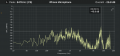
Here, this might help.
 

Audioguru again

Joined Oct 21, 2019
6,826
My home has 120V at 60Hz and nothing hums or buzzes.
The area transformer that feeds 4 homes including mine is on the property beside mine and it hums slightly.
Because the area transformer has such short wires to my home then its waveform is a perfect sinewave without the clipping shown in this thread. The clipping might produce a buzz sound.
 

MisterBill2

Joined Jan 23, 2018
27,673
I have been wondering ifit was actually a buzz, or just a HUM. AND I have had to deal with a buzz in a sound system provided by the amplifier power being in the same conduit as power wires to dimmer controlled lights. So is the sound a buzz or is it a hum??
 
Top