Just noticed you don't have the reset connected to Q3 so that is continually sequences through the 3 states.
Without that, it will go through all 10 states.
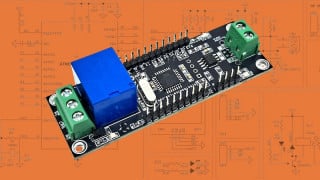
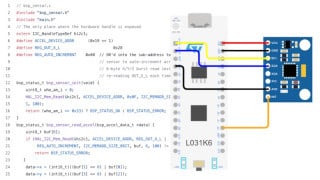
A bit late to come to the party, but my view is that an ATtiny85 processor might be the simplest low component count solution. 25mA is pretty low, bipolar transistors would suffice
Let me first say I REALY appreiciate all your efforts in trying to help me figure this out!!! I can tell my quandry interested some of you. One thing I think we have in common, regardless of knowledge and skill level, is puzzle solving. Once presented with a challenge it's hard to turn the old thinker off.
BUT - I must confess, I broke the #1 rule of troubleshooting "assume nothing". From the very beginning, the extereme unlikelyhood that two separate components would fail the same way, at the same time, bothered me. That should have been my first clue. This morning I built a small test harness for the Flasher Modules. Surprise! They both work fine.
So - It's back to "square one"...
Note: My Jeep has dual batteries. The "House" battery runs the radios, winch, air compressor, and a few other accessories. The "Start" battery funtions as the name implies and runs all the OEM accessories (plus the tow brake). As I mentioned earlier both are on thier last legs. I've put them on a trickle charge so I can finish troubleshooting this.
BTW - I have 14.3V when the engine is running so the alternator is fine.
Crazy idea: What if you used the "pulsing" of the flasher to drive the 4017 (or whatever else for sequencing)? Eliminate a bunch of the circuit; you would just need to also bring in a source of switched 12V.
I would also bet there's a circuit on "the12volt.com" that would do the trick using 3-4 relays (basically making a counter/sequencer from relay logic); for instance, here's a "wig-wag" for left/right lights - it could probably be extended a couple of more relays (one for a third light, and a fourth to "reset"):
I couldn't find a three-relay sequencer - but such a thing should be possible, with the above circuit as a starting point.
I would also bet that somewhere out there, is a circuit for such a relay sequencer - I honestly can't see why it couldn't be done, and aside from space reasons (you've mentioned this, etc - but I bet you have more than enough room to put something larger in place, if you're willing to do that).
The thing about using Bosch automotive relays, is that they're designed for the environment of a vehicle - they are robust, cheap, and proven. No, they aren't "solid state" and "sexy" - but you need something that will work and be reliable, because your flasher is a part of your vehicle's signaling system - reliability is what you want first and foremost (and really, unless you're going to pot your homebrew circuit, soldered connections of parts on a low-cost PCB seem to me fraught with issues over time, due to vibration and more; it isn't the soldering part, but the smaller connections and the quality - whatever that is - of the holes on the protoboard).
EDIT: BTW - I took the time and I think I have a circuit for the relay sequencer; uses four relays, three are time-delayed by a 1/2 second using simple RC delays (consisting of a diode, a resistor, and a capacitor) - very simple and should do the needful...
Another thing to look into would be old designs for the Mustang; originally its sequencer was a motor-driven cam action thing (you might consider that as well - a simple gear motor, either three cams or a weird multi-lobe single came, actuating a series of cheap roller micro-switches. I think there was a relay version, too...but at some point in the later 1960s with transistor prices came down, they moved to such a design (not sure of the schematic, but I bet it was just three 2-transistor flip-flops, wired as a sequencer); I'm not sure how reliable any of these were, though.
Also - have the "pulsing" output start the motor, a cam-switch latches the drive "on" (so the pulsing won't stop the motor), the motor does it's sequence then releases the drive to the motor; if the signal is still "flashing" then it just repeats it again, once the turn signal is stopped, the motor will continue until end-of sequence, then stop.
The main trick with the motor solution, though, is making it robust (you could also do a "wiper" thing on a PCB design to actuate the lights; just have the wiper turn on relays, that then turn on the lights, to reduce the current requirements of the PCB and wiper arm). A robust "motor sequencer" may not be in the realm of "homebrew", unless you start out with a pre-made sequencer (like one from an old washing machine, perhaps - but you'd have to adapt a DC gearmotor to it).
That's too slow.
Have you ever seen a sequential turn signal operate?
The sequence of 3 flashes typically occurs in the type for one turn signal "flash".
That's too slow.
Have you ever seen a sequential turn signal operate?
The sequence of 3 flashes typically occurs in the type for one turn signal "flash".
No need to jump down my throat - just offering ideas.
That said, the relay sequencer I've designed could be made to go at nearly any rate (up to the max that a relay could trigger - which is going to be way faster than you'd ever need).
You could probably do something similar with transistors, too. Also, I'm not saying your design is bad or anything (in theory, it should work ok) - but I'm just throwing out some other ideas. There's just a lot of ways to approach this kind of project.
Though I do have to say I like the idea of just using a microcontroller of some sort; a small 8-pin ATTiny or PIC would likely be all that's needed, use a ULN2003 or similar for the LED driver, a bit of glue code and call it done. Use a small transistor as an input buffer to a pin (to basically ground the pin when it sees 12 volts), have it look for "pulsing" and when it does, drive the LEDs, and when it stops, go back into a monitoring loop (or if you want to be fancy, use an interrupt routine).
It wouldn't change your part count much, but the coding of "bring n-number of pins high and keep them on until all are lit, then cycle" would be very simple - and you could eliminate the relay part, plus it could probably still fit in your box. Downside is having to code it, if it isn't something you're familiar with, of course...
Well I finally got to the bottom of it. My original DIY control was in fact fully funtional. I bench checked each part seaparately, and, as I reassembled the module. No issues. Rechecked the Jeep wiring. Had voltage where it should be and the LED's would light when "hot-wired". Had continuity at ground. Reinstalled the module. No workie. After more checking, I discoverd the ground connection for the module was rather week. Apparenlty I handn't cleared the paint away well enough and the screw itself was rusting. Took care of both issues and it worked fine. I was not conviced this ground loaction would stay "clean", so I decided to run a new ground wire (all the way to my battery bus).
I'm still curious about the various prosed solutions but for now I'm good.
Crazy idea: What if you used the "pulsing" of the flasher to drive the 4017 (or whatever else for sequencing)? Eliminate a bunch of the circuit; you would just need to also bring in a source of switched 12V.
I would also bet there's a circuit on "the12volt.com" that would do the trick using 3-4 relays (basically making a counter/sequencer from relay logic); for instance, here's a "wig-wag" for left/right lights - it could probably be extended a couple of more relays (one for a third light, and a fourth to "reset"):
I couldn't find a three-relay sequencer - but such a thing should be possible, with the above circuit as a starting point.
I would also bet that somewhere out there, is a circuit for such a relay sequencer - I honestly can't see why it couldn't be done, and aside from space reasons (you've mentioned this, etc - but I bet you have more than enough room to put something larger in place, if you're willing to do that).
The thing about using Bosch automotive relays, is that they're designed for the environment of a vehicle - they are robust, cheap, and proven. No, they aren't "solid state" and "sexy" - but you need something that will work and be reliable, because your flasher is a part of your vehicle's signaling system - reliability is what you want first and foremost (and really, unless you're going to pot your homebrew circuit, soldered connections of parts on a low-cost PCB seem to me fraught with issues over time, due to vibration and more; it isn't the soldering part, but the smaller connections and the quality - whatever that is - of the holes on the protoboard).
EDIT: BTW - I took the time and I think I have a circuit for the relay sequencer; uses four relays, three are time-delayed by a 1/2 second using simple RC delays (consisting of a diode, a resistor, and a capacitor) - very simple and should do the needful...
Another thing to look into would be old designs for the Mustang; originally its sequencer was a motor-driven cam action thing (you might consider that as well - a simple gear motor, either three cams or a weird multi-lobe single came, actuating a series of cheap roller micro-switches. I think there was a relay version, too...but at some point in the later 1960s with transistor prices came down, they moved to such a design (not sure of the schematic, but I bet it was just three 2-transistor flip-flops, wired as a sequencer); I'm not sure how reliable any of these were, though.
Also - have the "pulsing" output start the motor, a cam-switch latches the drive "on" (so the pulsing won't stop the motor), the motor does it's sequence then releases the drive to the motor; if the signal is still "flashing" then it just repeats it again, once the turn signal is stopped, the motor will continue until end-of sequence, then stop.
The main trick with the motor solution, though, is making it robust (you could also do a "wiper" thing on a PCB design to actuate the lights; just have the wiper turn on relays, that then turn on the lights, to reduce the current requirements of the PCB and wiper arm). A robust "motor sequencer" may not be in the realm of "homebrew", unless you start out with a pre-made sequencer (like one from an old washing machine, perhaps - but you'd have to adapt a DC gearmotor to it).
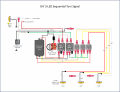
This is my original diagram using automtive size/grade components (before I got curious about doing more with electronics). Messy but funtional. View attachment 355476
I take it that those three grey box parts on the right are your SSRs? Glad you got it fixed; I normally say on auto-electrical things "check your grounds" - but for some reason didn't in this case. I'll need to remember to remember that next time...lol.
I take it that those three grey box parts on the right are your SSRs? Glad you got it fixed; I normally say on auto-electrical things "check your grounds" - but for some reason didn't in this case. I'll need to remember to remember that next time...lol.
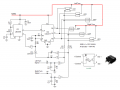
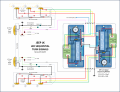
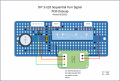
To bring this full circle, I've added updated versions of my diagrams and a pic of my control module installed in the Jeep.
When I discovered the timing PCB's were OK, I retrofit a pair of my earlier prototype PCB's with a smaller 1KuF capacitor. When I "upgraded" from mechanical relays to SSR's there was so little resistance the original 10KuF would run the lamps for quite some time after the turn signal was switched off. I just set this incarnation of the project asside at the time.
As for the relay, I introduced it to the circuit when i noticed I could tell by watching the LEDs when the power source changed from system to capacitor. A brief "hicup" and the pattern restarted. I reasoned the lamps would behave more consistanly with an uniterupted power source. A relay would stay closed with even with the slight variations in input.
The best part is I was able to get it back up and running with stuff I already had on hand.
Thanks for helping me work through it! Joel
Note: There is a pic of the back side of the aftermarket unit I'm using attached to post #19. It works for me as is, so there's not much motivation for me to put in the extra effort to try and diagram it separately. The components are fairly well marked and/or easy enought to identify if someone else wants to take up the challenge. I'd cerainly be interested in seeing the result

 Facebook
 Google
 GitHub
 Linkedin





![Signalbox[1].jpg](https://forum.allaboutcircuits.com/data/attachments/343/343319-51dace6a1bafe897f082f7eb77d83eb8.jpg "Signalbox[1].jpg")