Questions about 8 pin RGBW power LEDs

be80be

Joined Jul 5, 2008
2,395
Where you see 300vdc
They use a switching supply 35 to 52 volts current set at 200 mA on that flood light it's got a big heat sink but those are $85 each LOL maybe last a life time LOL maybe

There 35 volt tho loaded the supply is 60 volt with no load hooked to it and it very's from 35 volts to 52 volts to maintain the 200 mA
 

Thread Starter

-live wire-

Joined Dec 22, 2017
959
Where you see 300vdc
They use a switching supply 35 to 52 volts current set at 200 mA on that flood light it's got a big heat sink but those are $85 each LOL maybe last a life time LOL maybe

There 35 volt tho loaded the supply is 60 volt with no load hooked to it and it very's from 35 volts to 52 volts to maintain the 200 mA
If it's being driven at 150W and .5A, that's 300V.
 

RichardO

Joined May 4, 2013
2,270
Most of the heatsinks I've found that might fit the 4W ones just list the dimensions, not any thermal properties. So would using heatsinks without listed thermal specs really be so bad?
Not if you want to replace LED's like they are fuses. I repeat... A part without complete specifications should never be used.

Oh, and a note on the heat sink with a fan attached that you found. You must make sure that the surface where the LED mounts is smooth and flat. Heat sinks like that one are often designed for computer CPU's. They are only flat in the very center. Again, only proper specifications will have a mechanical drawing showing what you need to know.
 

Thread Starter

-live wire-

Joined Dec 22, 2017
959
Not if you want to replace LED's like they are fuses. I repeat... A part without complete specifications should never be used.

Oh, and a note on the heat sink with a fan attached that you found. You must make sure that the surface where the LED mounts is smooth and flat. Heat sinks like that one are often designed for computer CPU's. They are only flat in the very center. Again, only proper specifications will have a mechanical drawing showing what you need to know.
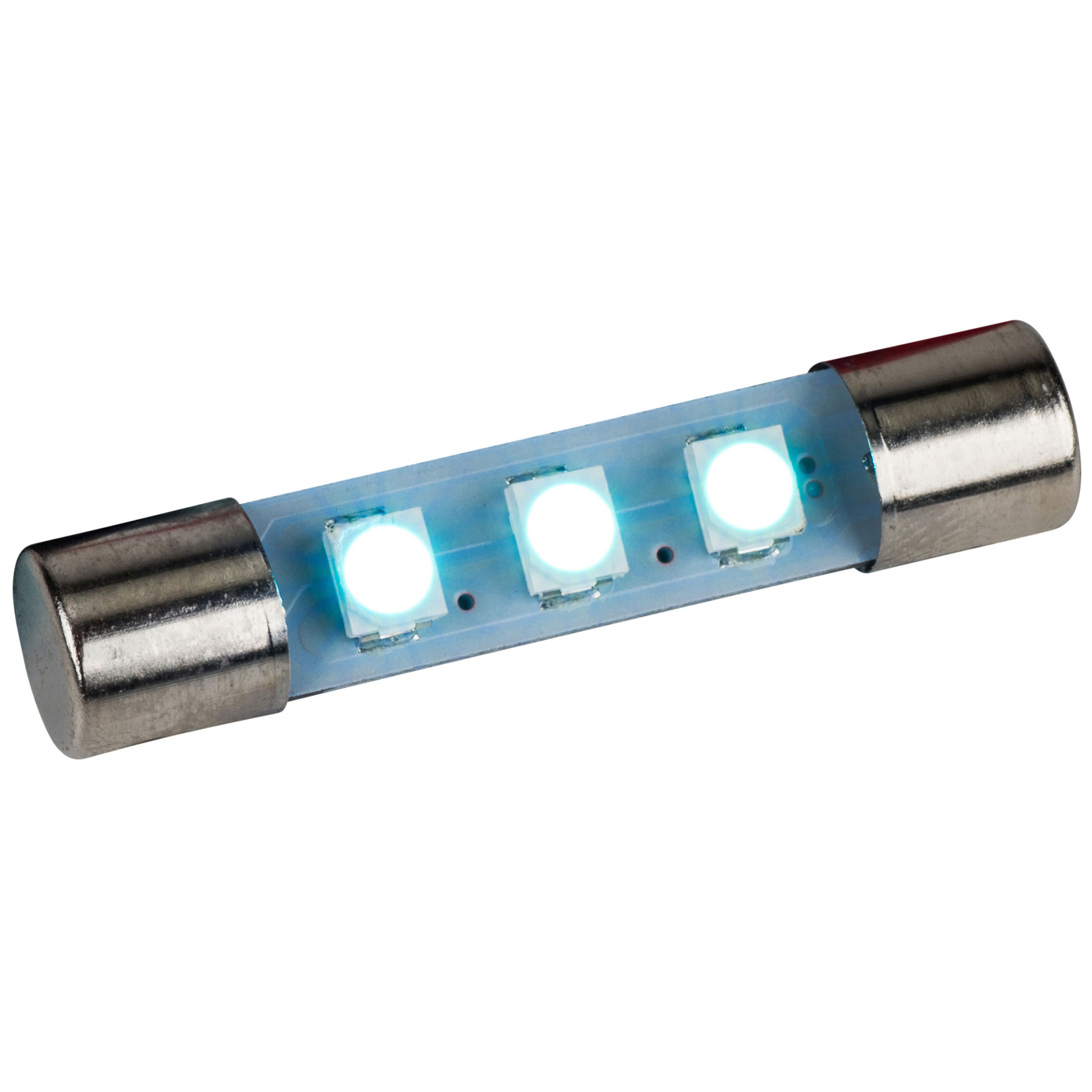
Problem solved. I found some LEDs in a fuse casing! Well, I guess I'll just have to replace them a lot. I don't see any other option (aside from proper heat sinking).;)

I'm not designing a consumer product or something where it is absolutely vital that it works flawlessly. And none of the sellers seem to list any specs other than the dimensions and the material. If it looks very similar to a well-documented item, then shouldn't it work about as well? Maybe I could look on mouser, but unless I'm getting something else from them, the shipping is a deal-breaker. But putting that aside, what do I need as a thermal resistance? Is higher or lower better, and how do I figure out an acceptable value based on dimensions and power?
 

RichardO

Joined May 4, 2013
2,270
Problem solved. I found some LEDs in a fuse casing! Well, I guess I'll just have to replace them a lot. I don't see any other option (aside from proper heat sinking).;)
I'm not designing a consumer product or something where it is absolutely vital that it works flawlessly. And none of the sellers seem to list any specs other than the dimensions and the material. If it looks very similar to a well-documented item, then shouldn't it work about as well? Maybe I could look on mouser, but unless I'm getting something else from them, the shipping is a deal-breaker. But putting that aside, what do I need as a thermal resistance? Is higher or lower better, and how do I figure out an acceptable value based on dimensions and power?
Looking in Mouser is a *very* good idea.

My LED head light on my bicycle is only about 13 watts. I designed it to be bright enough to ride at 15 MPH and see far enough ahead to have 2 seconds of warning to avoid road surface hazards such as glass or potholes.

At 13 watts I think I have a heat sink with a thermal resistance of 5 degrees per watt with airflow (when the bike is moving). A heat sink with lower thermal resistance is better. That gives lower temperature rise for a given amount of wattage.
 

ebeowulf17

Joined Aug 12, 2014
3,307
Looking in Mouser is a *very* good idea.
Agreed!

Digikey would be my other go-to source.

Undocumented Amazon parts are fine for generic passives, common parts, things that can have unknown or loose tolerances... but when you're trying to calculate heat dissipation, size heatsinks, etc. you've got to have specs!
 
You are letting other people get to you--don't. Buy and make your 4 watt RGBW flashlight. Then, if you still want a more powerful one, you will have learned enough about power consumption to make wise decisions.
 

Audioguru

Joined Dec 20, 2007
11,248
This heatsink is too small.
24 degrees per watt= 96 degrees rise plus the unknown chip-to-case rating of the LED plus the ambient temperature that might be 34 degrees C. The LED gets cooked and dies soon.
 

Thread Starter

-live wire-

Joined Dec 22, 2017
959
50 degrees C = 112 F. Add ambient of, say 75 = 187. If ambient goes to 95 that's 207.
There's no real reason to even convert to Fahrenheit. So the seller says there is a max of 60 deg C for optimal operation, but I think they say it can go up to 140 deg C. If there's a 50 deg rise in 30 deg ambient temperature, that's a max of 80 deg c, worst case scenario. It could be 60 deg C if it is 20 deg ambient and there is better heat transfer. So while it may not be ideal, it should, hopefully, be fine. Also a 50 deg C rise is not 112F. It's 50/(5/9) = 90F. Let's say it rises from 20C to 70C. 20C is 68F, and 50C is 112F, but the result is not 190F, it's 158F. That's a difference of 32 degrees, which is not trivial.
 

Audioguru

Joined Dec 20, 2007
11,248
I saw 9 deg Celsius per watt, so for 4 watts, there shouldn't be more than a 50 deg rise, with non-ideal transfers.
The datasheet for the tiny heatsink had an error that was corrected, but Digikey did not correct theirs. The corrected datasheet says "Thermal Resistance 24K/W." I assume that K= degrees C.
 

Thread Starter

-live wire-

Joined Dec 22, 2017
959
You forgot to add in the 32 degree constant so it is 122 degrees (I don't know how I made my 10 degree mistake).
The datasheet for the tiny heatsink had an error that was corrected, but Digikey did not correct theirs. The corrected datasheet says "Thermal Resistance 24K/W." I assume that K= degrees C.
Oh. That's unfortunate. Well, your assumption is essentially correct (K = Celsius - 273.15).
 

ebeowulf17

Joined Aug 12, 2014
3,307
There's no real reason to even convert to Fahrenheit. So the seller says there is a max of 60 deg C for optimal operation, but I think they say it can go up to 140 deg C. If there's a 50 deg rise in 30 deg ambient temperature, that's a max of 80 deg c, worst case scenario. It could be 60 deg C if it is 20 deg ambient and there is better heat transfer. So while it may not be ideal, it should, hopefully, be fine. Also a 50 deg C rise is not 112F. It's 50/(5/9) = 90F. Let's say it rises from 20C to 70C. 20C is 68F, and 50C is 112F, but the result is not 190F, it's 158F. That's a difference of 32 degrees, which is not trivial.
Not sure why people are debating your temperature conversions. You're doing them all correctly, applying the 32° constant when you should, and also not including more often than you should.

I'm not prepared to comment either way on heat sink size, assumptions about ambient temp, assumptions about LED failure temp, etc... but you're doing the conversions correctly.
 

Thread Starter

-live wire-

Joined Dec 22, 2017
959
Not sure why people are debating your temperature conversions. You're doing them all correctly, applying the 32° constant when you should, and also not including more often than you should.

I'm not prepared to comment either way on heat sink size, assumptions about ambient temp, assumptions about LED failure temp, etc... but you're doing the conversions correctly.
This is the importance of not using online calculators for everything, and understanding the math. For even basic math like this, it can lead to confusion, but for more advanced things, the level of understanding just gets worse.
 
Top