That should work, but the dark sensor circuit will be drawing a few mA continuously. I think it would be better, from a power-saving viewpoint, to run the PIR from 12V and use the PIR output to switch on everything else.
Are you now abandoning the timing circuits (which, incidentally, would happily run from 12V)? If the 24 sec delay was the only reason for that decision it is a simple matter to eliminate that delay by just changing one connection on the timing circuit (connect pin 8 to pin 2 instead of to pin 5 of the 556).
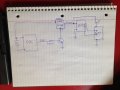
so are you saying? if I run the PIR in front it would still only power up at night? even when triggered because the night sensor would block power output during the day? that would make sense to me! but I don't see how I can do that because the output of the PIR is only 3.5 volts .UNLESS.... you know? it's easier to draw a picture now. something like this????? can you please explain the change in pins, 8 to 2? would that put the 3 second pulse first and then it would use the timer? in other words, will it be in the "on" position when everything fires up? and THEN wait 20-24 seconds? we're getting to the FUN part now
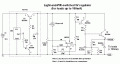
This is what I had in mind :-
The bits in the "Add-on" box are extra to your existing dark-sensor (which is unchanged).
R9 might need reducing to, say, 560 Ohms if the load approaches 100mA.
will it be in the "on" position when everything fires up? and THEN wait 20-24 seconds?
That's the intention. The cap C1 in your interval timer will initially be totally discharged, so the monostable should be triggered as soon as the 9V supply switches on.
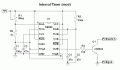
This shows a suggested interval timer mod, including a transistor for triggering the sound module.
When the 9V supply switches on the monostable (as well as the astable) is triggered and the transistor switches on, starting the sound module (assuming the first trigger pulse it receives is interpreted as 'start' rather than 'stop'!). The transistor remains on for about 14 secs while C1 charges during the initial cycle of the astable. In subsequent cycles of the astable the transistor is only on for ~17ms in each 24 sec cycle. I think this brief period will be enough to switch the module: if not, C2 can be increased.
Alec, THANKS! I would like to go back to the existing dark-sensor circuit for a minute. I have a question I have yet to fully understand in regards to the voltage divider R6 & R7. As you recall, you added a parallel 56k to R7. I can figure voltage dividers when there are simply (2) resistors and even if there are several voltage dividers involved. Why? did you choose to ADD the 56k and have (2)resistors, instead of simply changing the 2k2?
On the ADD ON circuit you added Q3, R9 and C1. I am having trouble understanding the current flow because of Q3. Does the PIR output to Q4 open the negative current, thus energizing the base of Q3 allowing 12v positive current to flow towards C1?
I thought I'd explained that? We found that the 2.2k value was slightly too high, so by connecting a high value (56k) in parallel the combined resistance is reduced to 56 x 2.2 / (56 + 2.2) = 2.12k.
Does the PIR output to Q4 open the negative current, thus energizing the base of Q3 allowing 12v positive current to flow towards C1?
It's conventional positive current that flows. PIR out 3V > Q4 base current > Q4 collector current > Q3 base current > Q3 collector current > Q3 collector voltage nearly 12V = regulator active. C1 is a reservoir cap (aka decoupling cap) to damp any transients on the voltage applied to the photocell etc.
you did explain, the equation is what I meant to ask for.
I am still not understanding the "route" of the current through Q4 and Q3. when the base is energized I think it "opens" / lets current flow between/through the E and C, because the resistance is lowered? what's screwing me up I think is that it is attached to the ground. does the pir output actually go to the base and THEN through the collector? why doesn't it go to ground?. the Q4 collector sends current to the Q3 base, which "opens" E to C and sends current toward C1 and sensor. have patience, I WILL get it.
The Q4 base current does go to ground; through the Q4 base-emitter junction. That 'turns on the tap' and allows Q4 collector current to flow to ground via the collector-emitter path. This is normal transistor behaviour, where the collector current is the gain factor (beta) times the base current. That collector current is drawn from +12V via the base-emitter junction of Q3, so Q3 base current = Q4 collector current.
The Hi Alec, I have been researching transistors this morning. I understand the NPN, in that, it is "off" when no current is supplied to the base. When more than more than .7v is supplied to the base, it allows current to flow from the collector to the emitter. I can understand Q4's operation "IF" Q3 is replaced by an LED. Power to the BASE of Q4 would allow the current to flow through the collector and then the emitter and go to ground completing the circuit and lighting the LED
The PNP (as I understand it, OR may NOT) however reduces the flow in relation to its base current. Power to the base turns it off. If Q3B and Q4C are equal, how is +12v moving from E to C in Q3? What am I missing?
Is there continuity between Q3E and Q3B?
HA!!!!!! the PNP EMITTER GOES TO BASE, WHEN THE BASE IS ALLOWED TO GO TO GROUND IT ALLOWS THE CURRENT TO FLOW TO THE COLLECTOR ???????
CORRECT?????
Yes, you've got it.
Incidentally, the dark-sensor could be switched using a single transistor much as you proposed in post #83, provided the PIR 3V output can provide enough base current (~10mA). Since the PIR spec doesn't make clear what output current can be drawn I thought it safest to use Q3 and Q4. Q4 base current is an order of magnitude less than Q3 base current.
YESSSSSSSS! the pulse/current form the PIR facilitates the opening of Q4 allowing Q3 to ground.
I know I have only scratched the surface, but this is a BLAST! I really appreciate your mentorship. This stuff can get frustrating, BUT! when the light finally goes on and I "get it" it is very rewarding. Like, now I "understand" how to use a transistor (because I actually know how it works) in place of a noisy relay and save money too. It's awesome. It's so cool to be able to pick up a schematic and know what the symbols are and what they do AND BUILD IT. (simple schematics) Can't wait till I can design my own.
I fried several 12v batteries because I let them go below the recommended drain point. small print said not to let them go below 10.5 volts. So I am thinking, if a specific voltage can be used to activate a circuit, I am willing to bet because of what I learned with the addition of the PIR circuit to the dark sens circuit that the 10.5 v mark might be able to be used to shut a circuit down to save the battery. or at least close to the 10.5 v mark. As with your other schematics thye are pretty precise in their out comes. sort of a battery protector.
What cause the transient current C1 is designed for. Since C1 is a capacitor, it will take the trans current, charge, and when it reaches like 60% it will simply discharge and go to ground?
Circuits which switch off when the battery volts drop below a reference voltage are well known. They involve a comparator (such as your LM339) and a latching switch arrangement. Complete isolation of the battery, even from this extra comparator, would probably involve a latching relay.
and when it reaches like 60% it will simply discharge and go to ground?
That's not how capacitors work. Think of a cap as a bucket holding electrical charge. It can be filled from a tap (battery) and provides a 'reserve' supply when the tap turns off.
ok, so why? would I need the reserve? the capacitor charges from the positive side? and I would think it would discharge to ground. how does it help the circuit? I suppose you are saying it would help the photocell circuit. but that power is being governed by the PIR circuit. and it would "seem" that if the PIR sends a signal, AND it is dark, the photocell circuit will respond as intended.....
I have used capacitors with LED circuits, pulse fading, the capacitor charges up, then supplies power (diminishing power, causing the led to gradually fade.)
In this circuit it acts as a 'cushion' to supply sudden surge current which might be drawn when e.g. a transistor in the PIR etc switches rapidly, and to absorb any surge current which might be induced by external interference. Thus it helps to stabilise the circuit power supply.
ok, I will study some more on capacitors, the causes of surge current and the like... in studying these schematics, it is apparent, or most likely that to make a circuit board for these that it may require a 2 sided circuit board? because some wires/contacts/paths cross. I have studied etching circuit boards, and fortunately spent 40 years in high end printing where registration is one of the most important factors, especially 2 sided. so I feel confident in that respect and the ability to etch one. all the you-tubers videos are mostly different ways of preparing and finishing a circuit board. no one goes into detail about the actual design, that is WITHOUT some kind of computer program. what are some of the fundamental considerations that need to be taken in to account for a first try?
Assuming you don't have a layout program such as the freeware Eagle, for a first try I'd suggest you get some paper and draw the circular/rectangular outlines of the components at 1:1 scale. Cut out the shapes and shuffle them around to get them more or less in the relative positions shown on the schematic. Then draw track lines linking their pins as shown. Re-position things to minimise the number of crossing tracks.
A one-sided board will be much simpler to do. Just use short jumper wires where you need to cross tracks.
As the circuit is relatively simple you might also want to look at using Veroboard instead of etching a pcb.
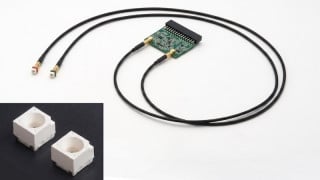
Hi Alec, I posted earlier but for some reason it isn't here. I got that Eagle software you mentioned. It's pretty cool but I didn't want to learn it. So, I made the circuit in Illustrator. Got it down to just under 2 x 3.5 inches with only (1) jumper wire being needed. I am going to try a new PCB. It however operates on 5v. I am wondering if I can simply use a resistor between the 9v output of the dark switch regulator circuit to drop the 9v down to 5? I will be building the modified timer circuit today to see how it performs.
One other question. Which if either is more efficient, a 12v power supply running a 9v and 5v system. OR a 9v power supply running a completely 5v system? or would that be like 6 of 1 or a half dozen of the other?
Unlikely, unless the new pcb draws only a small constant current. Can you post the spec (or a link to the spec) of this new pcb?
As for efficiency, you need to know the total current draw of each module of the system to do the sums. It would, however, be simpler to just go from 9V down to 5V.
yes, now in retrospect, AND learning MORE about the properties of the components, 9v to 5v would be cool! primarily because 9v batteries are readily available and some even rechargeable. You say "simpler" HOWEVER? won't it be basically the SAME circuit with "different" values for the resistors and such? One going from 12v to 9v, vs one from 9v to 5 v.
OR? did you mean simpler because it wouldn't take (2) voltage regulators.

 Facebook
 Google
 GitHub
 Linkedin
 45.1 KB Views: 24