Question about capacitors

Thread Starter

andrea585

Joined May 24, 2026
4
Hello, non EE newb here. There's a desktop amplifier I'm interested in buying. Production years were between 1993-2002. This amp is new in box. My concern is the that having never been turned on there may be issues with the capacitors i.e dried up electrolyte, leakage, etc... Is there cause for concern?

Thanks,
Andrea
 

MrChips

Joined Oct 2, 2009
34,745
Hello, non EE newb here. There's a desktop amplifier I'm interested in buying. Production years were between 1993-2002. This amp is new in box. My concern is the that having never been turned on there may be issues with the capacitors i.e dried up electrolyte, leakage, etc... Is there cause for concern?

Thanks,
Andrea
You are buying something that is 25 years old. I would not worry about capacitors. If the price is right for you then buy it. The concern is that you are buying something that might not work. That is the risk you take.
 

Thread Starter

andrea585

Joined May 24, 2026
4
Hi, thanks for the reply. It wasn't the age of the amp that concerned me (I have a 40 yr old turntable) it's that (1) it was never turned on and (2) I'm giving it to someone to use as a preamp for a 78 rpm TT with a ceramic cartridge and I'd like it to function properly.

Anyway, I trust your judgement so I'm going to buy it.

Thanks again,
Andrea
 

dl324

Joined Mar 30, 2015
18,307
My concern is the that having never been turned on there may be issues with the capacitors i.e dried up electrolyte, leakage, etc... Is there cause for concern?
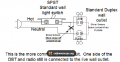
You can use a dim bulb fixture when you first turn it on. A dim bulb tester is simply an incandescent bulb (usually with a light switch to switch power) inserted in the power line to the device to limit current (and not blow internal fuses). It's normal for the bulb to light up and then dim when there are no shorted capacitors.
1779678671649.png
When you build it, just install everything in a 2-gang metal electrical box.

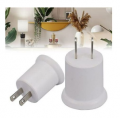
The bulb goes in an adapter:
1779678978872.png
 
Hello, non EE newb here. There's a desktop amplifier I'm interested in buying. Production years were between 1993-2002. This amp is new in box. My concern is the that having never been turned on there may be issues with the capacitors i.e dried up electrolyte, leakage, etc... Is there cause for concern?

Thanks,
Andrea
The only thing I can say is, test before you buy.
 

MrChips

Joined Oct 2, 2009
34,745
Hello, non EE newb here. There's a desktop amplifier I'm interested in buying. Production years were between 1993-2002. This amp is new in box. My concern is the that having never been turned on there may be issues with the capacitors i.e dried up electrolyte, leakage, etc... Is there cause for concern?

Thanks,
Andrea
You said a desktop amplifier. By that I am to presume that it is powered speaker meant for a computer.

Secondly, you want to amplify the signal from a vinyl turntable. The two are not compatible because you need RIAA frequency compensation. Without it, the sound will be very tinny with no bass.
 

Thread Starter

andrea585

Joined May 24, 2026
4
You said a desktop amplifier. By that I am to presume that it is powered speaker meant for a computer.

Secondly, you want to amplify the signal from a vinyl turntable. The two are not compatible because you need RIAA frequency compensation. Without it, the sound will be very tinny with no bass.

This is an integrated amp. That means it has a built-in preamp. One of its features is a phono input which is switchable between ceramic and magnetic. It also has a tape out so it can basically function like a phono preamp. These amps are commonly used by people wanting to get the correct signal input resistance and RIAA correction for a ceramic cartridge (although most ceramics have RIAA built in). Standard MM carts have an input resistance of 47k ohms (which is why they require a preamp). While a ceramic has an input resistance of between 500k and 1 meg that modern equipment does not accommodate.

The other options are building a velocity equalizer or buying a CerMag which all in costs about $100. At $30-$50 these little units are a cost effective way of getting correct signal and can also be used for their primary function as an integrated amp. I'm all for multi use gear.
 

Thread Starter

andrea585

Joined May 24, 2026
4
Hello,

Have a look at this project for a phono preamp:
https://sound-au.com/project91.htm

Bertus
Hi,

There a few schematics online and quite a few diy videos on YouTube for building ceramic phono preamps. Unfortunately, I don't possess the necessary skills to do so though I would very much like to. The video of a tube preamp build makes me want to learn even more.

Thanks for the link
 

MrChips

Joined Oct 2, 2009
34,745
This is an integrated amp. That means it has a built-in preamp. One of its features is a phono input which is switchable between ceramic and magnetic. It also has a tape out so it can basically function like a phono preamp. These amps are commonly used by people wanting to get the correct signal input resistance and RIAA correction for a ceramic cartridge (although most ceramics have RIAA built in). Standard MM carts have an input resistance of 47k ohms (which is why they require a preamp). While a ceramic has an input resistance of between 500k and 1 meg that modern equipment does not accommodate.

The other options are building a velocity equalizer or buying a CerMag which all in costs about $100. At $30-$50 these little units are a cost effective way of getting correct signal and can also be used for their primary function as an integrated amp. I'm all for multi use gear.
If the amplifier has RIAA equalization built-in then you're good to go.
 

Futurist

Joined Apr 8, 2025
739
Hello, non EE newb here. There's a desktop amplifier I'm interested in buying. Production years were between 1993-2002. This amp is new in box. My concern is the that having never been turned on there may be issues with the capacitors i.e dried up electrolyte, leakage, etc... Is there cause for concern?

Thanks,
Andrea
If its never been used then the capacitors will likely be nothing to worry about.

Well, that's what I was going to say until I did some digging!

https://digital.library.unt.edu/ark:/67531/metadc3104/m2/1/high_res_d/thesis.pdf

and

https://www.lung-chen.com/the-capacitor-has-not-been-used-for-a-long-time
 
Top