Project the circuit for a fan controller

Thread Starter

PsySc0rpi0n

Joined Mar 4, 2014
1,786
Obviously Not!
I was using the original as a reference.!
You changed the designations.
I'm sorry sir. I mentioned in that post #85 that I have renumbered all the components.
I'm really sorry for the confusion.
So, having this last one as a reference. Let's start from there, please!
 

Thread Starter

PsySc0rpi0n

Joined Mar 4, 2014
1,786
The symbol does not matter so much as the function.

If you see a + sign then it is polarized.

In general, if the value is less than 1μF it will be non-polarized.
If it is 1μF or greater it is likely to be polarized. There are many cases where >1μF call for non-polarized capacitors.

There are no rules, just guidelines.
Yes, I now about the polarity.

I'm just not sure about which capacitors in my circuit should be polarized and which should not.
But with your reference, I think I can change them now!.
But after dealing with polarity, I still need to deal with type (ceramic, tantalum, electrolytic, etc). And after that, I need to deal with sizes (footprints) and if I'll use SMD or THT (probably SMD because I don't have THT components for all values needed).
 

MrChips

Joined Oct 2, 2009
34,829
Ok, so, to make things simpler, could you please tell me which symbol to use on each capacitor?

Should I use cap 8 (from the 1 to 8 list) for all caps but C8 and C9 on my circuit?
I use symbol #1 for all my caps because I am lazy.
Then I put a + sign on the proper side (if I need to convey this to someone else) but I already know which side is +ve.
 

MrChips

Joined Oct 2, 2009
34,829
If it is a ceramic capacitor, use symbol #1.
If it is a polarized capacitor, use any of the symbols that has a polarity sign.

Your question should be "Where do I use a non-polar capacitor vs a polarized capacitor?"
Show us the circuit diagram and we will tell you.
 

Thread Starter

PsySc0rpi0n

Joined Mar 4, 2014
1,786
As per my question in #97, did you design it? or come up with the components yourself?
I can retype the caps for the #85
I'm not sure I understand the question. You mean if I designed the symbol myself of if I designed the L1 + C8 + C9 part of the circuit?

I'll reply to both questions. I didn't design the symbol myself. It's default in KiCa 5.0.2. And that part of the circuit was suggested my a friend of mine (not from the forum).

If it is a ceramic capacitor, use symbol #1.
If it is a polarized capacitor, use any of the symbols that has a polarity sign.

Your question should be "Where do I use a non-polar capacitor vs a polarized capacitor?"
Show us the circuit diagram and we will tell you.
I replaced the symbols. Please check my previous post!
And yes, probably that should be the question I should ask in the first place.
 

MaxHeadRoom

Joined Jul 18, 2013
30,679
OK as per post #98 schematic.
C2, C6, C7, C10, C1 C12, non polarized ceramic
C3, C4, C5, C11 = electrolytic
C8, C7 = polarized ceramic
I meant, did you come up with the circuit yourself ? or copy it from an existing design? or designate the component type.
 

MaxHeadRoom

Joined Jul 18, 2013
30,679
BTW, if you intend doing a board layout with the intention of having boards made by board manuf.
The next important step involves knowing the physical/mounting attributes of each component , type of electrolytic for e.g. etc.
As a proper footprint has to be assigned to each device.
 

Thread Starter

PsySc0rpi0n

Joined Mar 4, 2014
1,786
OK as per post #98 schematic.
C2, C6, C7, C10, C1 C12, non polarized ceramic
C3, C4, C5, C11 = electrolytic
C8, C7 = polarized ceramic
I meant, did you come up with the circuit yourself ? or copy it from an existing design? or designate the component type.
I collected ideas from web searches, asked a friend and asked here (and also other forums) and that's how I got to the point where the circuit is at now.
About the component types, I just added the first suggestion KiCad gives when you type 'c' in the component list.

Replying to the post you added after I start typing this one, yes, I want to make a PCB and I'm still deciding if I'm going to use all SMD or mix SMD and THT to use the components I have here at home. But will address that part later!
 

Thread Starter

PsySc0rpi0n

Joined Mar 4, 2014
1,786
OK as per post #98 schematic.
C2, C6, C7, C10, C1 C12, non polarized ceramic
C3, C4, C5, C11 = electrolytic
C8, C7 = polarized ceramic
I meant, did you come up with the circuit yourself ? or copy it from an existing design? or designate the component type.
You meant C8 and C9, right? Not C8 and C7. C7 is already mentioned in the first row.
 

Thread Starter

PsySc0rpi0n

Joined Mar 4, 2014
1,786
...
C3, C4, C5, C11 = electrolytic
...
I meant, did you come up with the circuit yourself ? or copy it from an existing design? or designate the component type.
There can be tantalum, right?


1621368870431.png
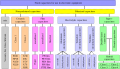
Source: https://studyelectrical.com/2016/12/different-types-classification-of-capacitors.html


C8, C9 = polarized ceramic
I know polarized ceramic exist, but did you meant those for this application?
Also, aren't electrolytic, polarized, by design? according to the above image, Electrolytic are under the polarized category!
 

sparky 1

Joined Nov 3, 2018
1,218
Some of the audio design people build near perfect circuits with good capacitor choice and have limited equipment.
Their output shows good capacitor use whereas there are a few high techs that sometimes put out misinformation on youtube.
Both perfectionist but different design styles.

I like 1206 X7R close to the IC Vdd the first time I tried different types with the circuit under load. They make em better now days.
Sometimes it does'nt matter, sometimes esr is more useful for finding faulty capacitors in repair but knowing which ESR type works can be helpful.
I think the audio guy's problem solving techniques work because he developed skill of finding closely matched parts he installed sockets and swapped out parts to see if he could make circuit better, he probably buys capacitors in variety packs. I don't buy too many at first because the discovery factor
intuitively influences the choice.
 
Last edited:

Thread Starter

PsySc0rpi0n

Joined Mar 4, 2014
1,786
Some of the audio design people build near perfect circuits with good capacitor choice and have limited equipment.
Their output shows good capacitor use whereas there are a few high techs that sometimes put out misinformation on youtube.
Both perfectionist but different design styles.

I like 1206 X7R close to the IC Vdd the first time I tried different types with the circuit under load. They make em better now days.
Sometimes it does'nt matter, sometimes esr is more useful for finding faulty capacitors in repair but knowing which ESR type works can be helpful.
I think the audio guy's problem solving techniques work because he developed skill of finding closely matched parts he installed sockets and swapped out parts to see if he could make circuit better, he probably buys capacitors in variety packs. I don't buy too many at first because the discovery factor
intuitively influences the choice.
Yes, but still to buy larger capacitor variety I still need to have an idea of the types I might need more commonly.
And I'm sitll not sure what would be the difference between electrolytic and polarized, because electrolytic are polarized, at least according to the above image!
 

MaxHeadRoom

Joined Jul 18, 2013
30,679
Electrolytic's are polarized as a general rule.
But as mentioned earlier, non polarized are sometimes used in a polarized fashion, i.e. where an outer foil terminal of a non-polarized cap is noted as connected to Chassis power common, for example.
In this case, it is indicated on the schematic to be a polarized, but non electrolytic!
These capacitors generally have one of the terminal leads indicated by a stripe or line on the case.
In case one desires to use them this way.
,
 

Thread Starter

PsySc0rpi0n

Joined Mar 4, 2014
1,786
Ok, now I'm in the process of choosing footprints.

What size of resistors/capacitors are better for handsoldering?
I chose the following so far:
1621537953707.png
Is this ok for handsoldering, tanking into account that I don't have much experience with SMD components?
 

Thread Starter

PsySc0rpi0n

Joined Mar 4, 2014
1,786
Any particular reason for going SMD rather than through-hole?
Yes. The same reason I chose a STM32 chip for this job. Learning process.

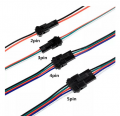
Also, I was looking for footprints for these JST connectors I bought online to connect the thermistor:
1621539328880.png

But I'm not sure if there are actually any footprints to represent the female header that will house the male header which will be soldered to the thermistor leads.
 
Top