Now the research team is working to get the antibody into human clinical trials, which are scheduled to begin in July 2024. The antibody will be administered to children between the ages of two and six affected by anodontia.
Lots of hope for many, my wife’s family have issues with liver caused by high blood pressure.A surgical team from Washington University School of Medicine in St. Louis recently performed the first robotic liver transplant in the U.S. The successful transplant, accomplished in May at Barnes-Jewish Hospital, extends to liver transplants the advantages of minimally invasive robotic surgery: a smaller incision resulting in less pain and faster recoveries, plus the precision needed to perform one of the most challenging abdominal procedures.
The patient, a man in his 60s who needed a transplant because of liver cancer and cirrhosis caused by hepatitis C virus, is doing well and has resumed normal, daily activities. Typically, liver transplant recipients require at least six weeks before they can walk without any discomfort. The patient was not only walking easily one month after surgery but also cleared to resume golfing and swimming.
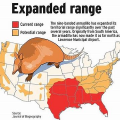
Cases of leprosy have increased in Florida and the southeastern United States over the last decade, according to a new report.
Leprosy, officially called Hansen’s disease, is a rare type of bacterial infection that attacks the nerves and can cause swelling under the skin. The new research paper, published in the Centers for Disease Control and Prevention's Emerging Infectious Diseases journal, found that reported cases doubled in the Southeast over the last 10 years.
Central Florida in particular has seen a disproportionate share of cases, which indicates it might be an endemic location for the disease, meaning leprosy has a consistent presence in the region's population rather than popping up in the form of one-off outbreaks.
"According to the National Hansen’s Disease Program, 159 new cases were reported in the United States in 2020; Florida was among the top reporting states," the report said. "Central Florida, in particular, accounted for 81% of cases reported in Florida and almost one fifth of nationally reported cases."
The disease does not spread through casual physical contact like shaking hands or sitting next to a person on the bus, according to the CDC. Rather, scientists' current thinking is that the bacteria gets transmitted via droplets from an infected person's coughs or sneezes during a prolonged period of close contact.

Snakes and possums are also carriers of leprosy.Little known fact is that Armadillos are/can be carriers of Leprosy just as Bats and Racoons can be carriers of Rabies. That means they carry the virus but are not actively infected by it but capable of infecting others. Leprosy, like many other medical conditions, has never been eradicated.
As a therapist who specializes in psychedelics for perinatal mental health, I’ve worked with numerous such women who hope to treat their depression, anxiety and trauma with therapeutic psychedelic medicine. Many of them feel more comfortable taking something they feel is more “natural” such as psilocybin, which they don’t have to take daily, rather than a daily pill like Prozac, which is one in a class of drugs called a selective serotonin reuptake inhibitors (SSRI).
I know they are using it to treat drug or alcohol addictions, it’s been effective in most cases.Microdosing, according to experts, is taking anywhere from 5 to 10 percent of a full dose of a psychedelic medicine such as magic mushrooms or LSD. A full dose of magic mushrooms that provides a psychedelic trip — often described as a dream state that frees people from ruminations, concerns, obsessions or fixations — ranges from 2 to 6 grams. A microdose could be 100 milligrams, taken every 48 to 72 hours, depending on the protocol. Most people take their microdose in capsule form.
They found that the gene therapy used to treat Parkinson's could also be adapted to reduce alcohol use in chronic heavy drinkers dramatically, at least in nonhuman primates. The treatment effectively involves using a specific molecule that induces cell growth to "reset" the brain's dopamine reward pathways, thereby reducing a patient's "brain reward center" when drinking.
Leprosy, also known as Hansen's disease, is spread via the air by droplets released from an infected patient's nose and mouth. It is not transmitted through hugging, shaking hands, or sitting near an infected person.
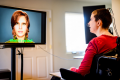
The implant, which Johnson received in an operation last year, contains 253 electrodes that intercept brain signals from thousands of neurons. During the surgery, doctors also installed a port in Johnson's head that connects to a cable, which carries her brain signals to a computer bank.

Experiments so far show that mice who underwent subcutaneous islet transplants from different mice, rats, and people experienced prolonged cell survival and diabetes reversal without the need of dangerous and often harmful anti-rejection medicines.
I would love for this to work but:
If we were all mice, Alzheimer’s disease, cancer, diabetes, and most inherited disorders would be a thing of the past. We could nibble on as much cheese as we wanted without fear of heart disease and run around our favorite wheel for hours on end without knee pain because all these ailments have been cured in mice. Unfortunately, we are not mice, and most of these cures fail miserably in humans. Out of the hundreds of Alzheimer’s disease treatments that helped mice, none have been beneficial to people. But why do Alzheimer’s treatments that show so much promise in animals never work on human beings? Even though mice and humans look slightly different from each other, they share 92% of their DNA. Additionally, humans and mice have identical genes. One would think a drug that targets and activates a gene in mice would also activate the gene in humans, but this is not always true.
It's ironic to think that after all the money, time, and hard work put into investigations, we now have better medical treatments for mice than for peopleI would love for this to work but:
How many times have medical things worked in mice but not humans?
https://sitn.hms.harvard.edu/flash/2020/why-drugs-tested-in-mice-fail-in-human-clinical-trials/
Because mice actually run this world.
View attachment 309290
Not too surprising, really. IIRC, pigs are another animal that are genetically so close to humans that they are used in a lot of treatment development.It's ironic to think that after all the money, time, and hard work put into investigations, we now have better medical treatments for mice than for people
I read CRISPR was used on mice years ago, the mice were introduced to sickle cell, then edited out genes and cured. I’m glad to see it in the news. It is a start, not only for them but for many people who can benefit from it in the future with other medical issues with no hope of cure.The Food and Drug Administration on Friday approved a powerful treatment for sickle cell disease, a devastating illness that affects more than 100,000 Americans, the majority of whom are Black.
The therapy, called Casgevy, from Vertex Pharmaceuticals and CRISPR Therapeutics, is the first medicine to be approved in the United States that uses the gene-editing tool CRISPR, which won its inventors the Nobel Prize in chemistry in 2020.
In an experiment in pigs, some of the animals were given the pill 20 minutes before being given access to food. These pigs ate around 40 per cent less compared with those that weren’t given the pill. They also had higher levels of hormones in their blood that typically signal satiety.