I assiduously avoid ladders which are a whole lot better than standing on a chair or stool. Let the kids put the Angel on top of the tree, they bounce better than I don't.
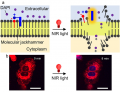
Scientists have discovered a new way to destroy cancer cells. Stimulating aminocyanine molecules with near-infrared light caused them to vibrate in sync, enough to break apart the membranes of cancer cells.
Now, with help from artificial intelligence, researchers have designed a new catheter that they say could reduce bacterial contamination by up to two orders of magnitude—without antibiotics. Its interior is studded with three-dimensional geometric shapes that help prevent bacteria from gaining traction.
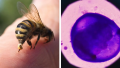
Dr. Duffy was also curious about what would happen if melittin was combined with already existing chemotherapy medications. Even more potent results were seen afterward.
The most common STI in the US in 2022 was chlamydia, which has remained in the top spot for years now. Nevertheless, it is the recent rise in syphilis that is concerning health officials most.
According to CDC data, syphilis cases of all stages have increased by 80 percent in the past five years.
Now, in another breakthrough, a new compound synthesized by Dr. Jung-Mo Ahn, a University of Texas at Dallas researcher, has been found to kill a broad spectrum of hard-to-treat cancers, including triple-negative breast cancer, leaving healthy cells unscathed.
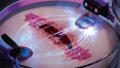
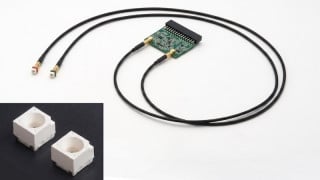
They created a biochip containing cultured skin cells with properties similar to human skin cells. Next, they chose two cells and made wounds on them. One cell was allowed to repair under an electric field (200mV/mm), while the other healed without any electric stimulation.
The researchers noticed that electricity enabled the former to heal three times faster than the latter. “We were able to show that the old hypothesis about electric stimulation can be used to make wounds heal significantly faster,” said Asplund.
Complex artificial organs could be created by 3D printing a mould of veins, arteries and capillaries in ice, casting that in organic material and then allowing the ice to melt away, resulting in a delicate, hollow network. This leaves a space for the intricate artificial blood vessels that are required to develop lab-grown internal organs.
A daily dose of gold nanocrystals suspended in water led to improvements in patients with Parkinson’s disease and multiple sclerosis (MS), according to the results of phase two clinical trials. The treatment addresses an energy imbalance that arises in the brain, and previous animal and human studies have suggested it could help slow neurological decline and maybe even trigger partial recovery for these patients.
Findings from the team suggest that this particular Cannabis sativa extract stops melanoma cells from multiplying, by forcing the disease to kill itself. "The damage to the melanoma cell prevents it from dividing into new cells, and instead begins a programmed cell death, also known as apoptosis,"
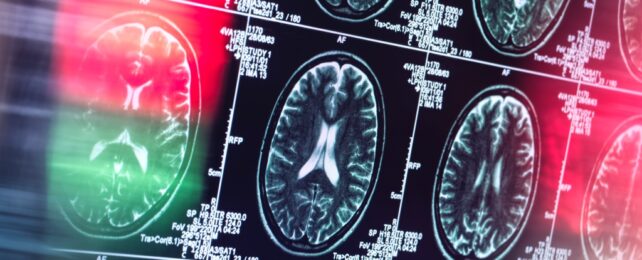
Based on our past 30 years of research, we no longer think of Alzheimer's as primarily a disease of the brain. Rather, we believe that Alzheimer's is principally a disorder of the immune system within the brain.
In tests on mice, a team led by researchers from the Massachusetts Institute of Technology (MIT) found that flashes of light and clicks of sound at a frequency of 40 times a second (or 40 hertz) helped clear amyloid proteins from the brain's glymphatic system, a 'plumbing' network that removes harmful substances.
An unassuming brown bovine from the south of Brazil has made history as the first transgenic cow capable of producing human insulin in her milk. The advancement, led by researchers from the University of Illinois Urbana-Champaign and the Universidade de São Paulo, could herald a new era in insulin production, one day eliminating drug scarcity and high costs for people living with diabetes.

 Facebook
 Google
 GitHub
 Linkedin