Issue with Contactor Driver Circuit – MOSFET Burns at Higher Voltage

Thread Starter

recker039

Joined Feb 27, 2025
16
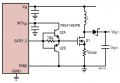
Hello everyone,
I have designed a contactor driver circuit that operates in two modes:
  1. It initially provides an inrush current (limited) to the contactor coil to engage it.
  2. Immediately after engagement, it supplies a constant holding current of approximately 50mA.
This topology worked well for 95A contactors. However, when I scaled up to high-power 265A contactors, I encountered issues.
  • For the 95A contactor, it engages with an initial current of 3.5A.
  • For the 265A contactor, it requires approximately 6.5A to engage.
Problem:
When operating at voltages between 110V and 180V, the MOSFET does not burn. However, above 180V, the MOSFET burns immediately when I switch on the circuit.
Some colleagues suggested:
  • Increasing the gate resistance
  • Adding an RCD snubber in parallel with the existing snubber
However, these modifications did not resolve the issue.
Components used:
  • MOSFET: STP30N65M5
  • IGBT (tested but same result): FGH60N60SMD
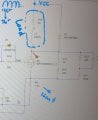
    WIN_20250227_21_11_56_Pro.jpg
I would appreciate any insights on what might be causing this issue and possible solutions.
Thank you!
 

MisterBill2

Joined Jan 23, 2018
27,164
What are the voltage and current ratings for the devices that have been destroyed?? In addition, is there any device connected across the contactor coil that may be going into a breakdown mode at the higher voltage?? I can easily imagine a diode installed to absorb a spike behaving like a zener diode at a higher voltage. So D7 in the schematic may be the cause of the problem. If the diode goes into a conduction mode that will certainly damage the transistor.
And if the failure is when the transistor switches ON, it is not the turn-off spike, IS IT??? In fact, with the snubber, why is the diode even needed???

In fact, what is the specified voltage for the contactor coil, which may not be rated for the higher voltage.
 

Ian0

Joined Aug 7, 2020
13,097
You haven't shown the most important part of the drive circuit.
You appear to have some current limiting, but when that takes place, a lot of voltage will be across the MOSFET which may generate enough heat to destroy the MOSFET.
DO NOT increase the gate resistance. That is likely to lead to instability which will destroy the MOSFET.
 

Thread Starter

recker039

Joined Feb 27, 2025
16
Give the part No. of the contactor, if DC it should not burn out if the correct DC voltage is applied. ??
3P(3NO)-AC-3, 440V 265A schneider electric contactor.
I am sure of the voltage at the drain of this source. I applied a maximum of 220V AC to the power input and ended up with 310V DC. I did not see any spike on the oscilloscope.
 

Thread Starter

recker039

Joined Feb 27, 2025
16
What are the voltage and current ratings for the devices that have been destroyed?? In addition, is there any device connected across the contactor coil that may be going into a breakdown mode at the higher voltage?? I can easily imagine a diode installed to absorb a spike behaving like a zener diode at a higher voltage. So D7 in the schematic may be the cause of the problem. If the diode goes into a conduction mode that will certainly damage the transistor.
And if the failure is when the transistor switches ON, it is not the turn-off spike, IS IT??? In fact, with the snubber, why is the diode even needed???

In fact, what is the specified voltage for the contactor coil, which may not be rated for the higher voltage.
1. My device was destroyed in 268VDC and limited to 7A.
2.NO!
3. I didn't notice the problem with D7. Basically, D7 is there to dissipate the coil's back EMF. If it wasn't there, we would have a very high peak voltage and the MOSFET would burn out at much lower voltages.
4. I find RCD snubber in Switchmode Power Supply Handbook (Keith Billings).I tested on my circuit and my problem didn't solve.
1740725412398.png
 

Thread Starter

recker039

Joined Feb 27, 2025
16
You haven't shown the most important part of the drive circuit.
You appear to have some current limiting, but when that takes place, a lot of voltage will be across the MOSFET which may generate enough heat to destroy the MOSFET.
DO NOT increase the gate resistance. That is likely to lead to instability which will destroy the MOSFET.
I tested a 10 ohm resistor with a reverse diode in parallel with the resistor. finally, this problem didn't solve.
1740725600927.png
 

Ian0

Joined Aug 7, 2020
13,097
It will probably manage without the snubbers.
It does need the reverse diode across the coil, rated for the supply voltage and the full current of the coil. If you want it to open more quickly, then you need a zener in series with that diode, and a MOSFET rated for supply voltage plus zener voltage.
Most likely, it’s your constant current drive that is the problem.
 
A Freewheeling-Diode may be needed across the Coil.

When the big-fat-heavy-Armature clanks closed, a serious Voltage-Spike may be created in the Coil.
.
.
.
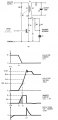
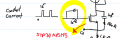
You can try a replacement for the diode-resistor at the entrance with this circuit:

1740732117522.png
You may have a problem with a overvoltage at GATE pin for the MOSFET when you have very high current. The Mp at the oscillation in the next picture could be too high for your 265 A case.

1740732332070.png
 

Thread Starter

recker039

Joined Feb 27, 2025
16
You can try a replacement for the diode-resistor at the entrance with this circuit:

View attachment 343425
You may have a problem with a overvoltage at GATE pin for the MOSFET when you have very high current. The Mp at the oscillation in the next picture could be too high for your 265 A case.

View attachment 343426
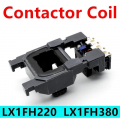
There has been a misunderstanding. 265A contactor is type of contactor. this is my load:
LC1F265 - Contactor body,TeSys F,3P(3NO)-AC-3, <=440V 265A without coil | Schneider Electric USA

1740738653955.png
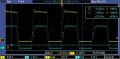
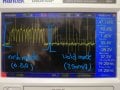
I used FGH60N60SMD IGBT. this Vcollector in VCC=205v Fullwave-rectifier:(Divide the values by 2.)
1740738353128.jpeg
Vsource :(Divide the values by 2) (my shunt resistor is 0.94 ohm)
1740738288203.jpeg
I put a diode and resistor in series with the load?? Why?I didn't have any spike or overshoot on my gate.
 
There has been a misunderstanding. 265A contactor is type of contactor. this is my load:
LC1F265 - Contactor body,TeSys F,3P(3NO)-AC-3, <=440V 265A without coil | Schneider Electric USA

View attachment 343432
I used FGH60N60SMD IGBT. this Vcollector in VCC=205v Fullwave-rectifier:(Divide the values by 2.)
View attachment 343430
Vsource :(Divide the values by 2) (my shunt resistor is 0.94 ohm)
View attachment 343429
I put a diode and resistor in series with the load?? Why?I didn't have any spike or overshoot on my gate.
Be sure that you don't have a spike on your gate, you can see that you have spikes in the shunt resistors (last picture on your attach.), so maybe the C_{drain-gate} is passing a spike on your gate, be sure that you don't have any spike at start-up or any time.
 

Thread Starter

recker039

Joined Feb 27, 2025
16
How can anyone tell you why it doesn’t work if you don’t show all the drive circuit?
What frequency is it running at?
I have a question and I need to give my email address. Please send a message to this email address.
<snip>

Moderators note : removed email to avoid spam
 

Ian0

Joined Aug 7, 2020
13,097
please send your email... I will send documents.
Just post it so that everyone can comment. There‘s nothing top secret about a solenoid driver.
The oscillograms look like a mess. I suspect you have chosen too high a frequency. For a coil that big, keep it below 16kHz, lower than that if no-one minds it whistling.That coil will have far too much self-capacitance for any higher frequency. You could even go down as low as 100Hz.
If you have a signal generator, measure its self-resonant frequency and make sure your drive frequency is lower.
 
Top