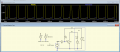
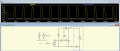
Induction sensor wave signal , converted to hall effect sensor square wave...

Thread Starter

eXe

Joined Jun 25, 2017
25
91lS2r7d7KL._SL1500_.jpg Forgot to ask this in the previous post, and can't edit it anymore...
Would this cheap scope do the job in my case? Oupps... can't add the link for some reason... Will add the description and a foto instead...

DSO138 is partially open-sourced. This opens the possibility for users
to add different features or develop new applications on the hardware.
DSO138 oscilloscope DIY kit Major features :
Analog bandwidth: 0 - 200KHz
Sampling rate: 1Msps max
Sensitivity: 10mV/Div - 5V/Div
Sensitivity error: < 5%
Vertical resolution: 12-bit
Timebase: 10us/Div - 500s/Div
Record length: 1024 points
Built-in 1KHz/3.3V test signal
Waveform frozen (HOLD) function available
9V DC (8 - 12V acceptable)
Supply Current: 120mA
NOTE: 9V DC power supply required. Not included.
Dimension: 117mm X 76mm X 15mm
Weight: 70 gram (not including cables)
Features
DSO138 kits are sold in two configurations. One is with all SMD parts pre-soldered (PN: 13803K, replacing 13801K).
The other is with only the main IC (the MCU) pre-soldered (PN: 13804K, replacing 13802K).
The latter serves also as a SMD soldering training kit.
For both configurations the MCU has been pre-programmed and no re-programming required.


Its for sale on Amazon, I can have it here tomorrow ...
 

Alec_t

Joined Sep 17, 2013
15,121
That scope has a bandwidth of only 200kHz, but should be fine for this project and other auto projects. It's max supply voltage is only 12V, so the car battery would probably kill it. A suitable 9V power supply is needed.
 

Thread Starter

eXe

Joined Jun 25, 2017
25
I have all the parts, but could only find the 2N2222. Hope that will also work? Ive seen the new schematics, but im not shore i understand what Hall stands for...? You say i should include the hall sensor in this new scheme? I'm tryng to figure it out as clear as possible so i don't do some mistake...
 

crutschow

Joined Mar 14, 2008
38,529
I have all the parts, but could only find the 2N2222. Hope that will also work?
The 2N2222 should work fine.
but im not shore i understand what Hall stands for...? You say i should include the hall sensor in this new scheme?
This circuit emulates the output of the Hall sensor.
Hall on the schematic is just a label, indicating that's the point where the emulated Hall signal appears.
 

crutschow

Joined Mar 14, 2008
38,529
That scope has a bandwidth of only 200kHz, but should be fine for this project and other auto projects. It's max supply voltage is only 12V, so the car battery would probably kill it. A suitable 9V power supply is needed.
A 9Vdc, 200mA (or greater), regulated wall wort supply should work fine for that.
 

Alec_t

Joined Sep 17, 2013
15,121
You say i should include the hall sensor in this new scheme?
No. The ECU has three terminals which would normally connect to a Hall sensor (which the emulation circuit replaces): one for the 10.2V sensor +ve supply, one for Ground and one for the Hall sensor output. I labelled the latter one 'Hall' in my circuit. So those three ECU terminals will connect to the circuit, and the inductive sensor will have one wire plus ground connected to the circuit input.
 

Thread Starter

eXe

Joined Jun 25, 2017
25
Then we have a little issue... Both of my sensors, only have 2 wires... What should i do in this case? The sensors are bolted into the gearbox housing... Can that bolt act as a ground (-) ? I have ask for another osciloscope , similar with the one above, so i should have it by friday... Meantime will get the breadboard populated, and maybe will do a little test just to see how the car ECU reacts... If will got everyhing in the right place... But im a little woried now because just realised that i only have 2 wires for the sensor...
 

Thread Starter

eXe

Joined Jun 25, 2017
25
Uhh... Sounds a little chinese to my ears... Can you please explain it thru a scheme? That way i can make an ideea and go from there
Thank you!
 

Alec_t

Joined Sep 17, 2013
15,121
Both of my sensors, only have 2 wires
Does the body of the sensor constitute a ground connection?

Edit:
If it doesn't, then the Hall sensor may be a high-side switch as per the link Les gave in post #29, in which case my circuit won't work as is and a mod will be needed.
 
Last edited:

Thread Starter

eXe

Joined Jun 25, 2017
25
Hi! Sorry, was all day at the garage, seems like a pretty busy period, and i had to start this repair right now... In absence of an osciloscope, ive risk it and i have connected the circuit to the transmission ECU. So fare so good... I get readings from the sensor, only that they are out of normal ... I mean, insted the normal 500-600 rpm on idling, i get 8160 rpm... So something its not right, but i have the feeling im on the right way, and all thanks to you guys!

Will try to measure the resistence betwin that suposed ground and the other two wires of the sensor that i have at home
 

Alec_t

Joined Sep 17, 2013
15,121
Here's the mod, which emulates a 2-wire Hall sensor acting as a high-side switch, as per the linked datasheet. I've assumed the ECU 'sense resistor' is 100Ω. To allow for the current this draws, R1 and R2 in my circuit now have lower values. You may need to tweak these depending on the ECU's resistor value.
SensorAdaptor3.PNG
 

Attachments

Last edited by a moderator:

Thread Starter

eXe

Joined Jun 25, 2017
25
Ive done crutschow circuit from the first page... Ive hooked the + to the knows + of the ECU output sensor and the - to the other white wire coming out from the ECU. Measuring those two ECU outputs i have a brown + and a white -...
Its there a way to add a variable resistor on the circuit to somehow affect the readings?
This evening will start doing this last circuit you post
Thank you!
 

LesJones

Joined Jan 8, 2017
4,511
Are you sure that the two sensors are at the same place in the gearbox (I.E Input shaft, output shaft. Or somewhere else.) and the toothed wheels used to generate the pulses have the same number of teeth on them ?

Les.
 

Alec_t

Joined Sep 17, 2013
15,121
From what you are saying about the hookup it seems that no ground connection is involved and that the ECU is expecting the sensor to act as a high-side switch, like in the 'typical application' shown in the linked datasheet. If you are using the post #12 circuit in that manner it won't work properly (it was designed as a low-side switch). That probably is why you get weird results.
Try the 2-wire in, 2-wire out post #33 circuit.
R1 or R2 or both could be variable.

@. Les
The TS said early on that the two sensors give the same pulse rates.
 

Thread Starter

eXe

Joined Jun 25, 2017
25
@LesJones : yes i have check that out and they have the same number of teeths.

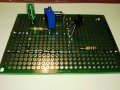
Here is my humble circuit that ive made late last night... Please dont laugh about it :). Im posting it, just in case ive made any mistake and solder any part in a wrong way... IMG_20170627_165326.jpg
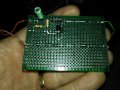
 

Thread Starter

eXe

Joined Jun 25, 2017
25
Guys, i got something here!
I've did the circuit that Alec_t provide, it looks pretty ugly as the first one, but it actually works !
Can't read the wave as i still don't have a osciloscope, but i connected the VAG COM to the car, and i have live reading from the sensor. Which is amazing!
Didn't took the car out for a test drive, as its quite late now , but before it was getting the sensor error as soon as it changed from 1st to 2nd gear... Thing that doesn't hapend anymore. The only possible issue may be the fact that the live reading shows only 200-300 rpm ... Ive tryed to play with the variable resistor, it does raise the rpm , but after around 100 + rpm it gets 0 reading from the sensor... Maybe i must add one more variable resistor?IMG_20170627_222914.jpg
 
Last edited:
Top