How do I get an LDR to work on this PIR Motion sensor board?

Thread Starter

that_infinte_bum

Joined Aug 11, 2025
34
I have a PIR motion sensor - which senses motion and turns on my LED strip lights. Without a Lux sensor, it keeps turning the lights on during day time as well, I'd want for it to work only when there is ambient/dim light or total darkness.
1754968916030.png
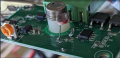
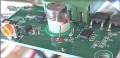
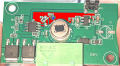
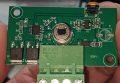
It looked like the right place to solder on a GL5528 LDR would be where there's marking for CDS1 - being a total noob, I got confirmation on a reddit post. Now I have got an LDR soldered on but the motion sensor does not work at all. Testing with a multimeter the output value is consistently zero. How do I get an LDR to work on this board?

ScreenShot of the LDR soldered on
 

Thread Starter

that_infinte_bum

Joined Aug 11, 2025
34
An LDR (light dependent resistor) has a specific light intensity to resistance characteristic curve.

How do you know which LDR to select?
I asked ChatGpt to compare the available options I had locally, then picked the one that suited my needs.

ModelLight Resistance @10 LuxDark ResistanceSensitivity LevelNotes
GL550610–20 kΩ≥10 MΩLow (least sensitive)Very selective; good for total darkness
GL55165–10 kΩ≥2 MΩMedium–HighTriggers in dim light
GL552810–20 kΩ≥500 kΩMediumBalanced option
GL55378–20 kΩ≥2 MΩMedium–HighSimilar to GL5516
GL553912–30 kΩ≥2 MΩLow–MediumSlightly less sensitive than GL5537
GL55476–15 kΩ≥1 MΩHighTriggers in ambient light easily
GL55495–10 kΩ≥10 MΩMedium–HighGood balance with strong dark resistance

✅ Recommendation:

Go for GL5528.

Why?

  • It's a balanced sensor: not too sensitive like GL5516 or GL5547, but not as strict as GL5506.
  • Great for typical indoor lighting conditions — it won’t trigger just because of a small flashlight, but will still turn on the lights when the room is generally dark.
  • Reliable dark resistance (500kΩ is plenty), and light resistance range allows flexibility.

What to Avoid:

  • GL5506: Too insensitive — only good for complete darkness.
  • GL5547: Too sensitive — likely to trigger during daytime or with a weak light.
 

Thread Starter

that_infinte_bum

Joined Aug 11, 2025
34
I’m thinking you would have to draw out the circuit and strategize as to where you could Place such a device
I dont know enough about the components on this circuit board to draw them out - I was hoping this would be a simple "solder LDR on ABC pads" and job done - which doesn't seem to be the case :-( Happy to put pencil to paper to map out what I see on the board - but it wouldn't be too different to what I can already see.
 

Thread Starter

that_infinte_bum

Joined Aug 11, 2025
34
hi that,
Where is the Fresnel lens that covers the PIR detector ?

Post a link to the site where you purchased the PIR module, or a Part number ID.

E

Update:
Located the PIR sensor d/s, it appears a Lens is not required.
https://hobbycomponents.com/sensors/1156-as312-pir-sensor

Posted the Reddit image,
View attachment 354090
It did come in a case which had the Fresnel lens cover over the sensor. I removed the outer casing and the Fresnel lens in order to find out what needs to be done to add a light sensor. This is the link to the product I purchased:
https://www.amazon.com.au/Clearhill-Motion-Sensor-Infrared-Dimmer/dp/B0DS2CNRX7?th=1
 

Thread Starter

that_infinte_bum

Joined Aug 11, 2025
34
That is AI nonsense.
ChatGPT has no knowledge of how the board works and is just giving you a wild guess.

A better solution would be to put a 1 MΩ variable resistor and see what range the unit works and doesn’t.
Slightly disagree. Chatgpt is only giving me information about the LDR not necessarily the working of the board. The board already has a 01E (1MΩ resistor) R5 between the CDS1 solder spots - is there somehow I can use this? What am I trying to find out?
If it matters, I have already measured the LDRs resistance and it fluctuates when I alternate between covering it and shining a light over it.
 

ericgibbs

Joined Jan 29, 2010
21,390
hi that,
OK, ref the lens.
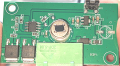
This is a clearer image of the PCB.
Does the PIR still work, light/dark if you disconnect one leg of the LDR, a test to check if you have blown any component?

E
As a general reference have attached BISS d/s

Added: that soldering of the LDR looks awful, check for solder joints.


EG 1670.pngEG 1671.png
 

Attachments

Last edited:

Alec_t

Joined Sep 17, 2013
15,101
I have already measured the LDRs resistance and it fluctuates when I alternate between covering it and shining a light over it.
Any LDR will do that, but the point at which your circuit should trigger on/off depends on both the LDR resistance and the resistance/capacitance of whatever else in the circuit defines with it a threshold voltage (or perhaps time constant). So the choice of a particular LDR is important. ChatGPT's mention of sensitivity is conjecture, since it has no knowledge of your particular circuit.
Try MrChips' suggestion.
 

Thread Starter

that_infinte_bum

Joined Aug 11, 2025
34
How about switching the supply to your set up via something like this?
I have started learning more about ESP32 - seems interesting and fun. That will be the next project I do, while I wonder how I will set a time window for a PIR sensor (eg., only do an action if motion detected between 10 PM to 5 AM - then re program it for Daylight savings etc) - have already received a PIR sensor that can hooked up to the board. For now, I want to try and solve the problem I have on hand.
 
Last edited:

Thread Starter

that_infinte_bum

Joined Aug 11, 2025
34
hi that,
OK, ref the lens.
This is a clearer image of the PCB.
Does the PIR still work, light/dark if you disconnect one leg of the LDR, a test to check if you have blown any component?

E
As a general reference have attached BISS d/s

Added: that soldering of the LDR looks awful, check for solder joints.


View attachment 354094View attachment 354097
Yes, when I turn the adapter on at the wall the multimeter shows the requisite DC voltage for a second or two. Then falls back to zero. So makes me think if I disconnect one of the LDR legs - it will work just fine. However one thing I have noticed is - now that its actually dark, in very dim light - for once I did see some value pop up on the multimeter when I waved my hand past the PIR sensor. But wasn't able to do it again - may be a false positive. But as you have noted my finesse in soldering is hardly anything to talk about. I reckon I am going to resolder that LDR and give it another go.

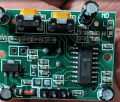
The BISS d/s isn't applicable in this scenario though, isn't it? Incidentally I have another PIR sensor that I intend to use with an ESP32 board at a later stage - that has the BISS chip on it (the PIR sensor is on the other side of the board):
1754999716254.png
 

Thread Starter

that_infinte_bum

Joined Aug 11, 2025
34
Try MrChips' suggestion.
Hes suggesting to use a 1MOhm resistor in the circuit. I am confused because there already is a 01E between the LDR legs - I am not quite sure what I need to do. Could you please break it down for me? I dont have any resistors separately with me.
 
Top