Facebook
 Google
 GitHub
 Linkedin
Electromagnetic brake
- Thread starter rgsawmill
- Start date

Scroll to continue with content
No sir. I will not be putting anybody or any piece of equipment at risk. What I got from our conversations was thoughts and ideas. With your ideas I am going to use a relay to supply power to the brake winding which I also had as option #2 in my chicken scratch schematic I sent you. I will draw the relay winding (excite) power from M1 and M2 with blocking diods. I will draw contact voltage to supply the brake winding from the battery + terminal on the PWM to insure a true 12 volts.Don't just take my word for it - I'm involved in severe guesswork. Whatever direction you decide upon has to be one of your own decision. I do not want to be responsible for any damage or injury caused by something I said. Take care and proceed with safety in mind above all. Safety for you AND for anyone else who may use something you've designed and built.
Thank you for your willingness to throw your thoughts my way .
Seems to me this should be a doable project without having to split any atom's. When I fab up a bracket to mount the gear motor in place of the hand crank gearbox and wire up the power panel to enclosed the PWM and motor brake relay I will test the unit and get back to you on the outcome with visual aids.
Tks Bob G.
You did say this rig was to slew a piece of machinery to a specific level.
If it should advance beyond some safe point it could damage something. I run a wood shop. I've seen and have had materials kick back. I got quite a good bruise from a flying piece of 1' square plywood, right in the gut. Spinning cutters can throw pieces with dangerous velocity. Don't take safety for granted. Unwanted movement can prove deadly.I am attempting to add a system to raise and lower the saw head on my manual mill.
Don't give up. I have taken your input seriously and have reached a lot of dead ends trying to to get information that doesn't really answer my questions on energizing and d-energizing the brake circuit .That's it, I give-up.
Good-Luck, you're gonna need it.
.
.
.
The PWM and gear motor are doing all of the heavy lifting. The setworks is just telling the PWM when to get to work, for how long . If the components I have chosen do not live up to my expectations I will only be out a gear motor that I had sitting on the shelf. I don't see any possibility of a failure that can damage any of my machinery, just unfavorable performance.
I have limited the risks and now it's time to fish or cut bait.
Also the way I am designing the modification I should only have to remove two bolts , remove the gear motor and bolt the manual crank mechanism back on and I will be back in buisness manually.
Thank you for your experience and advice.
Bob G.
A stuck or welded contacts on a relay could cause movement to not stop. Run to the limit of the raising or lowering mechanism and force it to go further resulting in damage. You have to make it idiot proof. Problem is when you make it idiot proof someone comes along and makes a new and improved idiot to undo all your hard work. And in the process it's easily conceivable that someone could get hurt. Sorry to keep banging this drum but you can't just "don't see any possibility of failure" you need to be 1000% absolutely certain nothing could go wrong. Even then, something could still go wrong. There's a reason why we stress safety. If you do something I suggest and it ends up hurting someone then I have to bear the responsibility for it. That's a responsibility I don't want.I don't see any possibility of a failure that can damage any of my machinery
I built a power supply for an ultraviolet (UV-C) LED for my fish tank. Voltage isolation was highly critical. There could be no possibility of line voltage making its way into the pond. Then the supply shorted. Fortunately when I put my hand in the pond I got a mild shock. I never did figure out what exactly went wrong - but gremlins can sink your project. I can't say it enough - be certain of what you're doing. I looked at the drawing for the relay. It could work - IF you KNOW the voltages you're going to be working with. If the coil burns out your motor could be trying to run against the brakes, which could lead to overheating or possibly damaging gear works. And a spinning saw blade can suddenly drop or hit something unintended. Then there's that super idiot I mentioned - no telling how that SI might do something wrong. What seems easy to you might be beyond the comprehension of someone else. Personally I'd stick with the manual operation of elevating the blade.
Yes sir. When setting up the setworks computer and string encoder you set minimum and maximum distances that the program is never supposed to allow vertical movement to go beyond. There are manual buttons that do override those parameters but they are momentary.You did say this rig was to slew a piece of machinery to a specific level.
If it should advance beyond some safe point it could damage something. I run a wood shop. I've seen and have had materials kick back. I got quite a good bruise from a flying piece of 1' square plywood, right in the gut. Spinning cutters can throw pieces with dangerous velocity. Don't take safety for granted. Unwanted movement can prove deadly.
Should I ever put a power feed (horizontal motion) I will be installing micro switches at each end of the carriage in case I should fall or fall asleep . The computerized setworks dose not support horizontal movement.
Excellent safety concerns, thank you.
MisterBill2
- Joined Jan 23, 2018
- 28,460
What I have noticed about this discussion is not much talk about accuracy. By that I mean how close to the intended position must the actual cut be?? My experience operating a milling machine has been that getting a cut within 0.005 inch of the target is fairly easy, and getting it within 0.001 inch of the target is possible if one is very careful and attentive. (YES, I DO know how to do good work with a Bridgeport, Including my setups and tool selections.) No, I am not at all fast enough to compete with a skilled machinist who does it all day long.
My point is that aside from safety with using any motion system, the ability to be accurate is also important.
So now the question I have is how is the controls computer going to know when to release the brake?? I think that it is a spring-applied magnetic released brake. So if you add a spike suppression diode the release time will be much slower.
My suggestion at this point is to get "MAX Head Room" , the CNC expert involved. My experience is that if you are going to have a chain and sprocket link in the system it will not be so very precise.
My point is that aside from safety with using any motion system, the ability to be accurate is also important.
So now the question I have is how is the controls computer going to know when to release the brake?? I think that it is a spring-applied magnetic released brake. So if you add a spike suppression diode the release time will be much slower.
My suggestion at this point is to get "MAX Head Room" , the CNC expert involved. My experience is that if you are going to have a chain and sprocket link in the system it will not be so very precise.
Last edited:
Good evening sir.What I have noticed about this discussion is not much talk about accuracy. By that I mean how close to the intended position must the actual cut be?? My experience operating a milling machine has been that getting a cut within 0.005 inch of the target is fairly easy, and getting it within 0.001 inch of the target is possible if one is very careful and attentive. (YES, I DO know how to do good work with a Bridgeport, Including my setups and tool selections.) No, I am not at all fast enough to compete with a skilled machinist who does it all day long.
My point is that aside from safety with using any motion system, the ability to be accurate is also important.
So now the question I have is how is the controls computer going to know when to release the brake?? I think that it is a spring-applied magnetic released brake. So if you add a spike suppression diode the release time will be much slower.
My suggestion at this point is to get "MAX Head Room" , the CNC expert involved. My experience is that if you are going to have a chain and sprocket link in the system it will not be so very precise.
My original concern was and is the instantaneous application and release of the brake. Most importantly is the brake application to eliminate the possibility of the motor to creep before the brake application.
This is a horizontal band saw used to produce rough sawn lumber. I don't have to worry about thousands of an inch. If I could hold to a tolerance of 1/64" I would be totally satisfied. 1/32" would be expectable. The main concern is the accuracy when the saw head is parked at the pre programed elevation. The computer tolerance is minus 0" plus 1/32" with a maximum travel speed of 1"- 1.5" per second. Should the head find the target and it should creep down before the brake sets I think the head will continue to hunt until the target is achieved for 1 second.
I will program the controller to lower below the target then rise to the proper location to take up any slack in the chain/sprocket drive system.
Thank you for your response.
Sorry I missed one of your questions. The input to the controller (set works) are manual.What I have noticed about this discussion is not much talk about accuracy. By that I mean how close to the intended position must the actual cut be?? My experience operating a milling machine has been that getting a cut within 0.005 inch of the target is fairly easy, and getting it within 0.001 inch of the target is possible if one is very careful and attentive. (YES, I DO know how to do good work with a Bridgeport, Including my setups and tool selections.) No, I am not at all fast enough to compete with a skilled machinist who does it all day long.
My point is that aside from safety with using any motion system, the ability to be accurate is also important.
So now the question I have is how is the controls computer going to know when to release the brake?? I think that it is a spring-applied magnetic released brake. So if you add a spike suppression diode the release time will be much slower.
My suggestion at this point is to get "MAX Head Room" , the CNC expert involved. My experience is that if you are going to have a chain and sprocket link in the system it will not be so very precise.
I would program the cut list into the controller and it will calculate kerf for every cut, Enter, it then gives me an elevation of the first cut (top cut if sawing from top down or bottom cut if sawing from bottom up), press "go to" bed and the controller will activate the motor relay's that actually only compleat a circuit on the contact side of the relay .(In my case it completes a ground in the PWM unit that activates one of the two motor relays depending on polarity/direction.)
Once your head is at the programed elevation for that one second it is excepted and you make a cut.
At the end of the cut you hit a preprogrammed bump up button then pull the head back.
Once you are behind the can't you hit the enter button and the controller moves the head to the next elevation in your cut list. Then repeat the cycle.
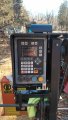
That is roughly what tells the motor to activate and if all goes well simultaneously release/apply the brake. There is no brake release circuit in the controller so that is what I am trying to do in a remote cabinet that will contain the PWM.
Sorry I missed one of your questions. The input to the controller (set works) are manual.
I would program the cut list into the controller and it will calculate kerf for every cut, Enter, it then gives me an elevation of the first cut (top cut if sawing from top down or bottom cut if sawing from bottom up), press "go to" bed and the controller will activate the motor relay's that actually only compleat a circuit on the contact side of the relay .(In my case it completes a ground in the PWM unit that activates one of the two motor relays depending on polarity/direction.)
Once your head is at the programed elevation for that one second it is excepted and you make a cut.
At the end of the cut you hit a preprogrammed bump up button then pull the head back.
Once you are behind the can't you hit the enter button and the controller moves the head to the next elevation in your cut list. Then repeat the cycle.
That is roughly what tells the motor to activate and if all goes well simultaneously release/apply the brake. There is no brake release circuit in the controller so that is what I am trying to do in a remote cabinet that will contain the PWM.
Attachments
-
 1.1 MB Views: 8

MaxHeadRoom
- Joined Jul 18, 2013
- 30,860
From what I have read so far, you have a Attempted CNC situation that is not capable of holding final position.
In a typical CNC motive power positioning system, the mechanics are designed to position and have the capability of holding this position, in your case it seems you only have the ability to position roughly and then apply a brake.
For this, you would need to have some signal from the controller that the saw position had moved to within tolerance, at that point, power should be removed from the posn. control and brake applied.
It sounds like a simple controller such as a Smart Relay may help, if the present controller does not have extra 'smarts'!
In a typical CNC motive power positioning system, the mechanics are designed to position and have the capability of holding this position, in your case it seems you only have the ability to position roughly and then apply a brake.
For this, you would need to have some signal from the controller that the saw position had moved to within tolerance, at that point, power should be removed from the posn. control and brake applied.
It sounds like a simple controller such as a Smart Relay may help, if the present controller does not have extra 'smarts'!
Good morning.From what I have read so far, you have a Attempted CNC situation that is not capable of holding final position.
In a typical CNC motive power positioning system, the mechanics are designed to position and have the capability of holding this position, in your case it seems you only have the ability to position roughly and then apply a brake.
For this, you would need to have some signal from the controller that the saw position had moved to within tolerance, at that point, power should be removed from the posn. control and brake applied.
It sounds like a simple controller such as a Smart Relay may help, if the present controller does not have extra 'smarts'!
I agree. I am rethinking how to control a brake relay I think in the direction you are leaning.
I may be able to steal the thought process used by the PWM manufacturer. Not to control the power supplied to the coil side of the polarity relays but to control the ground side of the coil.
As previously stated the setworks controller motor relays are only producing continuity on the contact side. When wiring that in place of the PWM switch that controls the cw, park, ccw functions it just controls the ground of the corresponding relay. I may be able to use that ckt to control the ground of a brake relay. My concern is can the PWM board handle the extra load of an other relay. ( .13 amps) Or do amps not effect a ground ckt. The same as the + supply side . I'm no electrician so sorry if I'm not explaining this clearly.
Thank you for your response.
MaxHeadRoom
- Joined Jul 18, 2013
- 30,860
I went back at looked at the video on the controller, its seems from viewing it, it is quite a neat and accurate controller, not sure how they interface it with so many M/C.'s ?
It shows all applications using CNC control, Which as you see is the way to go if possible, IOW, use the unit the way it was intended.
Has the positioning been insufficient so far to maintain position with continuous control?
It shows all applications using CNC control, Which as you see is the way to go if possible, IOW, use the unit the way it was intended.
Has the positioning been insufficient so far to maintain position with continuous control?
Yes it has been accurate. I am currently operating it in manual mode, elevating it with a hand crank. I would like to automate that function using more of its capabilities with less input from me. Manually cranking the saw head to the target elevation can at times be finiky due to the nature of the mechanical brake and pawl incorporated in the hand crank gear box. These are the extent of the provided schematics.I went back at looked at the video on the controller, its seems from viewing it, it is quite a neat and accurate controller, not sure how they interface it with so many M/C.'s ?
It shows all applications using CNC control, Which as you see is the way to go if possible, IOW, use the unit the way it was intended.
Has the positioning been insufficient so far to maintain position with continuous control?
Attachments
-
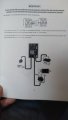 968 KB Views: 8
 -
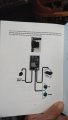 947.1 KB Views: 9
 -
 1 MB Views: 8
I am attempting to use it as intended and following mikron's recommendation on wiring in the PWM. I agree that the desired gear motor would be one capable of holding the load when parked. The only difference in my choice of gear motor is it uses a spring applied magnetically released brake to accomplish that. I have not completed the mounting of the motor or the wiring in the control panel that will incorporate the PWM and possible brake relay.I went back at looked at the video on the controller, its seems from viewing it, it is quite a neat and accurate controller, not sure how they interface it with so many M/C.'s ?
It shows all applications using CNC control, Which as you see is the way to go if possible, IOW, use the unit the way it was intended.
Has the positioning been insufficient so far to maintain position with continuous control?
Otherwise I would have tested my system by now to see if it's performance is acceptable.
The questions that need to be answered during testing since I do not have spec. Sheet on gear motor or knowledge of accuracy of the brake depending on how it is controlled and from what ckt.
1) will the gear motor powered by 12 volts DC have the torque to start movement of the load at the duty cycle needed to control the movement to 1" - 1.5" per second.
2) will the brake release and apply fast enough to prevent creep and undesirable internal wear apon brake release.
MaxHeadRoom
- Joined Jul 18, 2013
- 30,860
The one thing I did not see in the video or or your posts, was the method of holding it in position, i.e. the posn. feedback device?
Maybe I missed it in your posts.?
The video shows some pretty hefty power saws, !
I think I would tend to find a mechanical solution that had the torque in order to follow the CNC route as the video shows.
Maybe I missed it in your posts.?
The video shows some pretty hefty power saws, !
I think I would tend to find a mechanical solution that had the torque in order to follow the CNC route as the video shows.
The majority of videos I've seen the users are using winches to pull cables. I have a chain system not cables. Also the winches are noisy and sound like nuts and bolts banging around in a transmission and wine like a bad pilot bearing. The cables are high maintenance when used out in the elements. However the mechanical advantage of a planetary gearbox dose tend to hold the load.I am attempting to use it as intended and following mikron's recommendation on wiring in the PWM. I agree that the desired gear motor would be one capable of holding the load when parked. The only difference in my choice of gear motor is it uses a spring applied magnetically released brake to accomplish that. I have not completed the mounting of the motor or the wiring in the control panel that will incorporate the PWM and possible brake relay.
Otherwise I would have tested my system by now to see if it's performance is acceptable.
The questions that need to be answered during testing since I do not have spec. Sheet on gear motor or knowledge of accuracy of the brake depending on how it is controlled and from what ckt.
1) will the gear motor powered by 12 volts DC have the torque to start movement of the load at the duty cycle needed to control the movement to 1" - 1.5" per second.
2) will the brake release and apply fast enough to prevent creep and undesirable internal wear apon brake release.
The other units use an acme type of thread to raise the saw head that by design also holds the load.
The AC powered mills do tend to use expensive gear motors that also hold the load that I can assume is due th the wrrm gear with much more reduction than I have.
I was surprised when I was able to turn the output shaft with a 6" wrench and brake removed. It took some force but I could turn it.
I'm not sure that my motor will not be able to develop enough torque to move the head fairly easily but I don't have any specs to go by.
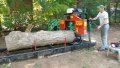
A view of the mill.
Attachments
-
 1.9 MB Views: 14

My 2p worth, having vast experience of wheelchair motors as a permanent user...
Most wheelchair motors are worm geared with typically 28 -> 32:1 reduction (for a 4mph wheelchair). There is virtually zero backdrive, though you might see some movement on a worn motor due to backlash and/or end-float of the motor shaft. No load speed typically 3600 rpm, 3200rpm rated speed at 250W output power. A typical low-end motor will generate 3 - 5Nm of torque at 100rpm. Stall current will be in excess of 240A if not managed/limited by the controller. The brake mechanically locks the shaft when not powered, releases when powered. It should hold a 300kg chair/user still on an 11deg slope, that's about 80Nm of holding torque (if serviceable). However the brake typically takes 0.2-0.5 seconds to actuate when power removed - on my 6mph chair that's about 2 revs of the wheels at full speed on a dry grippy surface. The wheelchair controller releases the brake once the joystick moves approx 5% off-centre (dead-band) when motor current starts to be applied.
Hope that helps.
Most wheelchair motors are worm geared with typically 28 -> 32:1 reduction (for a 4mph wheelchair). There is virtually zero backdrive, though you might see some movement on a worn motor due to backlash and/or end-float of the motor shaft. No load speed typically 3600 rpm, 3200rpm rated speed at 250W output power. A typical low-end motor will generate 3 - 5Nm of torque at 100rpm. Stall current will be in excess of 240A if not managed/limited by the controller. The brake mechanically locks the shaft when not powered, releases when powered. It should hold a 300kg chair/user still on an 11deg slope, that's about 80Nm of holding torque (if serviceable). However the brake typically takes 0.2-0.5 seconds to actuate when power removed - on my 6mph chair that's about 2 revs of the wheels at full speed on a dry grippy surface. The wheelchair controller releases the brake once the joystick moves approx 5% off-centre (dead-band) when motor current starts to be applied.
Hope that helps.
Yes sir that is helpful.My 2p worth, having vast experience of wheelchair motors as a permanent user...
Most wheelchair motors are worm geared with typically 28 -> 32:1 reduction (for a 4mph wheelchair). There is virtually zero backdrive, though you might see some movement on a worn motor due to backlash and/or end-float of the motor shaft. No load speed typically 3600 rpm, 3200rpm rated speed at 250W output power. A typical low-end motor will generate 3 - 5Nm of torque at 100rpm. Stall current will be in excess of 240A if not managed/limited by the controller. The brake mechanically locks the shaft when not powered, releases when powered. It should hold a 300kg chair/user still on an 11deg slope, that's about 80Nm of holding torque (if serviceable). However the brake typically takes 0.2-0.5 seconds to actuate when power removed - on my 6mph chair that's about 2 revs of the wheels at full speed on a dry grippy surface. The wheelchair controller releases the brake once the joystick moves approx 5% off-centre (dead-band) when motor current starts to be applied.
Hope that helps.
So it sounds like the motor is only capable of 3.5 ftlb. Of torque, potentially. I don't know if that will be enough. I will have to get the torque wrench out and see what it will take to move the saw head with the gear ratio I am using. I am assuming these specs are for a unit supplied with the full 24volts.
To throw a fly in the ointment, I am hoping to supply 12 volts to the 24volt motor. What will that do to the torque ? Also I'm thinking that the amperage will increase.
The speed is greatly reduced however it is still above the rpm I need so I am incorporating a PWM to slow it down to approx. 50 rpm.
My PWM is only rated for 60 amps . That may be a problem when starting to move the load and more importantly changing direction from down word direction (very little load) to up word direction to reach the target elevation.
Thank you for your response. And also I'm assuming the wheelchair controller has something to do with the delay in the brake application for safety reasons.