Facebook
 Google
 GitHub
 Linkedin

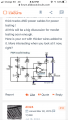
CAn you share the circuit you have used for testing the mosfets?Welcome to AAC!
If you're repairing equipment for pay, you should only use components from reputable sources.
I don't think it's practical for you to test all parameters.
You need to test as the manufacturer specifies.
Using IRLZ44 as an example.
- Gate leakage is measured at +/-16V.
- I used a PWM to test drain current at 6A. I wasn't able to test at a higher current. I used that circuit to get an estimate of on resistance.
- On resistance is measured using a pulse width ≤ 300us with a duty cycle of ≤ 2%. This is to prevent junction heating from affecting (increasing) resistance.
- Threshold voltage is measured with Vds=Vgs and Id=250uA. I had read that drain voltage and short channel effects caused threshold voltage to read low. That didn't turn out to be the case. I initially measured threshold voltage by using the MOSFETs as a current sink/source. Then designed a circuit to measure with the drain and gate shorted together. Doing it correctly gave slightly lower threshold voltages, which was the opposite of what I was lead to believe.
I bought 4 types of MOSFETs from AliExpress and had to test 100% of the devices for gate leakage (because they were all packaged in plastic bags), on resistance, current up to 6A, and threshold voltage. I used 3 different circuits and just used an ammeter to measure gate leakage.
I know the dubious origins of these parts and they won't be used in any critical applications (hobby circuits only). I bought them because I was looking for affordable power MOSFETs. I'm retired and it was worth my time to pay a fraction of what the parts would have cost from a reputable source and have to test them.
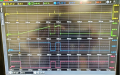
Dynamic test for mosfet and IGBT
- Thread starter gaber2611
- Start date