So you guys permit to have 1 DAC at 15$-20$ like MCP47FEB or MCP4725. So that is your answer to what you have. Interesting. I thought you may have something cheap that I never had thought about.
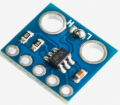
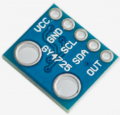
ok then, I buy 10pcs (at 6$) of this MCP4725. Its the first time for me using this component !
I look on yt and I also find it is quite easy to drive itusing arduino libraryfor this MCP4725 and the wire.h for I2C protocol.
Im also thinking to take some logic level mosfets. I know someone here, long time ago, suggested that to me.
What is your favorite or most used logic level mosfet? (meaning you can drive its gate and fully saturate it, full VDS with only 5V)
Because Im using IRFZ44N, ghatgpt suggested an alternative for me, for a logic level, as IRLZ44N. But they are quite expensive...im in doubt. 50pcs=US$15.
Thats why Im asking what's your favorite?
---
after somedelay time, Ifind IRLZ48Nwhich is better than 44Nwith greater current and RDSon.Also cheaper, 10$ for 50pcs. I think is a good deal for good components. I hope they are good - will see.
I can't find a single datasheet for an IRLZ48N only IRFZ48N, which is not a logic level device, from any manufacturer. I've seen the adverts for them but I'm not convinced they actually exist.
There are only a couple of power MOSFETs in a TO220 case which are logic level and all are priced similarly to the IRLZ44N.
If I need to drive a 'big' MOSFET I use a gate driver.
You seem to have an issue with 'real world' pricing - if you want quality products, not re-marked or end-of-life or out of spec parts you have to pay the going rate. $15 for 50 parts isn't expensive... My question would be "why are they so cheap?"... If the known good bulk suppliers like LCSC can't do them cheaply I'd be very wary of the quality...
You are right, I could not find a datasheet either !!!
This is what I find and already purchased:
The L in the name standsfor Logic. Theoretically. If not, then Im screwed.
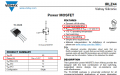
Aaaah, I find something !!! https://www.vishay.com/docs/91328/irlz44.pdf
and indeed it is mentioning RDS(on) specified at VGS = 4 V and 5 V
Although it is not the same, this is 44 and mine is 48, the difference between the 2 is purely in Amperage conduction. Therest of datais identical. From what I could understand.
Aaaah, I find something !!! https://www.vishay.com/docs/91328/irlz44.pdf
and indeed it is mentioning RDS(on) specified at VGS = 4 V and 5 V
Although it is not the same, this is 44 and mine is 48, the difference between the 2 is purely in Amperage conduction. THe rest of data is identical. From what I could understand.
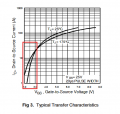
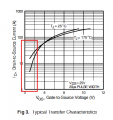
You're misreading the datasheet. The IRLZ44N is a logic level MOSFET in that the device is characterized for a gate voltage between typically 2 to 3 volts. Most MOSFETs start at 4.5v or higher. Logic Level doesn't means its hard on at 3v, just that its useful at that level and guaranteed across the temperature range. See the chart in the datasheet, LH below, that shows its good for 10 - 20A at logic levels, compared to it's non-logic brother on the right which is not tested below 4.5v.
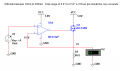
I took Crutchows simple suggestion and kept having noise issues with LM358 and others.
After a few attempts and modifying a little the simulation ran ok without the filters.
about that, I recently (on 01-07-2025/as DMY) I commanded a lot of multiturn POTs, all brand new.
Why? Because I have only scrapped multiturn and very random values and probably less than <10pcs in total. So very few.
The other majority of POTs I have are simple track POTs, both scrapped and brand new and even 3-4 types of track POTs.
This idea was something I promised I will do for a very long time. So only recently I did it.
Detail: 3296W 50R 100R 500R 1k 5k 10k 50k 100k 500k 1M multiturn POT 10pcs/each=100pcs_total
Its better the way I did it, because I could choose exactly what values I wanted, rather than letting random "PACK" values choose for me, at the same total price I may add, including transport.
10$ is a bit expensive, but... I will swallow this capitalistic sacrifice and be happy with the large quantity of values.
I discovered, in course of time, that a multiturn POT is a very good component to have at hand, even if used rarely like I do. In certain situations I had the need to use one, and I didn't had the specific value, so I used my usual track POTs, which did fine, to a point, remember me complaining of rotating from 0%-10% of the track to see the value changing very sharply and very abruptly, while the rest of the %, from10% to 100% was changing imperceptible or very close to nothing.This is called experience and I am paying for this lesson, very late I may add.
This problem arise with this project actually, on the basic opamp cct.
Certainly for switching, but this is a linear application.
For this application, the larger the source resistor the better, as less capacitive load is seen by the op-amp.
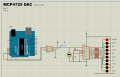
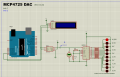
I made today this test cct, in Proteus.
Is working fine 99% of time, only that at 5V from code it is resetting to 0V in reality.
I start to believe this DAC is not THAT rail to rail as advertised. Or, is it a simulator problem.
I solved it by setting the max as 4.99V instead of 5V (from arduino code).
Is a small BUG, I can live with it, but it was nicer to have true rail to rail, and even a bit over it, why not.
I also supplied with 5.1V and 5.2V in my sim, both ICs and it is skipping the 4.5V led. So I left it as 5V and lower in code to 4.99V.
I guess, it needs some specific calibration. The code test and the cct test works, which is good.
I dont have the IC yet, it is still on the road to come. I only made my homework.
I suspect that when you calculate (Vout*4096/5.000) for Vout=5.000 then you get an answer of 0x1000 which of course requires 13 bits not 12, and when you send the data to the DAC it takes the lowest 12 bits which will be 0x000.
If it was simply a rail-to-rail problem then the output would get as close to 5V as it can, it wouldn't be at 0V.
[Edit]
Is working fine 99% of time, only that at 5V from code it is resetting to 0V in reality.
I start to believe this DAC is not THAT rail to rail as advertised. Or, is it a simulator problem.
I solved it by setting the max as 4.99V instead of 5V (from arduino code).
You are correct. The resistive string has 4096 resistors, not 4095. I have seen devices where the resistor string contains only 2^n-1 resistors and 0xFFF outputs Vref.
Regarding the Vset in the op amp mosfet CC sink in post #91 and expanding details for a possible solution.
The voltage specified on this particular design the Vset is 10mV to 500mV that is needed for the mosfet.
The op amp Vset does not need much current, The design above needed about 250nA
You have a quantity of 3296W multiturn pots. That should prove to be good investment.
The dual op amp has a spare amp could have future possibilities but is more complex.
The voltage regulator modules using an LM317 as you know, will unfortunately not go low enough by itself.
Could a stable 5.1V constant current supply limited to 1 mA fed into an op amp voltage follower meet the mosfets gate requirements?
At a semi-professional level a power supply having full featured source and sink capabilities are often enhanced with a digital interface.
It is interesting to read a manual for the specifications and some of the clever arrangements that can be made. You get what you pay for.
A Vset for a (Basic Variable power load w IRFZ44) and 3296W pots with a concept goal of being simplistic and intuitive.
Given the visual concept along with testing and quantitative analysis increases the possibilities.
I have an idea.
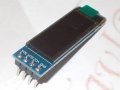
I'm thinking to add a I2C OLED/LCD that I already have in my stock linked to the the same I2C line that is already linked to the DAC. I believe I can add 111 devices on the same I2C lines, if I recall right. This will display the digital value send to DAC as Voltage. I think it will help a lot. I'm also working for the first time with this component, although I have it in stock for quite some time, I never used it. I will shoot multiple rabbits with this 1 project. OLED12832I2C
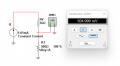
Here is how it looks in circuit:
- Im also thinking to add a rotary encoder, on top of the LCD, also linked to the I2C lines. I have the rotary encoders, but I don't have the I2C IC to convert rotary encoder signal into I2C signal. I only managed to make a very smart program in arduino, to communicate without interrupts, on any I/O pins, using a Attiny88 mcu, efficient and clean. Im wondering if I can use this code already written and convert the output into I2C bitbang ????? It's an idea.
- But this part is more complicated to implement and not absolutely necessary right now, because at this stage I will command everything from my PC. Later, if the project will be a success, I will think about this rotary encoder that will become necessary as I will leave only 1 Atmega328p to command everything, without PC intervention. Thats the plan. - What to use this project in practice? Well, you know me, to test mosfets !!! hahaha. I believe, this way of using a DAC, with very small amounts of voltage increments, it means this is a finer resolution of precision. This means, I can activate the gate of a mosfet, at a very slow and precise steps and observe what the mosfet behavior really is, at certain gate opening voltages, specifically in the linear region. The linear region is the worse case scenario to drive a mosfet, when it will heat up very strong and very quickly from increased internal resistance on its DS. So this is the project Im thinking to use all this circuit for. I am thinking this is a very good tester for brand new mosfets and also for used or scrapped mosfets. Especially for used ones that I know their characteristics as new, and compare what level of damage or usage or stress they are after some tests.
- Im also thinking to add a current limiter cct, like the one with the opamp I used before and also already suggested in this thread, but only to specifically limit the current, not to stress or test mosfets with it. Im not sure how precise that can be!!!! I probably will use my second varPSU that has very fine current (and voltage) settings.
This might be a very complicated module, that Im not very sure about it. Why Im thinking is necesary? because to test a mosfet you dont have to leave it conduct fully. You can gradually open the current passing through its DS, from the current limiter, as you will do from the gate. But this way is a more safer way of not blowing up the mosfet. Is how I see it and how I will do it.
- At the moment I will use my PC to command everything. Later I will use a single MCU, and command the voltage as a stand alone board, independent of my PC.
- Any ideas to add to all this are welcome now, when I still wait for the DAC chip to arrive.
I'm thinking to add a I2C OLED/LCD that I already have in my stock linked to the the same I2C line that is already linked to the DAC. I believe I can add 111 devices on the same I2C lines
As long as all devices have unique addresses then yes. In theory you can have 127 devices but the practical limit is typically less than 20 at standard speed (400kbps) as it's constrained by bus capacitance (total input capacitance of all devices plus cable capacitance), especially over longer distances (<1m). At the high data rate (3.4Mbps) my experience is no more than 2 or 3 devices but a lot depends on board layout, track lengths, clock skew, etc.
Im also thinking to add a rotary encoder, on top of the LCD, also linked to the I2C lines. I have the rotary encoders, but I don't have the I2C IC to convert rotary encoder signal into I2C signal. I only managed to make a very smart program in arduino, to communicate without interrupts, on any I/O pins, using a Attiny88 mcu, efficient and clean. Im wondering if I can use this code already written and convert the output into I2C bitbang ????? It's an idea
I've done something similar with an 8MHz ATtiny85 and the TinyWireS() (I2C slave) library, with the control encoder's push-button for 'select' and two push-buttons for 'go left','go right', tho I use a GPIO output to signal to the master via an interrupt that a new event is ready. Because of my limited hand dexterity I've also used an ATtiny and 5 push-buttons to emulate a rotary encoder, the centre button being 'select', the horizontal ones for 'go left','go right' and the vertical pair for 'go up','go down'.

 Facebook
 Google
 GitHub
 Linkedin