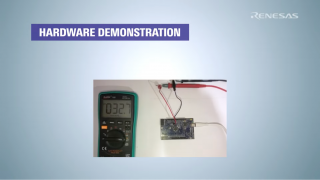
Basic Variable Power Load w IRFZ44N

BobTPH

Joined Jun 5, 2013
11,518
some call it " -LOAD Power supply- " !!!

See? In this particular case the Power supply is both the producing power and consuming power as a LOAD
I’d love to see where you read that.

Edited: Did you mean “Point of load power supply?” That is actually a thing. It is a power supply adjacent to the load it is supplying power to.
 
Last edited:

Thread Starter

q12x

Joined Sep 25, 2015
2,227
that's right, I want to copy or get close enough to this kind of load tester. This is a project that I want to do it with the components I have. But I never found a specific circuit for it, only the basic cct with the opamp that I build it a couple of times so far and all I got was burned mosfets because my PSU switching from VtoA, and then I kind of make it, using very powerful 2N3773 BJT-NPN which are more resilient to my weird PSU power switching spikes. But not powerful enough, probably 5 or 7W from my memory, using the correct wire thickness and avoiding power loss in the wires. A lot of lessons with this project and again, I couldn't reach 30 or 35W like the comercial one. And no one can help me with this very simple project ! This should have been a breeze but everybody gets stumble and tremble into it ! My excuse, I got stumbled because im completely new to this concept, its my first time making it..... in a way I got what I wanted but... with severe limits that I start to recognise them better with time. At least I tried.
By the way, your presented model says "150W", but I will give it 15W realistically...for the driving transistor, in non-pulsed conditions.
 
Last edited:

Irving

Joined Jan 30, 2016
5,128
I couldn't reach 30 or 35W like the comercial one
Because you don't appear to understand how to ensure adequate and effective heat-sinking, the selection of appropriate MOSFETs for this purpose, and the effect/choice of the current sense resistor and the trade-off of dissipation in the MOSFET v that in the sense resistor - one size doesn't fit all. All of which have been discussed at length here. The loss of 'burned MOSFETs', IMHO, has little to do with PSU characteristics and far more to do with inadequate heat-sinks and over-expectation of what's possible with your choice of MOSFET.

One thing you've repeatedly stated is '35W' but you've never stated at what voltage/current you want to do the testing. Doing it at 30v and 1.2A versus 2.7v and 13.3A are very different problems, yet both are 36W. Designing a solution that meets both criteria is possible but there are trade-offs to be made, and one of those is that an IRFZ44N is simply the wrong beast for this burden.

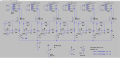
But because I'm a nice person (mostly :) ) here's a design, based on my 400W module that should work OK as long as you follow a few rules. It will do >36W (maybe 50W if you're lucky) across the ranges given above as long as:
a) you have adequate heatsinks of 10C/W or better (lower) on each MOSFET. A little clip-on or a bit of PCB won't cut it.

b) Your control voltage is stable to 1mV or better; at the upper limit the difference between OK and thermal run-away is <10mV, you won't catch it, so a pot is useless. A good 12-bit 3.3v DAC is preferable but a digital PSU might just do.

c) If you have a MOSFET tester eg TC2, TC3, etc, pre-select IRFZ44N ideally from same manufacturer with similar Vth(g-s) to 5mV or better otherwise there is increased risk of imbalance and runaway at the limits.

d) You can't go less than 6 IRFZ44N for 36W (well you can if you increase the losses in the sense resistor to 10 - 20W at the low volts end but then it gets expensive and you lose dynamic range). You can go more, but heatsinks aren't cheap either; a typical clip-on in reality is around 16 - 19C/W in isolation, much worse in close proximity, so you'll need more than double.

e) Breadboards are out, good soldered joints are needed. The heatsink will get to 100C at the top end so think about the mechanical configuration. MOSFET and fins should be vertical. Fans can help if powerful enough and pushing air through the vanes from bottom up, not into them.

f) I've used LM358 'cos they are cheap, though not ideal. If you can gt the B version its better than the A as closer tolerance for input offset voltage (3mV, ideally I'd like <100uV). In my own unit I use a much more expensive amp with voltage controlled gain so alleviating much of the range issues, but at >£10/$12 a go....

A bit about my heatsink component (files attached). It simply models the static thermal resistance network from junction to case (th_jc), case to heatsink (th_cs) and heatsink to ambient (th_hs). Voltage = temperature (in degC), current = heat flux (Watts). You can't use it for switching MOSFETs or varying loads as it doesn't (yet) model thermal time constants. Inputs are voltage across device and current through it, plus a voltage for the ambient temperature (25v = 25degC). Outputs are voltages representing temperature at junction, case, and heatsink base. The current through the ambient voltage = power dissipation in Watts. Parameters are thermal resistances th_jc, th_cs, th_hs in degC/W. Put the .asy and .asc files in your project folder.

Last thoughts: Often you'll see designs that use a single op-amp driving several MOSFETs with additional source resistors to help balance the differences in Vth(g-s). Both ST and IXYS recommend this for their linear devices and its commonly used for switching MOSFETs too. But it doesn't work well for this scenario because the resistors have to be quite large to have a useful effect and the Vth(g-s) parameter across multiple IRFZ44N's has a wide range that can't easily be accommodated because the linear region on these devices is very small.

1751381390855.png
 

Attachments

Ian0

Joined Aug 7, 2020
13,132
I made a similar design with an "unsuitable" MOSFET, for 120W. I used the biggest CPU cooler I could find (at the time) with a normal aluminium heatsink and designed it so that 60W was dissipated in 6 MOSFETs and the other 60W in source resistors.
I only used one op-amp to drive the lot. It worked because the relatively large value of the source resistors which ensured adequate* current-sharing.
*the term "adequate" was carefully chosen - I did not want to imply "perfect".
 

Irving

Joined Jan 30, 2016
5,128
I made a similar design with an "unsuitable" MOSFET, for 120W. I used the biggest CPU cooler I could find (at the time) with a normal aluminium heatsink and designed it so that 60W was dissipated in 6 MOSFETs and the other 60W in source resistors.
I only used one op-amp to drive the lot. It worked because the relatively large value of the source resistors which ensured adequate* current-sharing.
*the term "adequate" was carefully chosen - I did not want to imply "perfect".
Some of the older 'big' MOSFETs work quite well for this IRF540N etc. The big limitation is the TO220 case, when compared to a TO247 which has a 30% bigger contact area and much lower th(j-c) (0.2-0.5K/W v 1.2-1.5K/W typically)
 

Thread Starter

q12x

Joined Sep 25, 2015
2,227
First of all, thank you for your sharing. I learn best from other people experience and their way of doing things !
But because I'm a nice person...
yes you are, I counted on it ! haha. You're my best friend !

Doing it at 30v and 1.2A versus 2.7v and 13.3A are very different problems, yet both are 36W.
Designing a solution that meets both criteria is possible but there are trade-offs to be made, and one of those is that an IRFZ44N is simply the wrong beast for this burden.
Very interesting about "IRFZ44N is simply the wrong beast for this burden". I imagined you to drive 1one at 94W its maximum (without destroying it, or weaken it, or stressing it).
Well, with this kind of project I'm learning quite a bit about power circuits !
Yes, you are right about "30v and 1.2A versus 2.7v and 13.3A" and I know the difference, and I didn't mention a specific voltage!
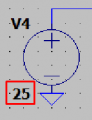
I'm not that familiar with LTspice. 1751447668920.pngThat 25 means Volts? so you probably using 25V to power this entire cct. Right?
I see another at 15V ? - probably for opamp rails?
- I know this from very young age, orbiting certain people, that the size of your steel transformer (mostly as it was back then) dictates what kind of load you can use. Pretty much. Powerful or not so powerful. Also, the more current you can get, the thicker the tracks. So these are the elementary rules I catch fly in my ears and for some reason they stick in my memory for good. I was that kind of a good listener and pupil I guess. To catch from 1 fly. I also asked a lot of questions for the
irritation of the person, who was having most probably limited knowledge or interest. So, what I'm saying with all this is that all depends of what PS I have. And I'm circling back to your statement, if I have a PS that can deliver a lot of Amps, then I can use less voltage; and viceversa, if my PS is less in Amps, then I have to increase the Voltage, again, to reach the same Power W. Now, to answer to you, about what kind of fixed PS I have, well... I'm not that great on the Amperage ones !! I kind of have shitty ones. They are kind of scatter in all my room, and I don't have that many. OR just use my varPSU that I'm always using for all my weird experiments, as a temporary PS, and not as a fixed PS. Hmmm. That's a problem.... (I also have 3 ATX PSU but 2 of them...questionable).
A little clip-on or a bit of PCB won't cut it.
This part I'm not getting it. What do you mean "clip-on" and "PCB" ?

a) you have adequate heatsinks of 10C/W or better (lower) on each MOSFET.
In my book, as long as Im having lots of copper or aluminium, and in thick and large panels as possible, the better.
I have something, but...Im not proud with them. haha. I have some scrapped radiators but... they are small and too thin in my opinion.
Also do post some close up pictures of your build, with detail for you heatsink and the cct and the mosfets catched on the heatsink.

I will be happy enough to make 2 // parallel modules for start. Then, later, after everything is a success, and I understand better this project, I will add more // paralel modules to it. I hope it is scalable ! It should be.

c) If you have a MOSFET tester eg TC2, TC3, etc, pre-select IRFZ44N ideally from same manufacturer with similar Vth(g-s) to 5mV or better otherwise there is increased risk of imbalance and runaway at the limits.
Aaaaaaaaaaaaaa, what now? Is there such a thing as a mosfet tester? And now you are telling me about it? What is TC2 or TC3?
I only know those cheap indian mosfet testers on youtube/or www/ that they check if you can open the mosfet VDS from activating it's gate. But more than that... Im not aware. Put a picture or a link to such unheard device.

- d) You can't go less than 6 IRFZ44N for 36W ..You can go more, but heatsinks aren't cheap either;
- a typical clip-on in reality is around 16 - 19C/W in isolation, much worse in close proximity, so you'll need more than double.
Depending how many modules Im making. If Im making only 2 modules I can escape cheap enough and with what I have. For the first phase. Then I will expand and get more heatsinks. I am ok with more than 6 mosfets as long as I understand their practical limits !!! Voltage-current and power heat dissipation limits. I also understand they are (kind of) weak components for this type of project. We will see what is what. By copying your build, or at least 2 // modules, I will walk on your steps and see how hot things will get.
- I don't understand your second line at all. Show me some pictures !

e) Breadboards are out, good soldered joints are needed.
I believe you are referring to point to point soldering, directly on the mosfet pins with thick wires.
I think I already did that in my older experiments. And I also agree with you here.

The heatsink will get to 100C at the top end so think about the mechanical configuration.
My limit is 50*C. But I will roll with you at this point, and do as you say.

f) I've used LM358 'cos they are cheap...If you can get the B version its better than the A version
I have 2 models,
DIP8 : LM358P (is written on the plastic case)
and SOT8 : 100pcs LM358DR SOP8 LM358 SOP LM358DT SOP-8 SMD LM358DR2G IC In Stock
So..probably I have LM358DR? (text on the plastic case is just LM358, no ending letter)
or LM358DT? I believe LM358DR2G means they are 2 opamps in 1 chip.
yah,Well....

Often you'll see designs that use a single op-amp driving several MOSFETs with additional source resistors to help balance the differences in Vth(g-s).
I actually mentioned (I think), but I certainly thought, on 1 amp per each Gate of mosfet. I didn't know how to do it as simple as possible though. But I was contemplating the idea. How I see it, is driving each mosfet with its dedicated gate driver (LM358 opamp), can result in using very uneven mosfets and I dare to say even not the same model of mosfets, like totally different and unmatched mosfets. Why is this possible? Again, theoretically and it is how I'm seeing it, from my perspective, is because you calibrate each mosfet from its opamp gate driver, limiting a certain amount of current to flow through each mosfet. This require careful calibration and testing, per each mosfet, in running time. But after everything is calibrated, you get the final power.
Is how I'm seeing it. Compared with all mosfets Gates linked together from 1 opamp driver, where everything must be perfectly picked and choosed and balanced, aah. NEIN ! I say. I'm very Pro careful customization and ramification and expandification and modularization.

Ok then... I will make 2 // paralel modules and see how it goes. Expect stupid questions along the way.
Also, you put some pictures from your real thing, with intim details.
 

MrAl

Joined Jun 17, 2014
13,707
Hello everybody !
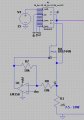
I have this Basic Variable Power Load w IRFZ44N cct. This is not my cct, I find it online and I am uncertain of its functionality.
I know there are these 2 types of driving a mosfet: linear mode and switching mode.
The usual way I know how to use my IRFZ44N is in full switching mode, with minimal RDSon as possible, from 10VGS up to maximum 20VGS as in its datasheet.
Here is what I understand from this cct:
This cct is made, by the look of it, in linear mode. Especially when the VDD is less than 10V.
That DZ10V and its 10k current protection, are there to limit higher voltages to a maximum of 10V on the transistor Gate. To protect it from over voltage and not burn its gate. The POT47k can be any value, I used 47k because is a rare value and I have a bunch left. Its role is to linearly change the voltage on the Gate, playing the role of a voltage divider. The current is very low, thanks to the 10k in front of the POT.
So,from my understanding, when the Gate receives less than <10V, RdsON will increase, lowering the performance of the transistor, increasing the power dissipated as heat over the transistor in the same time, and conducting way less current compared when is fully open with >=10V.
So, it is better to drive any mosfet as fully open as possible, with a minimal RdsOn as possible, to allow as much current to pass through it.
So this is the theory and practice I know so far. I kept away from driving mosfets in their linear region <10VGS.
View attachment 351580
Now... to correct this cct, Im thinking on a boost DC converter. I already have a cct for it, that I can build. Its a bit complicated, including a 555 oscilator module, that drives a small mosfet included in a current pump with a 500uH coil module and in the end, a current rectification module, to liniarize the oscilations, making it as DC and smooth as possible pretty much. But is a big-ish cct to implement. What it does, it is taking a 5V input, and outputs 60V or so. I already made the circuit for another application, but Im thinking to make it again, this time to specifically drive my mosfet in this Power Load cct presented in the picture. But 60V or so is way over nominal VGS. That DZ10V is there to limit and assure a clean 10VGS. So Im safe at this point. Why to use this DC converter? For the simple reason, of driving everything from 5V ! My mosfet will be driven in switching mode, with a precise 10V on its gate, and everything else in the cct will run at 5V.
The problem is that POT, that is transforming everything I said until here into crap. Because whatever Im doing until the POT, doesnt matter. As long that POT is there, it will add a less than 10V on Gate and make it run more hot than I want it.
Whats the solution here? Where Im doing wrong? Is my logic so far ok? Do I miss anything? Any comment is welcomed.
One approach I believe you will come up with is to use PWM on this mosfet to pass less or more current through it, all in the switching mode, no linear mode. I thought of it as a possile solution, but I want to see what you say too.
Thank you.

Hi,

By now you probably realized that you need to control the MOSFET more diligently in order to set the drain to source current level and have it stay at that level.
That's because the characteristics of the MOSFET alone can vary somewhat during operation. Using an op amp allows you to measure the current and have the op amp make corrections to the Vgs voltage of the MOFET automatically in order to keep the DS current constant.

Then I see the power dissipation came into the picture as another issue.
This is a consequence of caused by a confluence of two things:
1. The current drain to source.
2. The voltage across the drain and source.

The instantaneous power P is:
P=Ids*Vds

so the higher either of those is the more power will be dissipated.
This is true for either linear operation or PWM operation, but with PWM we get to factor in the 'on' time of the MOSFET vs the 'off' time. This results in a modification of the above:
P=Ids*Vds*Ton/(Ton+Toff)

where P is the average power which you can just call the power P for this problem.
This should allow you to figure out an approximate temperature rise.

A rule of thumb is that 1 square inch of surface area powered from a device that dissipates 1 watt will cause a temperature rise of 60 degrees C. That means if the room temperature is 20 C and the power is 1 watt and the total surface area with no forced air flow is 1 square inch, then the temperature of the heat sink will be 80 C. If you increase the surface area to 2 square inches, the temperature rise goes down to roughly half of that, so the rise is roughly 30 degrees C and that means a total heat sink temperature is now 50 C. It's actually a bit higher than that but that's rough estimate.

This should give you some idea what is happening even though this is not an exact calculation. The more surface area, the lower the heat sink temperature. And, if you have 1 square inch of heat sink area and 2 watts dissipation, then the temperature would rise very roughly by a factor of 2 (actually less than that). This would lead to a temperature rise of 120 C which would result in a heat sink temperature of 140 C.

So you see how the heat sink matters. You need a bigger heat sink to dissipate more power. If you are not satisfied with the temperature, then go to a bigger heat sink or add forced air cooling (a fan).
When you do use a fan, you should have a fan speed detector so you can determine if the fan stops running. Fans often stop running without any notice, and if that happens when there is significant power being dissipated, the MOSFET burns out.
 

Irving

Joined Jan 30, 2016
5,128
I imagined you to drive 1one at 94W its maximum (without destroying it, or weaken it, or stressing it).
Well, with this kind of project I'm learning quite a bit about power circuits !
The 'headline' power dissipation in the datasheet is a theoretical maximum that can never be realistically be achieved - its quoted at a case temperature of 25C, a physical impossibility. Its done to standardise datasheet descriptions to allow for comparison between devices - just like the automobile industry's 'miles-per-gallon' or 'full-charge range on an EV'.

To work out what the real useful capability of the MOSFET is, you need to work out how effectively heat is removed from the device. Let's assume we want to dissipate around 10W in the MOSFET. From the datasheet our maximum junction temperature is 175degC but we wouldn't want to run it that hot, so lets say 160°C. Also from the datasheet we can see the thermal resistance from junction to case is 1.5°C/W (ie for each Watt dissipated the junction rises 1.5°C above the case temperature) and the thermal resistance from case to heatsink is 0.5°C/W (this is the thermal paste, insulator and takes into account surface finishes too), so in total the resistance from junction to heatsink is 2°C/W. So at 10W the case will be 160°C - 2°CW * 10W = 120°C (ouch). To get to 25°C ambient we need a heatsink who's thermal resistance is better than (120°C - 25°C)/10W = 9.5°C/W. Ideally we'd want one much better than that so everything runs much cooler, especially as our choice of ambient at 25 °C may be questionable; there may be little airflow, sunlight on the heatsink, local heating due to other equipment, etc. 30 °C or even 40 °C might be a more realistic choice.

As you can see, linear operation of a MOSFET is much more demanding than switching between fully on and fully off, where most of the dissipation is during the switch over.

1751447668920.png
That 25 means Volts? so you probably using 25V to power this entire cct. Right?
Yes, thats 25v but No, that source is used as an analog for ambient temperature (I guess you didn't read my comments about the heatsink component). You should get to know LTSpice and learn to use it effectively. Designing with a simulator gives a lot of confidence things will probably work before spending time and money trying them.

This part I'm not getting it. What do you mean "clip-on" and "PCB" ?
Clip-on - a small heatsink that just pushes onto the transistor tab. Simple and cheap but not very effective above a Watt or two.

PCB - printed circuit board, copper clad board used as a heatsink, usually for surface mounted devices. Again only useful for fairly low wattages.

In my book, as long as Im having lots of copper or aluminium, and in thick and large panels as possible, the better.
Not really. Flat panels make poor heatsinks. Mass is much less important than surface area. Many large fins on a base around 10mm thick is whats needed.

More later...
 

Thread Starter

q12x

Joined Sep 25, 2015
2,227
So, this is what I call a module from your cct. That you scale it to 6 modules.
Screenshot_7.jpg
- I have no idea what all that top part means, I understand is a heatsink, I believe it is part of the simulator settings. I didnt put the hours with this sim so I know little about it. I know it works with parameters as text.
- I assume you link all the Drains somehow, probably through the heatsink aluminium common case? But you said all mosfets are having separated heatsink. Anyway, I draw a violet line there on top, that is representing this common Drain wire or track.
- About the DAC !!! I have none ! And I recently commanded one and is on the postage way. But I made a big mistake, I took 10pcs of DAC0808 because I catch them at low price of 7$ for 10pcs. But after 1 day, of simulating and googling this IC, I realized that is dependent on negative voltage and it needs a minimum -15V on one of its pins. Pretty much like a uA741 and I start to believe this DAC wasactually made for this opamp, or at least back compatible with it, if not for it. So....ha... I have a big problem. Im still waiting for it to arrive so I can not test anything except in my simulator.
With this occasion, what DAC are you using? one that preferably is logic 5V to 0V rail-to-rail, and not -15V ; or even larger than 5V is always good.One that you used in time and you are familiar and happy with, no weird setup or power like Im getting to receive. I think I will buy another type of DAC like you have. Or even better if you know or put your eyes on one.
By the way, this is the first time for me, using and needing a DAC !!! Also this DAC0808 is my first DAC IC I ever have ! My first introduction to them !
I thought how to deal with this -15V it requires, and my solution is either:
- get a transformer with +15V and -15V on it (ideally) _ but remains planB because is exorbitantly expensive for my romanian pocket.
- make an inverting voltage circuit with a 555, I made it before and it worked. But the problem is 15V high. So I thought I may boost a 5V into a 15V, then invert it into -15V. Its a lot of circuitry but if done with smd's I think it will be small enough footprint. I hope. So thats my thoughts how to repair my mistake and deal with this old style of powering.
- But on the bright side they where very cheap, 7$ for 10pcs ! where the majority are like 15 or 20$ per 10pcs ; and also I have a very low voltage limit, as low as 0.001V if I want, using this kind of old voltage setup, this is it's biggest advantage from what I know. And if I have already these 2 voltages +15V and -15V, I can use my brand new uA741's, that I never used (100pcs) in my life !!! haha. Except once when I test it to see if its working and how its working. So in other words, this is a great chance to use these uA741 opamps, take them out from naphthalene.
Another bright side, it's // parallel inputs ! No serial, so very easy to command. Although a bit more complicated to set up and more wiring. I always liked // input devices !!!
The bad side, it is a blody complicated circuit to drive everything, and I get it why noone is jumping to make it.
- The R1 load resistor, you set it as .15@10W, because is what you have. I have 1R@10W and 1R@5W. But I also have .1@5W Im not sure .1@10W.
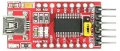
-Until my shitty DAC will arrive, I was thinking to link my PC through a USB to TTL converter and use it LIKE a DAC, but programatically directly from my favorite C# on the serial COM port ! S4602925cc8484964a545ed.jpgWhich is way more practical and easier to handle the code and test, than with Arduino !!! This is my favorite way actually but I am not using it as more as I like ! For some reason, arduino is more convenient to setup, its more plug and play than me going into my C# settings and figure out how to setup everything .... anyway....
Or... another idea is to use an Arduino Uno as a DAC. I just checked and it does not have an integrated DAC inside it. Bummer!!!!!!!! l have to make the code for it, is not a problem, but it will take some time.
So these are my options I can think to actually make it in practice.
Your ideas are always welcome !!
 
Last edited:

Thread Starter

q12x

Joined Sep 25, 2015
2,227
Anyone - What DAC are you using?
What you used in the past, and you got comfortable with. Also write your project you used it.
I want to buy another DACversion but I need some guidance first.
I already buy and is on its way, DAC0808 but like I saidalready, it full of setup and powering problems.
So I want something simpler to implement and deal with.
Not only simple in hardware but in software too especially if is serial input, so I'm counting on your experience at this point.
Or, if you don't have one, what youreccomend ?
 
Last edited:

sarahMCML

Joined May 11, 2019
697
Anyone - What DAC are you using?
What you used in the past, and you got comfortable with. Also write your project you used it.
I want to buy another DACversion but I need some guidance first.
I already buy and is on its way, DAC0808 but like I saidalready, it full of setup and powering problems.
So I want something simpler to implement and deal with.
Not only simple in hardware but in software too especially if is serial input, so I'm counting on your experience at this point.
Or, if you don't have one, what youreccomend ?
Are there no DAC's in the PIC's that you have in your stock. If so you could maybe use one of those?
Otherwise, if you're happy to use I2C devices, Microchip have a large selection of relatively cheap 8, 10 and 12 Bit devices, with a 10-Bit MCP47FEB11 10 Bit going for just 48p from Mouser.
 

BobTPH

Joined Jun 5, 2013
11,518
Are there no DAC's in the PIC's that you have in your stock. If so you could maybe use one of those?
Most PICs do not have a useful DAC. Many have a 5-bit one. There is one family of dsPIC that has a dual 16-bit audio DAC, which has not seemed to catch on. I have used it, but many people seem to have trouble with it.

Anyway, I think the TS uses Atmel chips. I don’t know about them.

Edited: Filtered PWM should be fine for this app.
 

Thread Starter

q12x

Joined Sep 25, 2015
2,227
Anyway, I think the TS uses Atmel chips. I don’t know about them.
Are there no DAC's in the PIC's that you have in your stock.
My PIC's "era" has winter down. I can say I am no longer a PIC fan.
I have some "small" PIC's but the majority I used was 12F508 and very long time ago probably 5 of 16F84A, because the internet tutorials literally started with them.They are both small in all the major characteristics like small memory, pin count, and especiallyperipheric options and that includes DAC or ADC. These ones are basic microcontrollers focused on digital operations, not analog signal processing. I can probably make a program for them to transform into a DAC, but ... you know the saying, if you dont use it, you lose it? thats all about my assembler skills these days. And also a major dropdown is they take a lifetime to learn and code and debug and test one single program. You know my saying "Im good, but not THAT good". I got the baptism with asm and PICs but I kindly move over from them.
- Now I am an Atmel fanboy !!! Why? Because the programming shell type C, is waaaaaaaaaaay more convenient and easy to write and read than asm. Plus, I'm very good at C# which is a big and serious branch of C. So the arduino C branch as small as it is, it is a dedicated one and very comfortable (for me)to work with !
So now I crossed the line into these ones. Specifically, and I made some movies about them too, AtMega328P and AtTiny44.These 2 are also "small" MCU's. Well, 328 is maybe medium to big. But comparedwith PICs they both haveADC's but not DAC's !
So, yes, Im screwed with these new DAC's that are comming !!!
Pleasegive me something good and modern and with logic voltages.... to have as a second chance.
I like that these DAC0808 have // inputs !!! Very nice because I always like it and promote it !!!!
Also...to BobTPH, I think (but I never tried) you can program atmel chips like PICs, directly in asm. If this is the only comfortable thing that you are used to do. I am running like puma from asm in general.The difference between them is that with atmel mcu's I can do MORE and MUCH-MUCH MANY projects than with PICs !!! thats the only difference. Atmel areway faster to write and debug code than PICs !!!!!!! I can write code in 1-2 days depends how complicated it is. But with PICs it took me literally months !!!! Im notjocking ! So thats my 2cents about them.
I really want to have more atmel on my plate to comparestuff between them. But...you know me, Im poor and limited.
Im also curious about other mcu brands if they have good tutorials and similar to arduino C type lng.
Im also sincerely VERY ashamed I moved so slow towards atmega brand and acknowledge their ease of coding (and debuging).
Again, Im a fan boy for atmega. Life changing with them !!! thanks god. haha.
- Good idea @sarahMCML , and good hint, to use a MCU that has DAC built-in !!! But that kind of MCU is probably super expensive and I also dont have it in my arsenal of components. You know me, I like to use what I have. I also like a minimum of 10pcs for a very decent price, because I make stupid mistakes as a life rule.
About your MCP47FEB DAC ...I checked on aliexpress and I find no MCP47FEB listed there ,
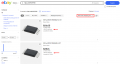
then I checked on ebay and look at the prices -hahaha 30$ for 10pcs, come on, set as the lowers price first.
Microchip is too expensive for no reason. There are other brands with the same characteristics but way cheaper. The problem is to find them.
1751635519832.png
 
Last edited:

Thread Starter

q12x

Joined Sep 25, 2015
2,227
Interesting enough....I searched on aliexpress after 10pcs DAC and I got some interesting results !!! (see the picture)
1751636939989.png
I also checkedtheir datasheets and they are all DAC's made for AUDIO!!! it didnt crossed my mind to check this in the first place !
So, if anyone had used such audio DAC around here?
Allthat Im scared about them ishow to access in code.... thats the biggest fear I have.
Thats why I need someone that used something like this.
 

Irving

Joined Jan 30, 2016
5,128
I assume you link all the Drains somehow, probably through the heatsink aluminium common case? But you said all mosfets are having separated heatsink
On your one, each MOSFET drain would be connected to the input connector (banana terminal) with an identical short piece of wire - the heatsinks would be arranged as a hexagon with the drain connection from each tab connected as a 6-arm star to the +ve input terminal in the centre at the top, and the 6 source resistors attached directly to the source pins arranged as a 6-arm star connected to the input -ve terminal in the centre at the bottom. This would allow a fan placed underneath to blow up through the fins.

With this occasion, what DAC are you using?
Look for modules on Amazon/eBay/AliExpress featuring MCP4725, single 12bit output I2C interface, cheap @ 5 for $15 approx. Other possibilities are MCP4728, quad 12bit output I2C, AD5693, single 16bit output, All are 2.7 - 5.5v single supply.

BTW, ff you want a negative rail for opamps etc., the simplest solution is a LM2662 module, +5v in, -5v out or look for ICL7660 module +5 to 12 in, -5 to -12 out. I regularly use these in projects: https://www.ebay.co.uk/itm/295786166474, for the price its not worth doing your own.
 

sarahMCML

Joined May 11, 2019
697
Ebay isn't always the best place to look. As I posted before, from Mouser, you can purchase a single MCP47FEB11A2-EST for 48p, 25 for £9.95, or 100 for £36.70. Way cheaper than Ebay, and guaranteed to be genuine!
 

sparky 1

Joined Nov 3, 2018
1,218
Mosfets gates by design are very voltage sensitive. This concept in practice is helpful.
If fine tuning is abrupt, lower the Vset range using an appropriate voltage divider.

The digital variety does that. Unlike our resistor networks that are not very precise.
Beside understanding that mosfets like very small voltage on the gate, I think that we need to use laser trimming to step up our resistor tolerance.
Maybe it's real maybe it's not. It must be real because we insist on having moral ethics.
 
Last edited:

Irving

Joined Jan 30, 2016
5,128
Ebay isn't always the best place to look. As I posted before, from Mouser, you can purchase a single MCP47FEB11A2-EST for 48p, 25 for £9.95, or 100 for £36.70. Way cheaper than Ebay, and guaranteed to be genuine!
The MCP47FEB11A2 is cheap because its only 10bit, the MCP4725 is 12bit. A 10bit DAC only gives 3.3mV resolution, which may not be sufficient. The MCP4725 is 97p, 1up and 81.1p 25 up.. @ mouser but postage (to UK) is a killer @ £12!. The MCP4725 is 69p 1 up, 60p 10up at LCSC, postage to UK is £6.66 (MCP4725 x 10 + shipping is $25 to US)
 
Last edited:
Top