Analog circuit optimization

Thread Starter

Marus780

Joined Jan 11, 2023
92
Hi !
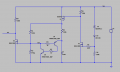
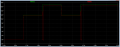
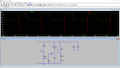
I need to make a circuit that produces a short negative pulse (high-low-high) when the supply voltage rise above 14.5V. The supply voltage vary from 11 to 17V. I found a piece of circuit on the internet which can trigger an repetitive pulse, and I addapt it in simulator to do what I want. I think it can be simplified and optimized compared to how it is now. But as I am not verry good at electronics and I don't really understand how this circuit works, I ask you if you can help me to do it right. The circuit must be verry low power and made only with discrete components (no uC, no NE555). The output stage (R9 and U2 mosfet) and the input stage (D1, D2, R6, U1) should remain as they are. The input stage can be reversed, made with P-Channel mosfet.
 

Attachments

Last edited:

Bordodynov

Joined May 20, 2015
3,429
You have the wrong zeners in your scheme. This may not be shown by the simulation due to poor zener models. Look for zeners that are rated at 10uA.
 

WBahn

Joined Mar 31, 2012
32,703
Where are these requirements coming from? They seem awfully arbitrary? Is this some kind of homework assignment?
 

Thread Starter

Marus780

Joined Jan 11, 2023
92
It is a little part of one of my hobby projects. I need a high-low-high impulse to change the state of a CD4013 latch which commands a mosfet that power the rest of the circuit when the voltage rise above 14.5V
But please don't change the subject. In this post I just want to know how can I make a high-low-high short pulse triggered by a rising edge (supply voltage raised over 14.5V).
 

sghioto

Joined Dec 31, 2017
8,633
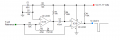
You can do it with a LM393 comparator chip like this:
5 volt reference can be a zener diode or other circuit depending on the precision required.
C2 and R6 determine the pulse width.
R1 and R2 set the trip point at 14.5 volts.
1704657250761.png
 

Miso1566

Joined Jan 6, 2024
6
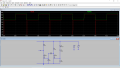
U4 and U5 forms a SCR thyristor. Once the U1 and U3 opens because of overvoltage the U2 also opens (pulls output “set” low) and simultaneously cap starts charging. When cap is charged to certain limit the SCR is triggered, discharges the cap rapidly and U5 pulls U2 gate low (i.e. output “set” goes high).
 

MrAl

Joined Jun 17, 2014
13,667
You can do it with a LM393 comparator chip like this:
5 volt reference can be a zener diode or other circuit depending on the precision required.
C2 and R6 determine the pulse width.
R1 and R2 set the trip point at 14.5 volts.
View attachment 312041
Now, now, we can't have any of that :)

Seriously though he said it had to be with discrete components like transistors no IC's just transistors and low level parts like that. That's unless he changes his mind. If we could use IC's it could be a very, very simple circuit.
 

MrAl

Joined Jun 17, 2014
13,667
Hi !
I need to make a circuit that produces a short negative pulse (high-low-high) when the supply voltage rise above 14.5V. The supply voltage vary from 11 to 17V. I found a piece of circuit on the internet which can trigger an repetitive pulse, and I addapt it in simulator to do what I want. I think it can be simplified and optimized compared to how it is now. But as I am not verry good at electronics and I don't really understand how this circuit works, I ask you if you can help me to do it right. The circuit must be verry low power and made only with discrete components (no uC, no NE555). The output stage (R9 and U2 mosfet) and the input stage (D1, D2, R6, U1) should remain as they are. The input stage can be reversed, made with P-Channel mosfet.
Hi,

How accurate does the pulse have to be and how percise does the pulse shape have to be?
I ask because there are much simpler techniques to generate a pulse that only lasts for a short time.
The simplest way I think is to use a capacitively coupled set of transistors. The first transistor goes low or high, and that forces a temporary current through the coupling capacitor, and that turns the second transistor on for a short time, then back off. Still use the zeners and may need another transistor but that's the basic idea.
 

MrAl

Joined Jun 17, 2014
13,667
All I read was no micro or 555.
;)
Ok no problem, but I read that as no IC's because those are both IC's and if you can use other IC's then I would think you could get away with just one IC chip in there like a multivibrator. Also, his prototype so far uses just transistors and other simpler parts.
We may need more clarification.
 

Thread Starter

Marus780

Joined Jan 11, 2023
92
How accurate does the pulse have to be and how percise does the pulse shape have to be?
I ask because there are much simpler techniques to generate a pulse that only lasts for a short time.
It doesn't need to be verry accurate, just a simple pulse of any shape that the clock pin from CD4013 could see it.
 

MrAl

Joined Jun 17, 2014
13,667
It doesn't need to be verry accurate, just a simple pulse of any shape that the clock pin from CD4013 could see it.
Oh ok, well as long as multiple clock pulses are allowed (D-FF) then you can probably get away with just two transistors and your zener arrangement.
Bias the two transistors, couple with a capacitor with reasonable value.
The only catch here is that the first transistor has to have high gain, which may mean using two transistors (and a third as output) to get a higher gain.
The first transistor (or the dual pair) has to turn on relatively fast in order to get the cap to conduct enough to turn the third transistor on for a short time.
If the input is very slowly changing, the first set of transistors has to have very high gain or else the output will not rise (or fall) fast enough to work with the coupling capacitor properly. This is usually done with logic gates or inverters but I realize you do not want to use those.
Possibly some positive feedback for the first (and second) transistor to get the second to turn on fast which will then trigger the third.
 

Miso1566

Joined Jan 6, 2024
6
The circuit i posted drains nothing if Vcc is below threshold. Maybe a zener leg a little thru upper 22k (about 30uA) when Vcc is close to threshold. The advantage (comparing to yours) is higher gain of two transistors , i.e. sharper first edge.
 
Last edited:

sghioto

Joined Dec 31, 2017
8,633
I made it like this, with mosfets, because I need it to be verry low power...
I breadboarded your circuit but changed C1 to 100nf to see the pulse better. It works but needed to lower D3 to a 11.5 volt zener because of the low bias current through R6. YMMV :)
 

Thread Starter

Marus780

Joined Jan 11, 2023
92
Did you used the BSS84 mosfet ? It is a logic level mosfet and has low Vgs (around 1.4V). I use them in similar configurations (BSS84 with BZX84C zeners) and they work exactly like in simulator.
 
Top